-
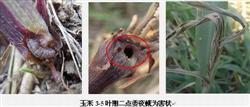
Technical key points for controlling the two-spotted field noctuid moth (Athetis lepigone) during the seedling stage of summer corn
The two-spotted field noctuid moth is a newly emerged pest in summer corn production areas in China. Returning wheat straw to the field provides an excellent environment for the two-spotted field noctuid moth to choose hidden, moist places for laying eggs and hatching. Once the larval peak period coincides with the corn seedling stage and suitable rainfall occurs, it may cause serious damage. The two-spotted field noctuid moth's...
-
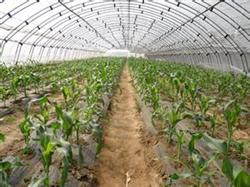
Detailed Explanation of High-Efficiency Cultivation Techniques for Fresh-Eating Corn in Greenhouses
In winter-warm greenhouses, during the late stage of spring production, the vegetable plants inside the greenhouse age, yield and quality decline, market prices are low, and planting benefits decrease. At this time, transplanting fresh-eating corn in the winter-warm greenhouse can rationally utilize greenhouse resources and achieve relatively high economic benefits. 1. Select excellent varieties: according to local conditions, select high-quality fresh...
-
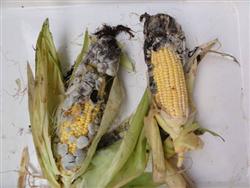
Detailed Explanation of Key Techniques for Corn Smut Prevention and Control
Corn smut, called "grey packet" by farmers. It can occur at all growth stages of corn, damaging the tassel, ear, as well as stems and leaves. Symptom identification: symptoms gradually become obvious around tasseling. Tumors of varying sizes grow on the affected parts; the tumors are initially white or reddish-purple, later turning grey, and after rupturing they release black powder. Affected...
-
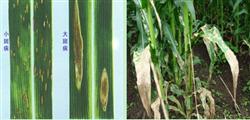
Control Techniques for Northern Corn Leaf Blight and Southern Corn Leaf Blight
Northern corn leaf blight and southern corn leaf blight mainly damage the leaves, and sometimes also infect the leaf sheaths and husks; southern corn leaf blight, in addition to damaging the above parts, can also damage the ear. In many regions these two diseases are collectively called "corn leaf blight." 1. Symptom identification: The typical symptom of northern corn leaf blight is that small lesions rapidly expand into large elongated spindle-shaped spots...
-
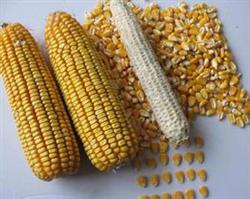
Things to note when choosing seeds for spring-planted corn, these aspects cannot be ignored
How to choose good corn seed is a key issue that affects whether yields can be increased in autumn. When choosing good corn seed, farmer friends should follow these principles: 1. Choose seed according to heat resource conditions. The local heat resources are related to the growth period of the corn variety. Corn varieties with a long growth period have good yield performance and...
-
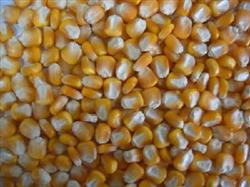
How should spring corn seeds be treated before drought-resistant sowing?
Before sowing, select and sun-dry the seeds. Choose uniform, consistent seeds and sun them for three days on a sunny day to improve germination vigor, disease resistance, and seedling uniformity. Conduct a germination test before sowing. The purity of the selected seeds should be no less than 96%, the cleanliness no less than 98%, and the germination rate no less than. Seed coating. Use a drought-resistant compound seed coating agent on...
-
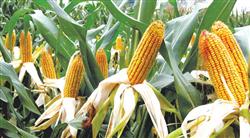
For high yields of spring corn, the sowing step is crucial
Improving the sowing quality of spring-sown corn and actively doing a good job in selecting and sowing good seed, fine land preparation, and timely sowing are crucial for ensuring a full stand and securing a bumper harvest of spring-sown corn. 1. Choose suitable varieties. Select suitable and appropriate improved varieties according to local conditions. According to heat resources and actual production conditions, mid-to-late maturing varieties with a growth period of 120-130 days should be selected...
-
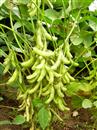
Spring Corn Stubble Transplanting Soybean Cultivation Technique
I. Characteristics and Traits Soybean prefers warmth; seeds begin to germinate at 10-12°C, with 15-20°C being optimal; the optimal growth temperature is 20-25°C; the optimal temperature during flowering and pod-setting is 20-28°C. At low temperatures, pod-setting is delayed, and below 14°C flowering cannot occur; if the temperature is too high, the plant ends growth prematurely. Seed germination requires relatively more water; during the flowering period...
-
Key Technical Points for High-Ridge, Sparse-Planting, High-Yield Cultivation of Spring Corn
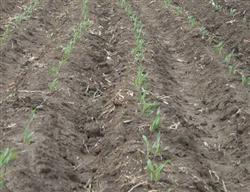
Many excellent spring corn varieties now require high ridges and sparse planting, but farmers generally adopt low ridges and dense planting, so the superior traits of corn cannot be fully expressed, seriously affecting farmers' income growth. This is especially true for excellent varieties such as Dongdan 60, Sanbei No. 6, Dongdan 13, and Zunyan No. 1, whose planting density per mu must not exceed 3000 plants, while...
-
What are the key cultivation techniques for spring corn?
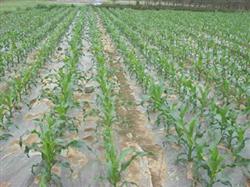
Adapt measures to local conditions and select improved varieties. In plain and hilly areas, promote Yedan 13 and Xiyu No. 3, paired with Huayu No. 4, Zhongdan 32, Chenghai No. 1, and Yuanzheng 808; for intercropping in cotton fields, select short-stalked, short-growth-period Yedan 22 and Yedan 51; in suburban areas, where fresh eating is the main purpose, waxy corn such as Zhongnuo No. 1 can be planted. Apply sufficient base fertilizer and skillfully apply topdressing...
条件筛选