Technical key points for controlling the two-spotted field noctuid moth (Athetis lepigone) during the seedling stage of summer corn
The two-spotted field noctuid moth is a newly emerged pest in summer corn production areas in China. Returning wheat straw to the field provides an excellent environment for the two-spotted field noctuid moth to choose hidden, moist places for laying eggs and hatching. Once the larval peak period coincides with the corn seedling stage and suitable rainfall occurs, it may cause serious damage. The two-spotted field noctuid moth's...
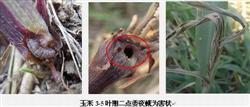
The two-spotted field noctuid moth is a newly emerged pest in summer corn production areas in China. Returning wheat straw to the field provides an excellent environment for the two-spotted field noctuid moth to choose hidden, moist places for laying eggs and hatching. Once the larval peak period coincides with the corn seedling stage and suitable rainfall occurs, it may cause serious damage. The main damage caused by the two-spotted field noctuid moth is that the larvae bite the base of the corn stem and the root system, causing the plants to wilt and die, resulting in missing seedlings and broken rows, or even crop failure. This year, the two-spotted field noctuid moth will occur heavily in fields with high wheat straw coverage in the central and northern parts of our province. Farmers should do a good job of self-inspection, prevent and control early to avoid losses.
Prevent insects from entering the field
June to mid-July is the second generation period of the two-spotted field noctuid moth, when damage to crops is most obvious, so it is the main damaging generation of the year. According to surveys, the reason the two-spotted field noctuid moth rose from an ordinary insect to a major agricultural pest is that after wheat harvest, straw is returned to the field, and when summer corn is planted the land is not plowed, resulting in large amounts of wheat straw, wheat chaff and other mulch accumulating in the field. The two-spotted field noctuid moth hides among it, lays eggs and breeds larvae. The larvae are afraid of light, and the area under the mulch is cool and dark, very suitable for their survival. According to last year's survey, the larvae occurred unevenly in the field. Corn seedlings covered by wheat straw, wheat chaff and other materials suffered severe larval damage; corn seedlings with exposed root crowns had no larval damage. During the main damaging generation of the two-spotted field noctuid moth, appropriate methods should be used for control according to its instar stage.
Clean the field: after harvesting wheat, treat the wheat straw in a centralized way; where conditions permit, rotary tillage to destroy the stubble so that there is no mulch in the field. With no hiding place, the two-spotted field noctuid moth will naturally not come to the corn field to cause damage; after corn sowing and before emergence, pull the mulch 15 cm away from the sowing row, which can also significantly reduce the damage rate.
Spraying to kill adults: preventing the two-spotted field noctuid moth from laying eggs can effectively reduce the number of larvae. From early to mid-June, in the afternoon go to the field and use tools to disturb the wheat straw and other mulch in the field. If a relatively large number of moths are startled into flight, it indicates that the two-spotted field noctuid moth is hidden in this field, and pesticide should be sprayed immediately to kill them. You can use 2.5% beta-cyhalothrin emulsifiable concentrate at 2500 times dilution, or 4.5% beta-cypermethrin at 1000-2000 times dilution, or 48% chlorpyrifos emulsifiable concentrate at 800-1000 times dilution, or 30% acephate emulsifiable concentrate at 600 times dilution for uniform spray control over the whole field. To improve the insecticidal effect, 10% chlorfluazuron emulsifiable concentrate at 2000 times dilution can be mixed in. Spraying to kill adults can be carried out together with spraying closed-type herbicides.
Spray control of 2nd-instar larvae
During the larval stage, the pests are under the mulch between corn ridges, the damage to corn is not very obvious, and there are no larvae surrounding the corn seedlings.
It is expected to enter the 2nd-instar larval stage from June 22 to 27. At this stage, spraying can be used for control. You can use 50% phoxim emulsifiable concentrate at 1000 times dilution, or 20% chlorantraniliprole suspension concentrate at 4500 times dilution, or 80% dichlorvos emulsifiable concentrate at 1000 times dilution, or 2.5% beta-cyhalothrin at 2000 times dilution, or 48% chlorpyrifos emulsifiable concentrate at 1200 times dilution, or 30% chlorpyrifos-phoxim microcapsule suspension concentrate at 1200 times dilution for uniform spray control over the whole field.
Trap-killing control of 3rd-instar larvae
The 3rd-instar larvae have already gathered around the roots of the corn seedlings and begun to bite the roots and bore holes. In the field, the corn or its whorl leaves wilt or the plants fall over in all directions. The 3rd-instar larvae have entered the early stage of heavy feeding, and their resistance to pesticides increases greatly. Methods of broadcasting poison bait or poisoned soil for trap-killing should be adopted to protect the seedlings.
Poison bait formula one: use 100 ml of 48% chlorpyrifos emulsifiable concentrate plus 200 ml of 80% dichlorvos plus 1.5 kg of chopped green vegetable leaves or weeds plus 5 kg of roasted fragrant wheat bran, add water and stir until it can be held into a ball, mix into poison bait, and in the evening broadcast it in small piles about 5 cm from the base of the corn seedling stems. Where the wheat straw mulch is thicker, broadcast more. Formula two: use 500 ml of 30% chlorpyrifos-phoxim microcapsule suspension concentrate to mix with 12.5 kg of roasted fragrant wheat bran, then pile and cover for 2 hours. This poison bait is used for 3 mu of land, also broadcast in small piles in the evening about 5 cm from the base of the corn seedling stems. Generally, the damage rate decreases significantly the next day.
Poisoned soil formula: per mu, use 300-500 ml of 80% dichlorvos emulsifiable concentrate, or 500 ml of 48% chlorpyrifos emulsifiable concentrate, or 500 ml of 30% chlorpyrifos-phoxim microcapsule suspension concentrate, add an appropriate amount of water and evenly mix into 25 kg of fine soil, and in the morning broadcast it in a ring along the ridges beside the corn seedlings.
Since one instar stage lasts only 3-4 days, farmers should seize the time to carry out control.
Pouring pesticide for control of 4th-instar and older larvae
The 4th-instar larvae have a body length of more than 1.4 cm and appear around July 7. The damage to corn in the field is obvious. The larvae will move from plant to plant to cause damage; one larva can continuously damage 7-8 corn seedlings, and it also gnaws on corn seedlings during the day. To deal with the large older larvae in the heavy feeding period, an emergency measure can be taken: pouring pesticide.
Per mu, 100 kg of pesticide solution can be sprayed around the roots of the corn seedlings. The pesticide can be 48% chlorpyrifos emulsifiable concentrate at 1500 times dilution or 30% acephate emulsifiable concentrate at 1000 times dilution. Unscrew the swirl plate of the sprayer or use a straight spray nozzle to spray along the ridges at the base of the corn seedling stems.
It is also possible to use per mu 800 ml of 48% chlorpyrifos emulsifiable concentrate, or 500 ml of 50% phoxim emulsifiable concentrate plus 300 ml of 48% chlorpyrifos emulsifiable concentrate, diluted to 200 times solution and flushed onto the ridge backs between corn rows along with irrigation water. To prevent the larvae from climbing onto the floating wheat straw, while irrigating, use a shovel to press the wheat straw floating on the water surface into the water.