-
Detailed Guide to Identifying Nutrient Deficiency Symptoms in Corn
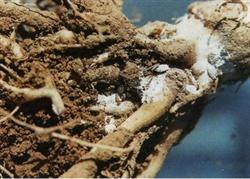
In recent years, the occurrence range of the corn root mealybug has continued to expand, and the severity of outbreaks has increased year by year, posing a serious threat to corn production and making it a major pest constraining corn yields. The corn root mealybug belongs to the order Homoptera, family Pseudococcidae. In Hebei, this insect produces 3 generations per year, with the second generation (mid-June to early-to-mid August) causing damage...
-
Control of corn smut disease cannot be ignored
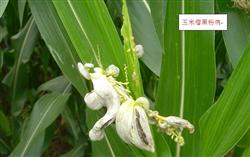
The symptoms of this disease can occur on all aboveground parts of the corn throughout the entire growth period, and are especially obvious at the tasseling stage. Tumor-like growths of varying sizes develop on the affected parts. Initially, the tumors are covered with a white membrane, which later turns gray and, after drying and cracking, releases black powdery material, namely the spores of the pathogen. On the leaves, bean-sized tumor-like masses are easily produced, while on the tassel...
-
Occurrence Patterns and Control Methods of Curvularia Leaf Spot in Corn
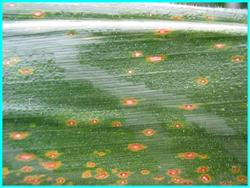
Corn Curvularia leaf spot, also known as yellow spot disease and called yellow leaf disease by farmers, is another important disease of corn in our province in recent years, following large and small spot diseases and rust. After the onset of Curvularia leaf spot, the leaves are covered with lesions, and when they merge, the leaves dry up and die, seriously affecting corn growth and reducing yield. I. Symptoms: ...
-
What are the key points for field management in the late stage of spring corn?
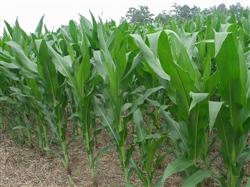
1. Choose good varieties. Choosing good varieties is the key to achieving a corn harvest; be sure to choose varieties introduced by formal agricultural technology departments, or varieties that have been approved by the provincial seed approval committee. In 2006, what we introduced was "Changxin No. 1," introduced from elsewhere by Danleng County Changxin Seed Co., Ltd. Per mu...
-
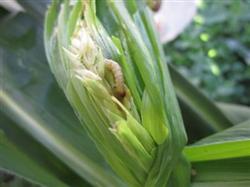
Why should spring corn be fertilized with the "light early, heavy late" approach?
The corn borer, also known as the corn stalk borer. At present, spring corn is at the late whorl stage (funnel stage), which is the best period for controlling the corn borer. During the funnel stage, most newly hatched corn borer larvae crawl into the leaf whorl and feed on the mesophyll of the not-yet-unfolded leaves, and spraying at this stage makes it easy for the spray liquid to enter the leaf whorl, improving control effect...
-

Is it better to plant corn at low density or high density?
Summary: Should corn be planted at "high density" or at low density? The autumn harvest season has arrived, and corn has successively entered the harvest season. The issue of corn planting density is actually a concern for many farmers. I previously saw someone...
-
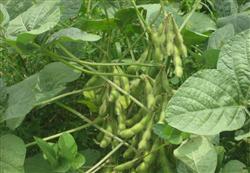
Spring planting fertilization tip: Effective potassium application boosts high yields in spring corn
Delayed senescence (staying green and late-maturing) refers to soybeans that, when they should be maturing, still have green branches and leaves with vigorous growth and seeds that are not yet plump, though not shriveled pods or shriveled seeds. The main cause of delayed senescence is excessive application of nitrogen fertilizer or application too late, causing excessive vegetative growth, delaying maturity, and affecting yield. To prevent delayed senescence in soybeans, it is necessary to timely...
-
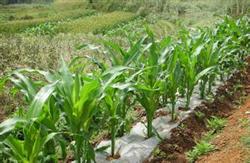
A Full Analysis of Key Spring Corn Cultivation Techniques
Adapt to local conditions and select improved varieties. For plains and hilly areas, promote Yedan 13 and Xiyu No. 3, paired with Huayu No. 4, Zhongdan 32, Chenghai No. 1, and Yuanzheng 808; for intercropping in cotton fields, choose the short-stalked, short-growth-period Yedan 22, Yedan 51, and 9362; in suburban areas where fresh eating is the main purpose, waxy corn varieties such as Zhongnuo No. 1 can be planted; in western Hubei, promote...
-
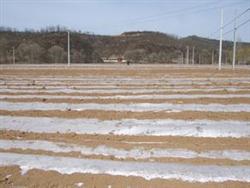
Detailed Cultivation Techniques for Spring Corn Intercropped with Autumn Cucumber
Land preparation and fertilization: Choose a sunny, well-ventilated plot with deep, loose, fertile soil, abundant water and good drainage. Base fertilizer should be mainly organic fertilizer, applied as early as possible in combination with autumn plowing, so that the fertilizer can fully decompose and blend with the soil. According to experiments, applying base fertilizer in autumn increases yield by 14.9% compared with applying it in spring. The base fertilizer can be...
-
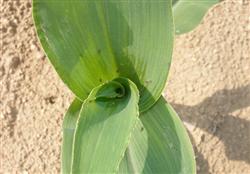
Key Technical Points for Transplanting Spring Corn with Plastic Film Mulch Cultivation
Q: The spring corn already has more than ten leaves, and now the field has a very high population of small brown planthoppers. Can I spray chlorpyrifos or fipronil to control them? A: The main damage small brown planthoppers cause to corn is spreading the viral disease maize rough dwarf. According to relevant data, the susceptible leaf-age period for corn runs from emergence to the 6-leaf stage (9 visible leaves),...
条件筛选