-

A woman who loves growing flowers lives a life full of surprises, with elegance in every corner of her home
A woman who loves growing flowers is surely someone who loves life. She loves all beautiful things, and for the garden she longs for, she pours in one hundred percent of her effort and passion - carrying soil, building flower stands, helping flowers climb their vines, and every day she has boundless energy! Watching...
-
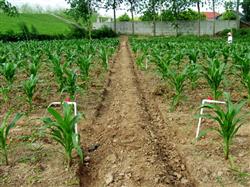
Detailed Explanation of Ginger and Corn Intercropping Cultivation Techniques
Ginger is a shade-tolerant crop, and high temperatures and strong light are unfavorable for its growth. Intercropping tall-stalk crops in a ginger field can make full use of the three-dimensional space of tall and short crops, provide shade for ginger, improve light energy utilization, and also improve land utilization, increasing yield per unit area. It does not affect the yield and quality of ginger, and can also...
-
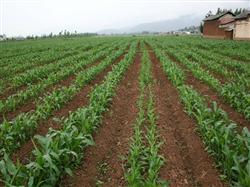
Spring-Sown Corn Planting Management Measures and Key Points
1. Suit measures to local conditions and select improved varieties. In plain and hilly areas, promote Yedan 13 and Xiyu No. 3, paired with Huayu No. 4, Zhongdan 32, Chenghai No. 1, and Yuanzheng 808; for interplanting in cotton fields, select the short-stalked, short-growth-period Yedan 22, Yedan 51, and 9362; in suburban areas, focus on fresh-eating types, and plant Zhongnuo 1...
-
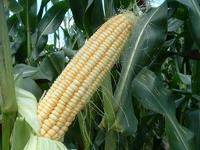
Detailed Explanation of Key Points in High-Oil Corn Cultivation Techniques
The application effects of phosphorus and potassium fertilizers vary greatly depending on the available soil content. Increasing the application of phosphorus and potassium is beneficial for strong seedling early development, sturdy plants with large ears, improving the grain-to-leaf ratio, and increasing grain number and grain weight, and is an important condition for improving population quality. However, after phosphorus and potassium fertilizers are applied, most are absorbed and fixed by the soil, resulting in low absorption and utilization rates in the current season, and in the soil...
-
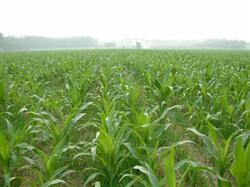
Key Technical Points for Summer Field Management of Spring Corn
At present, spring corn in the Qianxi area has entered the jointing stage, which is the peak period of water and fertilizer demand for corn and also a critical period for yield formation, so summer management of corn should be strengthened. 1. Timely topdressing Corn topdressing should be mainly nitrogen fertilizer, preferably applied in two split applications, namely 20 kg of urea per mu at the large trumpet stage...
-
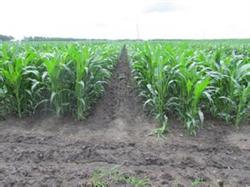
Detailed Explanation of Autumn Corn Planting Techniques and Management Key Points
Autumn corn is suitable for no-till direct sowing after mid-July. After harvesting the previous corn crop, promptly clean the field, and early sowing at the earliest opportunity is key; generally deep plowing is not required. 1. Sun-dry the seeds for 2-3 days, and soak them for 4-6 hours before sowing to promote uniform and neat emergence. Arrange plant spacing at a density of 3500-4000 plants per 667 sq m...
-
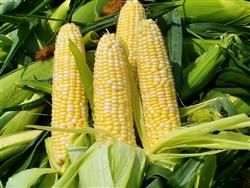
Detailed Explanation of Key Cultivation Techniques for Specialty Corn
Specialty corn includes fodder corn, waxy corn, sweet corn and popcorn. The botanical characteristics and biological traits of specialty corn differ from those of common corn, and therefore its cultivation techniques also have special requirements. 1. Fodder corn. Fodder corn refers to corn varieties used for green fodder or silage. At present, ...
-
What causes poor corn seedling emergence?
①Low temperature or excessive rain: Experiments show that low-temperature soil reduces the germination rate or germination vigor of seeds; too much rain hinders the normal respiration of seeds and makes them prone to mold infection, causing seed rot. ②Rough land preparation or improper fertilizer application: Many clods, uneven land, uneven soil moisture, or inconsistent sowing depth...
-
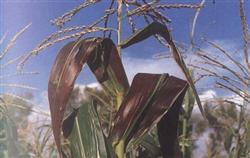
How can corn red leaf disease be controlled effectively?
Symptoms: When improved varieties bred with Huangzaosi encounter low temperatures and rainy, overcast weather during the grain-filling stage, their leaves turn red, which is called red leaf disease. Cause: The occurrence of this disease is related to the fast grain-filling of this variety. When large amounts of synthesized sugars cannot be quickly converted due to metabolic disorders, they become anthocyanins, and the green leaves turn red. Control methods: (1) In areas where it occurs severely, do not...
-
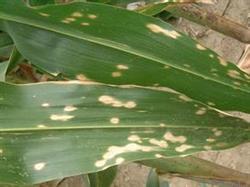
How to prevent and control corn gray leaf spot? A full analysis of the technical key points
Corn gray leaf spot can occur throughout the entire growth period, but the disease is most severe at the tasseling and grain-filling stages. In the early stage of the disease, water-soaked light brown spots appear. These streaks extend parallel to the leaf veins, are often rectangular, and are more obvious when held up to the light. The center of the lesion is gray, and the edge has a brown line. The lesion size is 2-4 x 10-24 (mm), and...
条件筛选