-
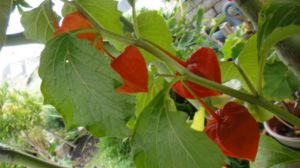
How to identify the Chinese lantern plant? Here are a few identification methods
Leaves: alternate, initially ovate in shape, gradually becoming ovate-cordate later, with serrated edges of varying sizes. Flowers: borne singly in the leaf axils, with a bell-shaped calyx and a yellow corolla. Fruit: a berry, spherical in shape and green in color, enclosed in an enlarged green persistent calyx that is ovate or broadly ovate.
-
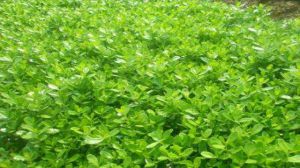
What is the difference between Chinese ash (Fraxinus hupehensis) and Chinese privet (Ligustrum quihoui)?
Trunk differences: Chinese ash is a large deciduous tree, reaching a height of 19 m, relatively tall; Chinese privet is a deciduous shrub, 1 to 3 m tall, much shorter than the former. Leaf differences: Chinese ash leaves are larger, about 1.7 to 5 cm long, with small serrations along the edges; Chinese privet leaves vary noticeably in shape and size, with edges rolled inward.
-

The Chinese lantern plant is very common in wild fields, but now it has become a high-end fruit.
Summary: The childhood snack of rural children - the Chinese lantern fruit (Physalis), now priced on par with imported fruit. The Chinese lantern plant is called "little girl fruit" in our area. When we were kids, there were plenty of these wild fruits in the fields, and we often picked them to eat. But the most delicious ones...
-

Leftover Chinese yam thrown into a flower pot, unexpectedly grew into a potted plant
Chinese yam is a very familiar medicinal food ingredient. Eating some Chinese yam in autumn and winter nourishes yin and tonifies the kidneys, strengthens the stomach and benefits the spleen, and is very good for the body. Sometimes when you can't finish the Chinese yam and it sits for a long time and sprouts, the editor suggests it's best not to eat it, because...
-
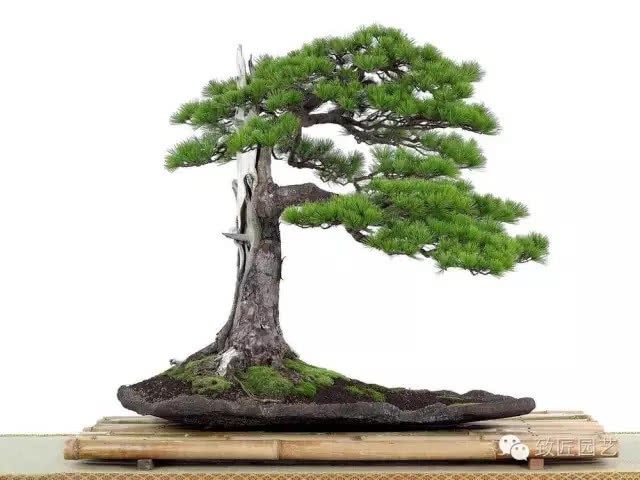
An Analysis of the Xieyi Concept in Chinese Bonsai Art
China's five thousand years of traditional culture has a long and profound history, with brilliant achievements; in its long historical development it has formed a mighty river of Yangtze-like proportions reflecting the stars and moon, leaving behind countless precious spiritual treasures, which have provided our bonsai art creation with...
-
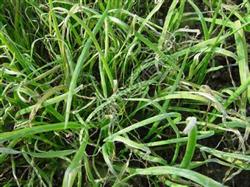
Control Methods and Technical Key Points for Gray Mold in Greenhouse Chinese Chives
When humidity inside a greenhouse for Chinese chives is high, gray mold is likely to occur. After the disease develops, pale grayish-brown to white spots gradually appear on the leaves from the tip downward, on both the upper and lower surfaces; after expanding, they become elliptical or spindle-shaped lesions and merge with each other into large dead patches. When air humidity is above 85% and the temperature is 15°C~20°C, warm and humid conditions favor the occurrence of this disease.
-
How to dry-sow Chinese chives? These little tips you need to know
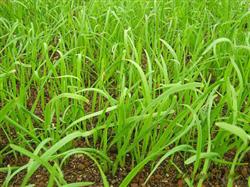
1. Seed selection: According to the local cultivation method, cultivation purpose, climate conditions, consumption habits and market demand, choose excellent Chinese chive varieties that are marketable, resistant to pests and diseases, highly stress-resistant and of good commercial quality. Seed quality must meet the requirements of GB8079. Refuse to use genetically modified Chinese chive varieties. 2. Seed treatment: ...
-
Diagnosis, Identification and Control Methods of Gray Mold in Chinese Chives
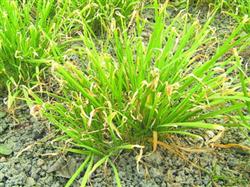
How to control gray mold in greenhouse Chinese chives. Gray mold in Chinese chives, also known as "white spot leaf blight" and "white spot rot", is the main disease of greenhouse Chinese chives. It should be controlled early to reduce losses and increase profits. The occurrence conditions and control methods of gray mold in Chinese chives are briefly summarized as follows: 1. Occurrence conditions 1. Chi...
-
What are the control methods for gray mold in Chinese chives?
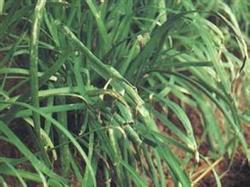
In protected cultivation, fumigate with 10% Procymidone smoke agent at 250 g per mu; for foliar spraying, use 50% Procymidone wettable powder at 1000 times dilution, 2% Wuyimycin (BO-10) at 150 times dilution, 40% Huimeiwang at 500 to 800 times dilution, 10% Polyoxin at 500 to 700 times dilution, and 50% Vinclozolin at 1200 to 1400 times dilution.
-
How to treat gray mold in Chinese chives? Key points of pollution-free control techniques
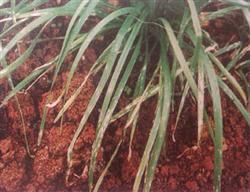
(1) Symptoms and epidemic patterns The disease mainly affects the leaves and shows 3 types: the white-spot type, in which water-soaked grayish-white spots form on both the front and back of the leaves, oval or spindle-shaped, with pale yellow margins; later the lesions enlarge into large dead patches, causing half a leaf or the whole leaf to die. In humid conditions, a sparse gray mold layer forms. The dry-tip type occurs...
条件筛选