An Analysis of the Xieyi Concept in Chinese Bonsai Art
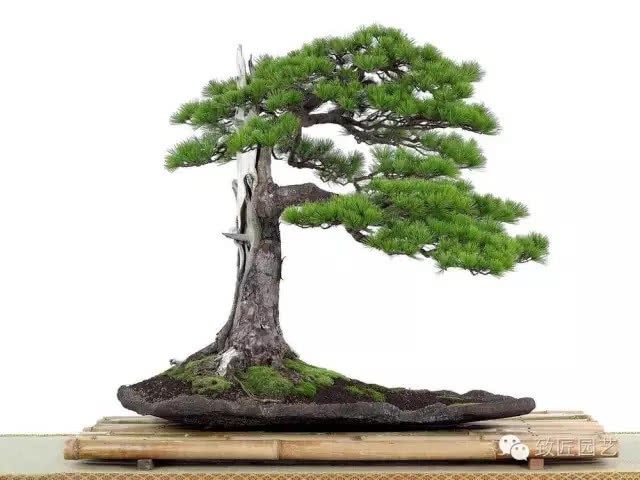
China's five thousand years of traditional culture has a long and profound history, with brilliant achievements; in its long historical development it has formed a mighty river of Yangtze-like proportions reflecting the stars and moon, leaving behind countless precious spiritual treasures, which have provided the prerequisite foundation for our bonsai art creation.
Bonsai art, as a kind of "silent poetry, three-dimensional painting," also has countless ties with our other sister arts, yet it possesses characteristics different from those sister arts: it is a living, vital, three-dimensional art.
Chinese culture, through thousands of years of development, has formed a complete artistic system that integrates the unique cultural cultivation, aesthetic consciousness, way of thinking, aesthetic thought and philosophical concepts of the entire Chinese nation, from Gu Kaizhi's "conveying the spirit through form," Xie He's "Six Principles of Painting," Zhang Cao's "external observation of nature as teacher, inner grasp of the heart as source," all the way to Qi Baishi's "between likeness and unlikeness," and so on. It encompasses a series of creative experiences and theories including scholarship, conception, artistic mood, spirit and tone, management, formal patterns, and style. These experiences and theories not only conform to general artistic laws but also possess a distinctly Chinese manner and Chinese spirit; compared with the culture and art of countries around the world, they have a vivid national style and national character. Our bonsai art is rooted in the deep cultural soil of the Chinese nation. Here we shall only give a summary account of the characteristics and artistic laws of Chinese bonsai.
Looking across the development of Chinese bonsai, we have experienced rises and falls, and now it is again on a trajectory of revival. It is closely linked to our social economy. Although it is the place of origin, Japan, which even declares it will turn our Chinese "traditional Chinese medicine" into "Eastern medicine," has marched ahead of us and stolen the spotlight. This gives us much to ponder. But as long as we Chinese strive to strengthen ourselves, the possibility of catching up with and surpassing Japan is quite considerable, because we have the broad, profound and vast Chinese culture, which Japan cannot match. It can be seen that, influenced by the philosophical views of Laozi and Zhuangzi regarding "the unity of heaven and humanity" and "yin and yang overcoming and generating one another," Chinese bonsai artists came to understand that artistic creation is a process of unifying the artist's subjective and objective aspects. They formed the aesthetic standard of "conveying the spirit through form" and artistic theories such as "transcending beyond the image" and "entrusting emotion through objects." Our bonsai art acknowledges that it comes from the objective world, yet also places great importance on the subjective role, that is, "originating from nature, yet higher than nature." This is something other countries do not possess. This has enabled our bonsai art to develop greatly, achieving a fairly perfect combination of realistic spirit and romantic spirit, of realistic method and romantic method. Our bonsai artists have done extremely well in this regard, injecting elements of Chinese painting into our bonsai creation and guiding our bonsai along a "xieyi" (expressive, freehand) line of thinking, which is relatively consistent with our Chinese traditional culture. Examples include the dynamic bonsai of Mr. He Gansun of Hubei and the water-and-land bonsai of Mr. Xu Xiaobai. In particular, Mr. Zhao Qingquan, our master and a student influenced by Mr. Xu Xiaobai, introduced our distinctive cultural bonsai to the world, a contribution that cannot go unmentioned. Of course, there are also many other artists who have made outstanding contributions in this area.
Just like Chinese painting, although Chinese painters proposed very early the principle of "conveying the spirit through form, with both form and spirit present," they also recognized very early that "formal likeness" does not necessarily mean "spiritual likeness." This is exactly the same as our bonsai creation. In order to better convey the spirit, the expression of form can be flexible. For example, our recently departed master Mr. Lu Xueming pioneered the creation of the "large flowing branch" and the "large drooping branch." This transcends the imitation and reproduction of specific objects, emphasizes the role of subjective creation, and emphasizes the expression of the author's subjective feelings. In short, in one phrase, we must emphasize "xieyi." It is not only a style of expression in Chinese bonsai but has also begun to develop into the mainstream of Chinese bonsai; "xieyi" is one of the great characteristics of our Chinese bonsai.
The so-called "xieyi" is not a simple depiction of vague and unclear images and ideas, but refers to the sum of our bonsai makers' deep observation of the nation, society, the times and nature. It is a kind of consciousness, a kind of spirit. Therefore, it differs from figurative imitation and from abstract unlikeness; rather, mainly through imagery and beyond imagery, it expresses human emotion, will and inner temperament, and values the direct expression of human spirit. Xieyi Chinese bonsai is both subjective and objective; both abstract and figurative; it has both the element of reproducing objective objects and the element of expressing subjective feelings; it is both bold and unconstrained, yet does not lose fine and meticulous carving. Expressing nature is the projection of our emotions. This combination is so apt that it is truly "a blending of object and self," making human--------society--------nature an inseparable whole, and its ideological connotation and aesthetic value far exceed the natural image of the potted plant itself.
The xieyi concept freed Chinese bonsai making from the limitations of the concepts of time and space, allowing it to pursue freedom of artistic expression. It emphasizes grasping the world macroscopically, which is called "viewing the small from the large," and advocates observing the world with a historical vision, an overall vision and a developmental vision. It can transcend complex temporal and spatial relationships and make a generalized, free depiction of the complex objective world. Taking landscape bonsai as an example, a thousand cliffs and ten thousand ravines, layer upon layer of peaks and ridges, a thousand miles of mountains and rivers, ten thousand miles of rivers, these natural scenes can all be freely combined under the hands of bonsai artists, summoned at will and dismissed at will. Bonsai artists can synthesize what they have seen, known and thought into a macroscopic consciousness: "Heaven and earth create things, cut and tailor them as you will; yin and yang transform greatly, let them divide and combine as they may." The works created in this way are neither simple reproductions of objective things in a specific time and space, nor random patchwork of subjective arbitrary whim; rather, they are artistic realms that transcend appearances and integrate time and space, formed after the blending of the objective world and subjective feelings. Such a realm tacitly accords with the laws governing the expression of nature; the scenery it depicts is so real that one could wander and dwell in it, yet it is also a supremely perfect, transformed world detached from reality.
Because it does not rigidly adhere to "formal likeness" and does not completely "imitate" nature, but rather benefits the grasp of the inner spirit of things and the conveyance of subjective feelings, Chinese bonsai has gained great freedom, producing a flourishing scene of a hundred flowers blooming, such as the Lingnan school, the Shanghai school, the Yangzhou school, the Suzhou school, the Sichuan school and Hubei dynamic bonsai, and so on.
Our bonsai art has poetic sentiment and pictorial charm, which is different from that of other countries. It advocates subtlety, emphasizes winding and hidden expression, uses few to conquer many, substitutes the empty for the solid, treats white space as black, and so on, making the expressive power of our bonsai language even stronger and more able to induce rich imagination in the viewer, just like our literati trees, of which the monk Suren was an outstanding representative. That detached artistic mood purifies our souls again and again. Chinese bonsai art has absorbed the essence of sister arts: it has the charm of Chinese painting, the philosophical and narrative quality of literature, the lyricism and rhythm of poetry, and the uniqueness and decorative quality of artistic techniques, becoming a highly integrative and capacious comprehensive art.
The creation of artistic mood in Chinese bonsai is first of all the result of a series of inner accomplishments on the part of the maker, such as life experience, figurative thinking and artistic ideals; at the same time, it must also undergo repeated and highly refined artistic processing, requiring the maker to labor with great care, exert heart and soul, exercise unique ingenuity, and guard it for ten years as one day. We must put great effort into this, and our attitude must also be extremely serious; every branch and every leaf is bound up with feeling, just as the great Tang poet Du Fu said: "In dismal and arduous toil the craftsman's mind works," and "I will not rest until my words startle the world."
Rich imagination: imagination is extremely important in artistic creation. When reflecting objective things, a person not only perceives the images directly sensed at the time, but also has a special psychological capacity; only then does purposeful human labor become possible. One of the tasks of artistic creation is to serve as a catalyst that induces rich associations in the viewer.
Of course, Chinese bonsai cannot reject the absorption of all excellent cultural and modern artistic elements; moreover, this can provide a reliable foundation for the modernization and expansion of Chinese bonsai. We oppose self-admiration, self-proclaimed purity, petty arrogance, and even building a cart behind closed doors. Historically, during the Wei, Jin, Southern and Northern Dynasties, the Tang Dynasty, and the Ming and Qing periods, Chinese civilization was successively influenced by some countries and ethnic tribes of the Western Regions, absorbing and integrating the excellent cultures of other peoples. In ancient times this was called "transforming the barbarian into the Chinese," and today it is called "making foreign things serve China." Today, when bonsai techniques from all over the world enter China by virtue of our policy of opening to the outside world, Chinese bonsai artists still boldly study them, examine them and integrate them, as their forebears did, making them nourishment for the further development of Chinese bonsai. Only thus can our Chinese bonsai win high praise and high recognition from the whole world.
Highlights