-
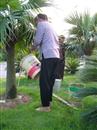
Why should you not water before and after drenching the roots with fungicide?
Why should you not water before and after drenching the roots with fungicide? Here are the reasons. Before drenching the roots with fungicide, you should not water. First, because the root disease of the crop has already occurred; if you water, the pathogens will spread with the flowing water, causing more dead plants. Second, because watering easily leads to reduced soil aeration, root oxygen deficiency, and...
-
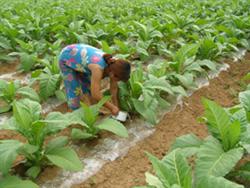
What precautions should be taken when applying fungicides as a soil drench to prevent pests and diseases?
What should be noted when applying fungicides as a soil drench to prevent pests and diseases? Here is an introduction. When applying fungicides as a soil drench to prevent pests and diseases, note the following points: 1. The choice of product must be reasonable: choose a fungicide that is highly targeted and has a strong disease-control function. Do not use products blindly; minimize waste as much as possible and avoid delaying the timing of control...
-
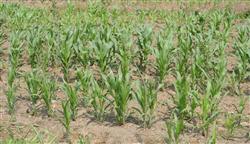
What precautions should be taken when using glyphosate for weed control in corn fields?
What should be noted when using glyphosate for weed control in corn fields? Please explain that glyphosate is a systemic herbicide. When used for weed control in corn fields, if used improperly, it can cause harm to corn, mainly for the following reasons: First, a lack of understanding of the properties of glyphosate; glyphosate is a systemic herbicide...
-
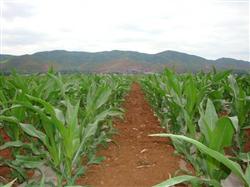
How to Do Chemical Weed Control in Corn? A Detailed Guide to Practical Methods
How is chemical weed control used in corn cultivation? Please give an introduction. Chemical weed control has been widely applied at all stages of corn growth. Because different regions have different climate characteristics and planting habits, the sowing and cultivation times of corn vary. According to how early or late the planting is done, corn is usually divided into spring corn and summer corn. For spring...
-
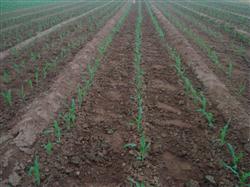
How can weed control in corn fields be effective?
How do you control weeds when growing corn? Please provide guidance. Spring-sown corn fields are mainly infested with perennial weeds, winter-annual weeds and early-spring weeds, such as field bindweed, field bindweed (Convolvulus arvensis), Ixeris denticulata, shepherd's purse, Hemisteptia lyrata, lamb's quarters, etc. The weed community composition generally consists of one or two weed species forming the dominant population; the dominant weeds are barnyardgrass, crabgrass, foxtail...
-
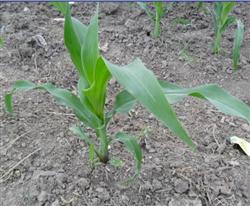
What herbicide works well for weed control at the corn seedling stage?
What herbicide is good for weed control at the corn seedling stage? Please note that using Yunongle herbicide at the corn seedling stage gives very good weed control results. Yunongle is also called nicosulfuron, and its formulated product is a 4% suspension concentrate, with a dosage of 1.5 liters of 4% Yunongle suspension concentrate per hectare. The specific application method is as follows: 1. Application timing: 3-5 leaves after corn emergence...
-
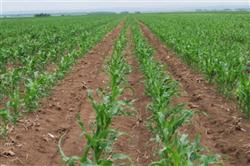
Can glyphosate be used to control weeds in corn fields?
Can glyphosate be used to control weeds in corn fields? Please explain: glyphosate should be used with caution for weed control in corn fields, for the following reasons: First, users lack understanding of the properties of glyphosate and cannot clearly distinguish between systemic and contact pesticides. After glyphosate solution is absorbed by corn leaves, it will not only damage the leaves it touches, but the entire plant will...
-
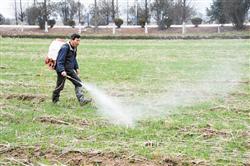
What precautions should be taken for chemical weed control?
What should be noted in chemical weed control? Please provide an introduction. Chemical herbicides have the characteristics of strong selectivity and strong specificity. Their application technology requirements are more stringent than those for insecticides and fungicides, and improper use often causes phytotoxicity. To give full play to the role of herbicides in agricultural production, the following seven points should be noted during use....
-
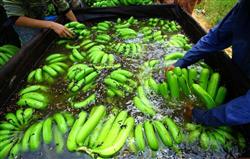
What are the commonly used fungicides and preservatives for bananas?
Which fungicides and preservatives can be used for bananas? Please give an introduction. The following products can be used as banana fungicides and preservatives: (1) Chlorothalonil is a broad-spectrum fungicide with good preventive action against fungal diseases in many crops, but it has no systemic translocation action, so once the crop has been invaded by pathogens and they have entered the plant body...
-
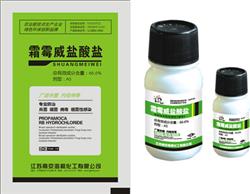
Correct application methods for the low-hazard fungicide propamocarb
How is the low-hazard fungicide propamocarb applied? Please provide an introduction to the application methods. Reference application methods for the low-hazard fungicide propamocarb are as follows: 1. To control damping-off and rhizoctonia rot in cucurbit seedlings, use a 500-fold propamocarb solution, spraying at a rate of 0.75 kg of solution per sq m, spraying 1 to 2 times over the entire seedling-raising period...
条件筛选