-
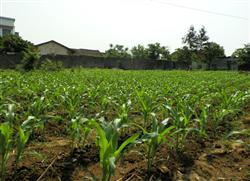
Which crops can paraquat be used on? Detailed introduction to its scope of application
Which crops can paraquat be used on? Please give a detailed introduction. Paraquat is a fast-acting non-selective herbicide with contact action and a certain systemic action. It is rapidly absorbed by the green tissues of plants, causing them to wither and die. It has no effect on non-green tissues. In soil it rapidly binds to soil particles and becomes deactivated, with no effect on plant roots and many...
-
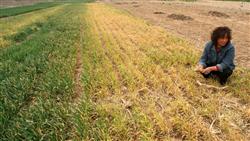
How to Apply Paraquat Herbicide Safely? A Detailed Guide to Correct Use
How to Apply Paraquat Herbicide Safely? Please Explain and Guide. Paraquat herbicide is a non-selective herbicide, generally used to eliminate annual weeds or perennial weeds. However, after paraquat comes into contact with soil, its activity decreases, so it cannot effectively eliminate the underground rhizomes of weeds. In recent...
-
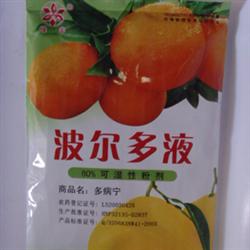
Correct methods for using non-systemic fungicides
How are non-systemic fungicides used? Please give an introduction. The following introduces how to use the non-systemic fungicide Bordeaux mixture: Bordeaux mixture is a sky-blue viscous suspension made from copper sulfate, quicklime and water. It is alkaline and corrosive to metals. It is a non-systemic protective inorganic fungicide, ...
-
What are the correct methods for using low-toxicity fungicides?
How are low-toxicity fungicides used? Please provide an introduction to the methods. The following introduces the methods for using several low-toxicity fungicides: Antimycin 120 (Nongkang 120, 120 agricultural antibiotic) is suitable for controlling powdery mildew, anthracnose and Fusarium wilt. To control soil-borne diseases such as Fusarium wilt of cucurbits and eggplant, a 2% aqueous solution at 130 to 200 times dilution can be used...
-
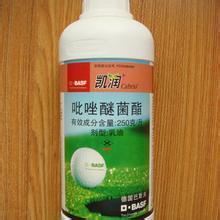
How should 25% Cabrio fungicide be used correctly?
How should 25% Cabrio fungicide be used? Please give an introduction. With the development of profitable agriculture, economic crops, mainly fruits and vegetables, have been expanded on a large scale. This has been followed by the occurrence of diseases in various economic crops, seriously affecting the high quality and high yield of agricultural products and farmers' increased production and income. Especially for grapes, in our province throughout the entire growth period...
-
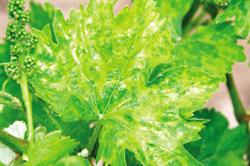
How to determine pesticide phytotoxicity? These judgment methods are worth knowing
How to determine pesticide phytotoxicity? Please provide an introduction to the methods. For phytotoxicity caused to crops, the existence of factors such as disease, nutrient deficiency, and crop physiological disorders increases the difficulty of identification. When phytotoxicity occurs and crop growth is abnormal, the following points should be noted in diagnosis: First, the abnormal...
-
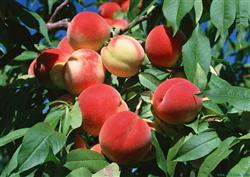
Which pesticides are prone to causing phytotoxicity when sprayed on fruit trees
Which pesticides can cause phytotoxicity in fruit trees? Please give an introduction. Pesticides that can cause phytotoxicity in fruit trees include: Omethoate: Apricot, pear, peach, fig and other fruit trees are sensitive to this pesticide solution at dilution concentrations below 1500 times, and phytotoxicity is very likely to occur when sprayed. In addition, during high-temperature seasons (above 30°C), use it as little as possible...
-
How to prevent pesticide damage to crops? A detailed guide to practical prevention methods
How to prevent crops from suffering pesticide damage? Please give an introduction to prevention methods. Correctly selecting pesticides: when choosing pesticides, understand their characteristics and apply them strictly according to the control scope stated on the label. When purchasing, guard against counterfeit and inferior products, and ask for a purchase invoice or credit card.
-
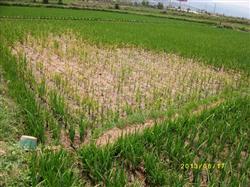
Which crops are prone to phytotoxicity from common pesticides?
Which crops will common pesticides cause phytotoxicity to? Please give an introduction. Common pesticides cause the following phytotoxicity to crops: Lime sulfur mixture: It is phytotoxic to plants such as peach, plum, apricot, and pear. If used on these plants, it is best to spray during the leaf-drop season, and it must never be used during the growing season or the flowering and fruiting period. Fenitrothion: In...
-
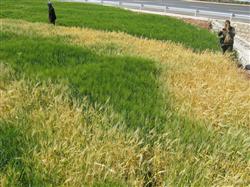
How to avoid pesticide phytotoxicity? A detailed guide to practical prevention methods
How to avoid pesticide phytotoxicity? Please provide guidance methods. To avoid pesticide phytotoxicity, you can refer to the following methods: 1. Fully understand the basic nature of phytotoxicity, strictly control the dosage and concentration used, choose the correct time and method of application, and do not arbitrarily increase the amount or frequency. 2. Understand the quality of the pesticide....
条件筛选