-
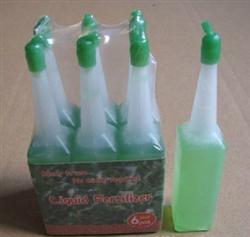
A Detailed Guide to the Correct Use of Plant Growth Regulators
How are plant growth regulators used correctly? Here is an introduction to the use of plant growth regulators, which have greatly increased crop yields and improved the quality of agricultural products. However, some farmers in production, due to improper use techniques, not only failed to achieve the expected results, but also caused serious yield reductions due to phytotoxicity. First taboo: using them as...
-
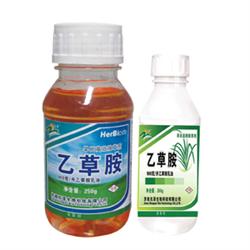
Can isoproturon and acetochlor be mixed for use?
Can isoproturon and acetochlor be mixed for use? Please explain. Both acetochlor and isoproturon are suitable for soil-closing treatment in wheat fields and barley fields after sowing and before seedling emergence or around the 3-leaf stage. Both also have some control effect on weeds at the seedling stage, and isoproturon also has a relatively good control effect on older weeds. The two can be mixed for use, and currently...
-
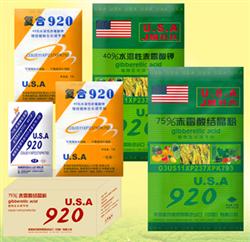
What Are Plant Growth Regulators? A Clear Guide
What are plant growth regulators? A detailed introduction. Plant growth regulators are a class of substances used to regulate plant growth and development. Plant growth regulators are also called exogenous plant hormones, generally produced through artificial synthesis or microbial fermentation, and their physiological effects and biological effects are the same as or similar to natural plant hormones...
-
What are the symptoms of organophosphate pesticide poisoning?
What are the symptoms of organophosphate pesticide poisoning? Please explain. Organophosphorus compounds are a type of insecticide widely used in agriculture and healthcare, and most have varying degrees of toxicity. They can enter the bodies of fur-bearing economic animals through the digestive tract, respiratory tract, skin, and mucous membranes, causing poisoning. Organophosphate pesticides that can cause poisoning include 1605, 1059, trichlorfon, dichlorvos, dimethoate, and more than 10 other types. Feeding grain, wild grass, or vegetables after organophosphate pesticides have been spread on them, or feed contaminated by them; spreading organophosphate pesticides near fur-bearing economic animal farms, with liquid splashing and being inhaled by the animals; using utensils previously used to prepare organophosphate pesticides to mix feed, or drinking water contaminated by them, can all cause organophosphate poisoning in fur-bearing economic animals. In addition, feeding the meat carcasses and by-products of livestock, poultry, and other animals that died from organophosphate pesticide poisoning, or using organophosphate pesticides to treat internal and external parasitic diseases in animals with improper dosage or excessively high concentration, can also cause poisoning. According to the amount of poison, the course of poisoning, and the manifestations, it can be divided into acute poisoning and chronic poisoning. In acute poisoning, the sick animal has difficulty breathing, salivates, foams at the mouth, sheds tears, snorts, and the conjunctiva and oral mucosa become cyanotic: the pupils constrict; diarrhea occurs with thin feces containing blood, with frequent defecation and urination; the skin feels cool; the animal is highly sensitive to external stimuli, in a state of excitement, with hearing loss and inhibited visual responses; the hind limbs are paralyzed, unable to stand, and walking is difficult. Muscle groups throughout the body show spasmodic contractions of varying degrees, skeletal muscles tremble, the whole body becomes weak, and death usually results from paralysis of the respiratory center or heart failure. In chronic poisoning, the sick animal shows reduced eating or even refusal to eat, gradually becomes emaciated, has movement disorders and uncoordinated movements: long-term diarrhea with shed intestinal mucosa or blood in the feces, increased respiratory secretions, leading to difficulty breathing, and finally a drop in body temperature and death. Necropsy shows cyanosis of the visible mucous membranes, a large amount of mucous secretions in the oral cavity, pulmonary congestion and edema, and bronchi filled with foamy mucus. Parenchymal organs are congested and hemorrhagic, meninges are congested, and gastrointestinal mucosa is shed with hemorrhagic spots or hemorrhagic patches. Based on a history of contact with organophosphate pesticides and typical symptoms such as excessive salivation, constricted pupils, muscle tremors, and difficulty breathing, a preliminary diagnosis can be made. It is best to collect pathological materials for toxicological identification to establish a final diagnosis. To prevent this disease, organophosphate pesticides must be properly stored and used. When deworming animals, the dosage and concentration must be correctly mastered, care must be strengthened, and licking or biting each other must be strictly prevented. When using trichlorfon to treat internal parasites in animals, it must never be given together with alkaline drugs. When crops sprayed with organophosphate pesticides are used as feed, they should be thoroughly washed clean and first subjected to a safety test before they can be fed to animals. It is forbidden to feed fur-bearing economic animals with the meat carcasses and by-products of livestock, poultry, and other animals (rabbits, dead foxes, rats, fish, etc.) that died from organophosphate poisoning. For acute poisoning, rescue should be carried out quickly. For poisoning caused by oral ingestion of organophosphate pesticides, immediately use 2-3% sodium bicarbonate solution, 1-2% soda water, or 0.1% potassium permanganate solution (potassium permanganate cannot be used for 1605 poisoning) for repeated gastric lavage to remove unabsorbed poison, but if poisoning is caused by oral trichlorfon, alkaline solution must not be used for gastric lavage; instead, use 1:5000 potassium permanganate solution or physiological saline for gastric lavage. For symptomatic treatment, to relieve spasms, barbiturate can be injected subcutaneously (10% sodium isoamylbarbiturate solution), 10 mg per kg body weight for mink, and 30-50 mg per kg body weight for silver-black foxes. It is best to use it once every few days, for several consecutive times. Pralidoxime at 30 mg per kg body weight, diluted with 5% glucose solution and physiological saline, should be injected slowly intravenously, and acts rapidly. However, it must never be combined with alkaline drugs.
-
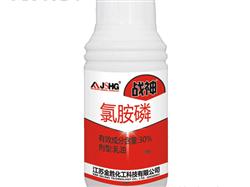
Which pests can chloramidophos control? A detailed explanation of its scope of application
Which pests can chloramidophos control? Please introduce 30% chloramidophos emulsifiable concentrate, a new insecticide variety with independent intellectual property rights, capable of efficiently controlling a variety of pests, mainly the larvae of the rice leaf roller. Such as the striped stem borer, the yellow stem borer, the pink stem borer, the brown planthopper, leafhoppers, the cotton bollworm, the cabbage caterpillar, the beet armyworm, etc., low...
-
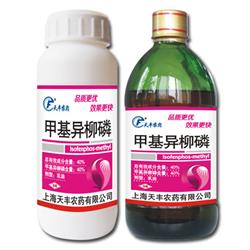
Which pests does isofenphos-methyl mainly control?
Which pests can isofenphos-methyl control? How should it be used? Please give guidance. Isofenphos-methyl is an organophosphorus insecticide. The technical product is a brownish-yellow oily liquid. It has strong contact and stomach poison action against pests, with a relatively long residual effect. It is highly toxic to humans and livestock. The formulations are 40% emulsifiable concentrate and 3% granules. Use...
-
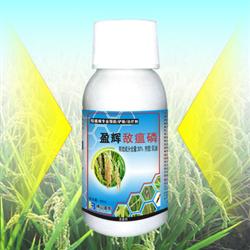
What are the correct methods for using edifenphos?
How is edifenphos used? Please explain. Edifenphos, also known as Kitazin, is a fungicide with protective and curative action. It is currently used mainly to control rice blast. Edifenphos also has good control effects against rice sheath blight, panicle blight, and northern and southern corn leaf blight. The formulation is a 40% emulsifiable concentrate. The application techniques are as follows:...
-
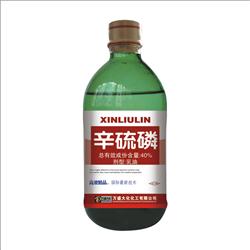
How is phoxim applied? A detailed explanation of the correct method
How is phoxim applied? What pests can it kill? Let us introduce it. Phoxim is a brownish-yellow liquid, and the formulations sold include 50% emulsifiable concentrate, 3% and 5% granules. Phoxim is stable under neutral and weakly acidic conditions, and easily decomposes under alkaline conditions. Under sunlight, especially ultraviolet light, it quickly photodegrades and loses effectiveness....
-
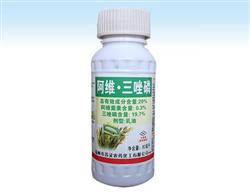
How can Abamectin-Triazophos be used for better results?
How should Abamectin-Triazophos be used well? Please give an introduction. Abamectin-Triazophos is a mixture of abamectin and triazophos, with products available as 10.2%, 15%, 18%, and 20% emulsifiable concentrates. It has contact and stomach poison action against pests, and also has good systemic properties. To control rice stem borer, use 80-100 ml of 18% emulsifiable concentrate or 20%...
-
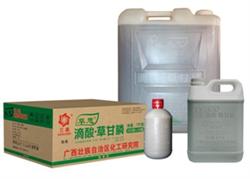
What precautions should be taken when using glyphosate for weed control?
What should be noted when using glyphosate for weed control? Please give an introduction. When using glyphosate herbicide, read the instructions carefully and thoroughly, because glyphosate herbicide is a systemic, broad-spectrum, non-selective herbicide that mainly inhibits enolpyruvyl shikimate phosphate synthase in plants, thereby inhibiting the conversion of shikimate to shikimic acid, prephenic acid...
条件筛选