What herbicide works well for weed control at the corn seedling stage?
What herbicide is good for weed control at the corn seedling stage? Please note that using Yunongle herbicide at the corn seedling stage gives very good weed control results. Yunongle is also called nicosulfuron, and its formulated product is a 4% suspension concentrate, with a dosage of 1.5 liters of 4% Yunongle suspension concentrate per hectare. The specific application method is as follows: 1. Application timing: 3-5 leaves after corn emergence...
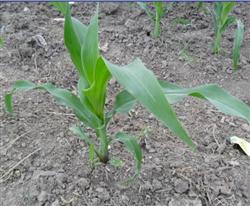
What herbicide is good for weed control at the corn seedling stage? Please note
Using Yunongle herbicide at the corn seedling stage gives very good weed control results. Yunongle is also called nicosulfuron, and its formulated product is a 4% suspension concentrate, with a dosage of 1.5 liters of 4% Yunongle suspension concentrate per hectare. The specific application method is as follows:
I. Application timing: At the 3-5 leaf stage after corn emergence, the 2-4 leaf stage of annual weeds, and before the 6 leaf stage of perennial weeds, when most weeds have emerged, applying the herbicide gives the best weed control effect and is also safe for corn. Yunongle not only has good foliar treatment activity, but also has soil sealing and herbicidal action. Therefore, application should not be too late; if too late, the weeds are larger and their resistance increases.
II. Target pests: annual weeds and perennial broadleaf weeds such as barnyardgrass, wild oat, green foxtail, yellow foxtail, crabgrass, goosegrass, wild millet, Polygonum lapathifolium, Polygonum lapathifolium, Polygonum convolvulus, redroot pigweed, black nightshade, Elsholtzia, Amethystea caerulea, shepherd's purse, cocklebur, velvetleaf, Asiatic dayflower, Bidens tripartita, Rorippa, Thlaspi arvense, Equisetum, Artemisia species, Cirsium setosum, Cirsium japonicum, and Ixeris denticulata. It has good efficacy against Chenopodium album, Chenopodium serotinum, Kochia scoparia, Galeopsis bifida, reed, and others.
III. Application technique: When soil moisture and air temperature are suitable, it is conducive to the absorption and translocation of Yunongle by weeds. Application is not suitable during long-term drought, low temperature, and when relative air humidity is below 65%. Generally, application should be chosen in the morning and evening when the temperature is low and the wind is light; under drought conditions, it is best to add a surfactant when applying. If there is long-term drought but rain is expected soon, wait until after the rain when field humidity improves before applying, or if irrigation conditions are available, apply after irrigation. Although the application time is delayed, the weed control effect will be better than applying before the rain.
For manual application, it is best to use a fan-shaped nozzle, applying along the ridge, spraying one ridge at a time, with fixed nozzle height, pressure, and walking speed, and not swinging the spray left and right, to ensure uniform spraying. The application rate for band spraying at the seedling strip should be calculated according to the ridge spacing and spray width, that is, the actual sprayed area. After application, combining mechanical intertillage and strengthening field management will help control later weeds.
IV. Mixing: Per hectare, use 0.75 liters of 4% Yunongle plus 375 milliliters of 72% 2,4-D butyl ester plus 2 liters of 40% atrazine, and add 1% of the spray volume of a vegetable oil synergist such as Kuaide 7, Xindebao, Kelite, Heisen, etc., to accelerate the absorption and translocation of weeds to Yunongle and other herbicides, with an obvious synergistic effect (2,4-D butyl ester can only be used after a sensitivity test is done on the corn variety). Under drought conditions, stable efficacy can also be obtained. When weeds are small and moisture is good, use a low rate of Yunongle; when weeds are larger and conditions are dry, use a high rate. Per hectare, mixing 100 grams of 70% Saike plus 0.75-1.0 liters of 4% Yunongle can give good efficacy and safety. For manual knapsack sprayer application, the spray volume is 300-400 liters per hectare, and for tractor sprayer, 150 liters. Ultra-low-volume spraying cannot be carried out, and handheld ultra-low-volume sprayers and knapsack motorized sprayers such as Taishan-18 and Dongfanghong-18 cannot be used.
V. Note: After rotation, there is phytotoxicity to subsequent crops such as sugar beet, Chinese cabbage, and spinach.
Click to get more herbicide application techniques
Click to get more pesticide application techniques