How to Do Chemical Weed Control in Corn? A Detailed Guide to Practical Methods
How is chemical weed control used in corn cultivation? Please give an introduction. Chemical weed control has been widely applied at all stages of corn growth. Because different regions have different climate characteristics and planting habits, the sowing and cultivation times of corn vary. According to how early or late the planting is done, corn is usually divided into spring corn and summer corn. For spring...
How is chemical weed control used in corn cultivation? Please give an introduction
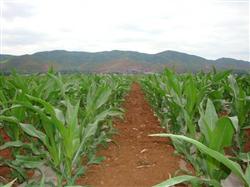
Chemical weed control has been widely applied at all stages of corn growth. Because different regions have different climate characteristics and planting habits, the sowing and cultivation times of corn vary. According to how early or late the planting is done, corn is usually divided into spring corn and summer corn. For the pattern in which weeds and corn grow in sync in spring and summer corn fields, the basic chemical weed control methods are the same, but the main factors to consider are temperature, soil type, corn variety and cultivation habits. Reasonably choosing herbicides not only reduces the labor intensity and shortens the working time of farmer friends, but also lowers cultivation costs and achieves the goal of increasing yield.
Chemical weed control in corn fields can be divided into three stages according to the growth period of corn:
Stage one: Closed treatment after corn sowing and before emergence
This period is mainly after wheat harvest or after the soil surface has been fully prepared, when weeds have emerged only slightly or not at all, and closed treatment can be used after corn sowing. The herbicides applied are mainly "amide" and "triazine" herbicides, such as the mixture of "acetochlor", "propisochlor" and "atrazine". Currently, the herbicides with relatively good performance on the market include "Xiyu", "Bangmixiao" and others. Their mechanism of action is that by spraying on the soil surface, the liquid forms a 1 cm thick herbicidal soil layer on the surface; when weeds emerge and come into contact with this herbicidal soil layer, they absorb it through young buds or young stems, thereby killing the weeds. Therefore, when applying the above products for weed control, the soil surface should not be disturbed for a relatively long period. When spraying, one should walk backward and spray evenly, otherwise the efficacy may be affected.
Pre-emergence weed control in corn fields is greatly affected by factors such as weather, soil type, soil surface conditions, application technique and dosage, and efficacy is often unstable. However, closed treatment of corn plays a key role in corn growth. In the early stage, crops have a weak ability to compete with weeds for fertilizer and water, and they need a relatively good environment to grow effectively. In this way, weed emergence can be limited to a greater extent, providing a strong guarantee for the later weed control effect. It should be noted that some weeds have already partially emerged after corn sowing and before emergence. At this time, "Tianshan" (200 g/L aqueous solution) can be used in combination for comprehensive weed control (that is, combining closed treatment and killing), which can control both emerged and non-emerged weeds. However, it should be noted that "Tianshan" should be used immediately after corn sowing.
Stage two: Stem and leaf treatment in the early post-emergence stage of corn
If previous application was affected by farming schedules or weather, or if closed treatment was poor due to weather, wheat stubble and other reasons, some weeds that emerge in the early post-emergence stage of corn can also be chemically controlled, thereby controlling early weeds in the field, such as the "nicosulfuron" series of products. Specific varieties include "Yunongle", "Jinyulao", "Yumijiancaosha", "Yuzhidun" and others. At the same time, according to the weed situation in the field, they can also be mixed with products such as "Dunlong" (fluroxypyr) to broaden the weed spectrum and control broadleaf weeds.
Because weed species differ among corn fields, and different herbicides control different weeds, it is necessary to choose suitable herbicide varieties. For example, "nicosulfuron" has a relatively ideal effect on purple nutsedge and grass weeds, but a relatively poor effect on broadleaf weeds; "Dunlong" has a good effect on broadleaf weeds but a poor effect on grass weeds. Therefore, suitable products should be selected according to the weed situation in the field for weed control.
When spraying the whole field for post-emergence stem and leaf treatment in corn, first pay attention to application safety. Improper post-emergence application can cause symptoms of phytotoxicity such as albinism, dwarfing and leaf curling (first it is necessary to determine whether these are caused by pests or diseases). The reasons for phytotoxicity generally include the following: first, increasing the dosage; second, applying under high humidity and high temperature conditions; third, mixing with other products; fourth, improper application timing or restrictions related to corn varieties. Taking "nicosulfuron" as an example, the application period is from the 2-leaf to 7-leaf stage after corn emergence. It cannot be used on sweet corn, seed production field corn, etc., cannot be mixed with organophosphorus pesticides, and organophosphorus pesticides cannot be used within seven days before and after application. Therefore, when using post-emergence corn products, in addition to consulting dealers in detail, one should also carefully read the relevant contents of the product label when using them, so as to apply them correctly. Compared with pre-emergence closed weed control, post-emergence application is less affected by the environment and is the direction of future weed control in corn fields.
In agricultural production practice, post-emergence herbicide use can adopt along-row spraying, which is a relatively mature application technique. Our Hansheng Company has relatively successful examples in many places in China. It mainly has the following characteristics: first, post-emergence along-row spraying in corn fields can minimize the damage of herbicides to the relatively tender corn leaves; second, weed control is intended to control weeds growing in the field. If broadcast spraying is used in the field, the area of corn contacted by the herbicide will be larger, which not only wastes the liquid but, more importantly, may reduce the control effect; along-row application can solve this problem and thereby improve the weed control effect.
Stage three: Directed treatment before row closure in the middle stage of corn
If new weed damage occurs because the earlier application was not ideal or because of excessive rain, products such as "Tianshan", "Yumijiancaosha" and "Jinyulao" can still be used for directed spraying. At this time, the corn has already grown relatively tall (60-80 cm). Using directed spraying between rows can protect the crop while also removing all weeds. "Tianshan" (200 g/L aqueous solution) is a non-selective herbicide. During application, do not spray the product onto the crop, and a spray shield should be added. The main reason affecting the efficacy of "Tianshan" is the cleanliness of the water used when preparing the product. In order to improve efficacy, pure tap water should be used to prepare the solution, and water containing more impurities such as river water and well water should not be used. Under conditions of sufficient sunlight, "Tianshan" takes effect quickly, and weed death can be seen within a few hours.
In summary, weed control technology in corn fields has become an important part of the corn planting process. We should make as much use as possible of chemical herbicides to control weeds, reduce the impact of weeds on corn growth, and achieve the goals of increasing yield and income.
Click to get more herbicide application techniques
Click to get more pesticide application techniques
Click to get more corn planting techniques