-
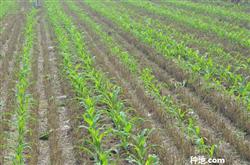
How to correctly apply herbicides during the maize seedling stage
How should herbicides be applied to maize seedlings? Please give guidance. For post-emergence chemical weed control in maize, herbicides must be strictly selected and mixed and applied according to the instructions. In plots with severe weeds, the dosage may be increased by 15-20% above the rate stated in the instructions. Method: for foliage treatment, it must be done before maize reaches the 6-leaf stage and before weeds reach the 2...
-
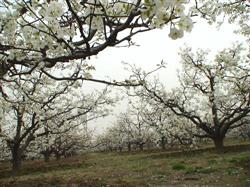
Which types of pesticides are resistant to rain washing?
When should fruit trees not be sprayed with pesticides? Please advise: to improve fruit yield and quality, reduce the number of pesticide applications, and extend the productive life of the trees, the key is to master the following critical periods in pest and disease control. The first is the period when buds clearly swell, that is, the bare-branch spray. During this period, spray a high-concentration fungicide plus insect...
-
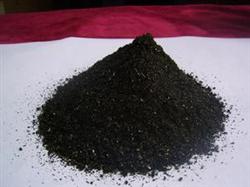
Can potassium permanganate really be used as a pesticide?
Can potassium permanganate be used as a pesticide? Please explain. Everyone knows that potassium permanganate is a strong redox agent, and in medicine it is a surgical drug commonly used for both humans and animals, commonly known as PP powder, and its solution has strong bactericidal, disinfecting and antiseptic effects. Experiments have shown that using solutions of different concentrations of it to control flower seedling damping-off disease...
-
Detailed Guide to Acetochlor Soil Sealing Treatment Methods
How is acetochlor used for soil sealing treatment? Please explain that acetochlor is a selective pre-emergence herbicide and should generally be applied before weeds emerge, used as a soil sealing treatment agent. When the weeds in the above field are at the needle stage and soil moisture is suitable, using thifensulfuron-acetochlor also gives good weed control, but it is best to choose isoproturon...
-
Can acetochlor be used for soil-sealing weed control in barley fields?
Can acetochlor be used for soil sealing in barley fields? Please advise: acetochlor wettable powder is a mixed formulation of thifensulfuron-methyl and acetochlor, and both of these active ingredients can be applied in barley fields. You can refer to the application method for wheat fields in the product instructions, spraying after sowing and before emergence to carry out soil-sealing treatment, or you can...
-
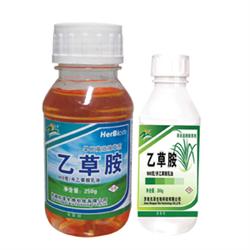
Introduction to the correct application methods of acetochlor
How is acetochlor applied? Please explain. Acetochlor is also known as Harness and acetochlor. It is suitable for soybeans, oil crops, peanuts, corn, cotton, vegetables, etc. It controls annual grass weeds and some broadleaf weeds. It is ineffective against perennial weeds. Acetochlor is a pre-emergence soil treatment, applied before crop emergence around sowing time...
-
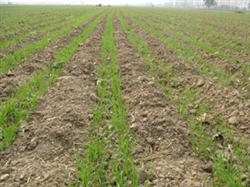
Can acetochlor be used for weed control during the wheat seedling stage?
Can acetochlor be used on wheat seedlings? Please advise: acetochlor must not be applied to wheat seedlings. Wheat is fairly sensitive to acetochlor from just emerging until before the 2-leaf stage, and applying the herbicide at this time easily causes herbicide injury. In wheat fields, acetochlor should be applied after sowing but before emergence, or after the wheat reaches the 2-leaf 1-heart stage. After application, keeping the field moist gives a better sealing effect; note that the soil...
-
What types of adjuvants are commonly used with glyphosate?
What adjuvants are commonly used with glyphosate? Please introduce the main SAA currently used as glyphosate adjuvants: tallow fatty amine ethoxylates, alkyl polyglycosides, fatty alcohol ethoxylates, silicone SAA, betaines, amino acid-based SAA, anti-drift agents, anti-hard-water agents, synergists, etc. Glyphosate is a low...
-
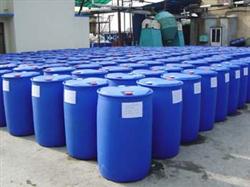
What is glyphosate aqueous solution? A detailed introduction for you
What is glyphosate aqueous solution? Please note that commercially available glyphosate comes in many forms and many formulations, such as glyphosate isopropylamine salt, glyphosate ammonium salt, and glyphosate, among which 10% glyphosate aqueous solution and 41% glyphosate isopropylamine salt account for the vast majority. According to Announcement No. 1158 jointly issued by the Ministry of Agriculture and the Ministry of Industry and Information Technology...
-
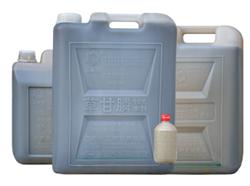
What is the difference between glyphosate and glufosinate? Explained clearly in one article
What is the difference between glyphosate and glufosinate? Compared with glyphosate, glufosinate acts faster, and it can also control some weeds that have developed resistance to glyphosate. Glufosinate is a phosphinic acid non-selective contact herbicide and a glutamine synthetase inhibitor with partial systemic activity. After application...
条件筛选