How to prevent pesticide damage to crops? A detailed guide to practical prevention methods
How to prevent crops from suffering pesticide damage? Please give an introduction to prevention methods. Correctly selecting pesticides: when choosing pesticides, understand their characteristics and apply them strictly according to the control scope stated on the label. When purchasing, guard against counterfeit and inferior products, and ask for a purchase invoice or credit card.
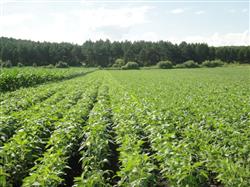
How to prevent crops from suffering pesticide damage? Please give an introduction to prevention methods
Correctly select pesticides. When choosing pesticides, understand their characteristics and apply them strictly according to the control scope stated on the label. When purchasing, guard against counterfeit and inferior products, and ask for a purchase invoice or credit card.
Calculate correctly and weigh accurately to avoid excessive use. When using pesticides, pay attention to the content of the active ingredient in the product, accurately prepare the liquid concentration, and do not arbitrarily increase the concentration or the number of applications.
Scientifically prepare the pesticide. When preparing, first make a stock solution. Add half the clear water to the tank first, then add the stock solution, then add enough water to dilute to the required concentration. Stir thoroughly when diluting, and add an appropriate amount of sticker to improve the physical properties of the liquid.
Scientific mixing. Mixing pesticides must have clear control goals and requirements. After mixing, it should both reduce control costs and increase efficacy and expand the control range; it should be highly effective while also being low in toxicity and low in residue to ensure the safety of agricultural products. When mixing pesticides, pay attention to negative reactions between pesticides; they must not cause physical, chemical, or biological interference. Generally, alkaline pesticides and acidic pesticides should not be mixed, microbial insecticides and chemical fungicides, or microbial fungicides, should not be mixed, and copper-containing pesticides and zinc-containing pesticides should not be mixed.
Pay attention to the climate. Do not apply pesticides when the temperature is too high, the weather is too hot, the humidity is too high, the rain or dew has not dried, the wind speed is too high, or rain is imminent. Also avoid using pesticides during the sensitive period of the crops.
Adjust the spray equipment well and spray evenly. For knapsack sprayers, change conical nozzles to fan nozzles, and change serpentine spraying to straight-line spraying, to reduce repeated spraying and improve spray quality. When spraying, consider the wind direction and pay attention to protecting nearby sensitive crops. At the same time, spraying should be uniform, and the droplets should be fine and even. The spray equipment must be thoroughly cleaned before and after use.
Click to get more insecticide application techniques
Click to get more pesticide application techniques