-
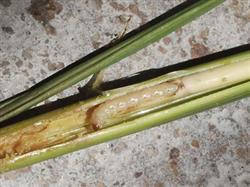
What pesticide gives good control results against rice stem borers?
What pesticide should be used to control rice stem borers? Please give guidance. The rice striped stem borer, the rice yellow stem borer and the rice pink stem borer are all commonly known as stem borers. After these pests bore into the rice stems and cause damage, the commonly used pesticides such as monosultap, bisultap, triazophos, diazinon, acephate, phenthoate, chlorpyrifos, cartap and abamectin...
-
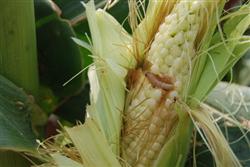
What are the control methods for corn borers?
How to control corn borers? Please explain the methods. Corn borers (corn borer) are a major pest of corn. In years with severe infestation, they can reduce corn yields by more than 20%. Their larvae bore into the main stalk and ears, which can break the main stalk of corn, causing reduced yield and quality. In the past, controlling corn borers mostly used methods such as pouring pesticide solution into the whorl, spraying, or applying poisoned soil into the whorl, which was labor-intensive and ineffective, and easily caused crop damage and human and livestock poisoning. Using granule formulations to control corn borers not only has low cost, saves labor, and is effective, but also is unlikely to cause human and livestock poisoning or crop damage. The following points should be mastered:
-
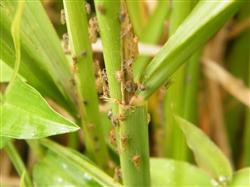
How to control brown planthopper? Detailed explanation of control methods and techniques
How to control brown planthopper? Please introduce methods for controlling brown planthopper. It is necessary to apply insecticides at the appropriate time according to the occurrence and damage characteristics of brown planthopper, and select suitable insecticides according to the occurrence situation of brown planthopper in the field. Occurrence and damage characteristics of brown planthopper: brown planthopper is a migratory pest and cannot overwinter north of 25°N...
-
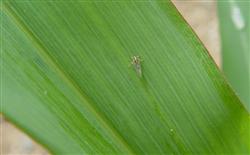
What pesticide should be used to control the small brown planthopper at the rice heading stage?
What pesticide should be used to spray for the small brown planthopper at the rice heading stage? Please note that for the small brown planthopper at the rice heading stage, the following pesticides can be used for reference: the small brown planthopper not only transmits the virus and causes viral diseases such as rice stripe virus disease, but also concentrates on the panicles to cause damage during the heading stage of late rice. The experiment set up per mu with 40% chlorpyrifos emulsifiable concentrate 100 ml, 10% nitenpyram aqueous solution 3...
-
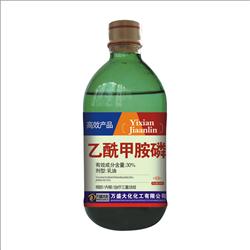
How effective is acephate? A comprehensive analysis of its insecticidal efficacy
How effective is acephate? Please introduce its characteristics. Acephate is a systemic insecticide with stomach-poison and contact action, and it can also kill eggs; it has a certain fumigant effect and is a slow-acting insecticide. If mixed with pesticides such as carbaryl and dimethoate, it has a synergistic effect and can extend the residual effectiveness period. Scope of application: suitable...
-
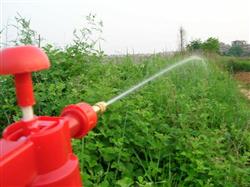
What are the precautions for glyphosate weed control?
What should be noted when using glyphosate for weed control? Please explain. The precautions for using glyphosate for weed control are: 1. Glyphosate herbicide is a non-selective herbicide, and when applying it, never let it contaminate crops, so as to avoid herbicide damage. 2. For perennial malignant weeds, such as cogon grass, purple nutsedge, etc., apply again 1 month after the first application...
-
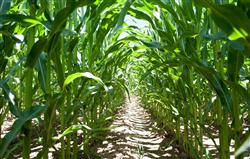
How to Control Weeds in Corn? A Detailed Guide to Practical Weed Control Methods
How to prevent weed damage in corn? Please provide prevention methods. Weed damage is one of the factors restricting high and stable corn yields. The annual area affected by weeds in corn fields in China exceeds 350 million mu-times, causing about 9.5 billion kg in corn losses each year. In response to the weed species present and their damage characteristics, an integrated control strategy should be adopted that takes agricultural control as the foundation, ...
-
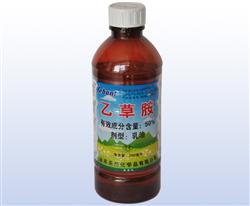
What precautions should be taken when using acetochlor in dryland?
What should be noted when using acetochlor in dryland? Please give an introduction. When using acetochlor in dryland, the following four points should be noted: Soil moisture. A certain level of soil moisture helps improve the weeding effect. If continuous drought weather occurs during the application period, the weeding effect will be greatly reduced. Therefore, watering first to increase soil moisture and then applying the chemical is...
-
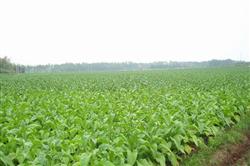
How to correctly use napropamide in tobacco fields?
How should napropamide be used in tobacco fields? Please give guidance. Tobacco seeds are small, and the seedlings grow slowly, so they are often harmed by weeds. The main weeds include: foxtail, Chinese sprangletop, barnyardgrass, goosegrass, shortawn foxtail, cocklebur, flatsedge, cleavers, chickweed, plantain, dandelion, etc. Weed control in tobacco fields can...
-
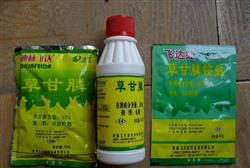
How to Use Glyphosate Herbicide and Its Soil Residual Period
How do you use glyphosate? Please give an introduction. Glyphosate only has a killing effect after it contacts green tissue. Because various weeds have different sensitivities to glyphosate, the dosage also differs. 1. For weed control in orchards, mulberry fields, etc., to control annual weeds, use 0.5-1 kg of 10% aqueous solution per mu; to control perennial weeds, use 10...
条件筛选