What precautions should be taken when using acetochlor in dryland?
What should be noted when using acetochlor in dryland? Please give an introduction. When using acetochlor in dryland, the following four points should be noted: Soil moisture. A certain level of soil moisture helps improve the weeding effect. If continuous drought weather occurs during the application period, the weeding effect will be greatly reduced. Therefore, watering first to increase soil moisture and then applying the chemical is...
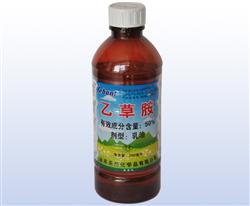
What should be noted when using acetochlor in dryland? Please give an introduction
When using acetochlor in dryland, the following four points should be noted:
Soil moisture. A certain level of soil moisture helps improve the weeding effect. If continuous drought weather occurs during the application period, the weeding effect will be greatly reduced. Therefore, watering first to increase soil moisture and then applying the chemical is one of the key measures to improve the efficacy of acetochlor.
Application timing. Acetochlor is a selective pre-emergence herbicide. It can only exert its herbicidal efficacy when used after crop sowing and before weeds emerge, and the earlier the application, the better. Acetochlor is basically ineffective against weeds that have already emerged.
Land preparation quality. Poor land preparation quality and failure to thoroughly remove old weeds will directly affect the weeding effect. In addition, uneven soil surfaces make it impossible to spray the solution evenly, which also affects the weeding effect.
Phytotoxicity issues. It is prohibited to use acetochlor for weed control in fields of sensitive crops such as cucumber, rice, spinach, wheat, Chinese chives, millet, and sorghum. When using acetochlor for weed control on crops such as tomato, corn, soybean, and rapeseed, the dosage per mu is limited to 50-75 milliliters, otherwise phytotoxicity is likely to occur.
Click to get more herbicide application techniques
Click to get more pesticide application techniques