-
How to Cleverly Use Non-Selective Herbicides in Summer Sesame Fields
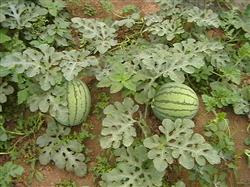
When watermelons are cultivated in greenhouses, small arched sheds and with plastic film mulch, the temperature and humidity conditions inside the protected area are suitable for weed growth, and manual weeding is inconvenient, resulting in vigorous weed growth and severe damage. Few herbicide products are registered for use in watermelon fields in China, and many farmers misuse herbicides in watermelon fields, leading to poor weed control results...
-
How to Prevent Corn Herbicide Damage to Watermelons
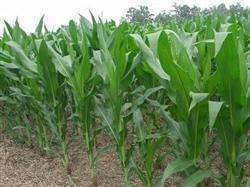
Some readers have asked: some corn field herbicide products are labeled as not to be used on certain corn varieties. Is this because different corn varieties have different sensitivities to these herbicides, and what issues should be noted when using these herbicides in production? Different varieties of corn do indeed differ in their sensitivity to certain herbicides...
-
What are the commonly used herbicides for aquatic vegetable fields?
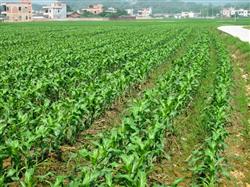
Properly grasp the application time, generally spraying after corn sowing; spraying herbicides when the ground is moist gives the best effect. Strictly control the dosage according to the amount stated in the instructions, using a reasonable dose; too much easily causes phytotoxicity, while too little fails to achieve the proper effect. Avoid spraying on windy days; when spraying, it is best to choose weather with wind...
-
When is the best time to apply wheat herbicide?
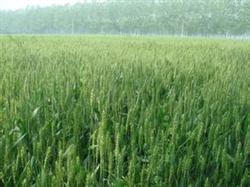
Weeds in wheat fields show their first and largest emergence peak 15-20 days after wheat is sown, and some weeds may show another small emergence peak in March of the following year. Through extensive experimental observation, there are 3 key periods for weed control in wheat fields. 1. Before wheat emergence after sowing is an important period for controlling weeds in wheat fields...
-
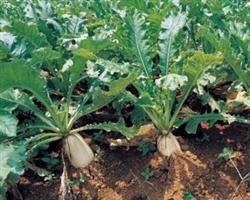
What herbicides are suitable for autumn radish fields
For pre-sowing soil sterilization, you can choose 48% trifluralin emulsifiable concentrate 100-150 ml (dosage per mu, the same below), 48% butralin emulsifiable concentrate 200 ml, 33% pendimethalin emulsifiable concentrate 100-150 ml, 50% acetochlor emulsifiable concentrate 75-150 ml, and spray each mixed with 50 kg of water. Trifluralin and similar products are prone to photodegradation and volatilization, which reduce efficacy, so immediately after spraying...
-
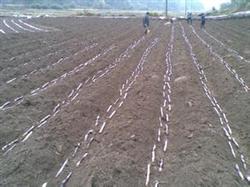
Can sugarcane herbicides and insecticides be mixed and used together?
First: The weed-control spectrum of the two herbicides should differ. Second: A fast-acting agent should be mixed with a slow-acting agent, and a long-lasting agent should be mixed with a short-lasting agent. Third: An agent with high diffusibility and mobility in the soil should be mixed with an agent with low diffusibility and mobility. Fourth: ...
-
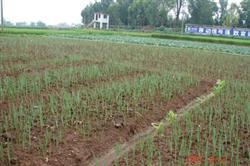
What herbicides can be used after garlic emerges
In garlic fields dominated by grassy weeds, after garlic emerges and before the weeds reach the 3-leaf stage, spray 50-70 ml of 5% quizalofop-p-ethyl emulsifiable concentrate per mu mixed with 30 kg of water. Soil moisture should be good at the time of application, and the temperature should be above 12°C, to help improve the weed control effect. In fields where grassy weeds, sedge weeds and broadleaf weeds are mixed...
-
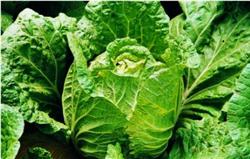
What herbicide works well in napa cabbage fields?
Currently, the herbicides registered in China for napa cabbage include 33% pendimethalin emulsifiable concentrate (100-150 ml per mu), applied as a soil treatment after sowing but before emergence, or before transplanting the cabbage; it can control some grasses and broadleaf weeds. If using pendimethalin over a large area, it is advisable to test on a small area first. For soil treatment...
-
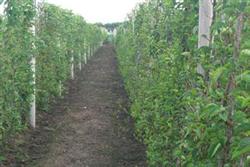
Diagnostic Methods and Prevention and Control Measures for Herbicide Damage
1. Soil residual herbicide damage: Farmland where long-residual herbicides such as triazines, sulfonylureas, and imidazolinones have been used cannot be planted with Schisandra chinensis within two years. If, due to a lack of understanding of the herbicide use on the planting plot in the previous two years, the herbicide damage to Schisandra chinensis is relatively severe, it cannot be remedied, because in current agricultural production there is still...
-
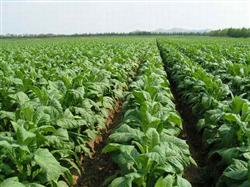
How to remedy herbicide damage in tobacco leaves
① After herbicide damage occurs, promptly spray "Tianda 2116" tobacco-specific formula, which plays an important role in eliminating or alleviating herbicide damage. ② Strengthen agricultural management: irrigation, drainage, and loosening the soil to promote tobacco growth and accelerate herbicide degradation. ③ You can use plant ash or lime, or apply plant growth...
条件筛选