How to Cleverly Use Non-Selective Herbicides in Summer Sesame Fields
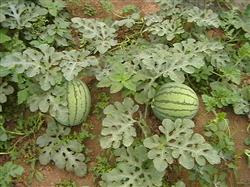
When watermelons are cultivated in greenhouses, small arched sheds and with plastic film mulch, the temperature and humidity conditions inside the protected area are suitable for weed growth, and manual weeding is inconvenient, resulting in vigorous weed growth and severe damage. Few herbicide products are registered for use in watermelon fields in China, and many farmers misuse herbicides in watermelon fields, leading to poor weed control results...
 Weeds in summer sesame fields generally emerge 3-10 days earlier than the sesame and grow rapidly. This period before the sesame emerges can be fully utilized to control the weeds that have already emerged using paraquat, spraying 200 ml of 20% paraquat aqueous solution per mu mixed with 40 kg of water. This herbicide is a contact non-selective herbicide. After application it is rapidly absorbed by plant leaves, quickly terminating photosynthesis and chlorophyll synthesis. Leaves begin to change color 2-3 hours after the chemical contacts them, but it cannot translocate, so only the parts that receive the chemical are damaged. Once the chemical contacts the soil it is deactivated and loses efficacy, leaving no residue, and it has no effect on sesame emergence.