-
How Is Fertilizer Distributed in the Soil? An Analysis of the Principles Behind Nutrient Fate
After fertilizer is applied to the soil, only a small portion of its nutrients is taken up and used by crops, about 1/3 to 1/2 of the application amount, while most of the remaining nutrients are lost in different forms. Taking the nitrogen, phosphorus and potassium fertilizers we commonly apply as an example, after they are applied to the soil, the fate of their nutrients can be broadly divided into the following...
-
Fertilizer mixing requires care; only scientific combinations boost effectiveness
Many vegetable growers are in the habit of buying a large quantity of fertilizer at one time when prices are low and storing it for use throughout the year. Although this practice is workable, it is quite unsuitable for certain chemical fertilizers. Because vegetable growers have no dedicated place to store fertilizer, storing it casually will cause some fertilizers during storage to...
-
Potassium chloride is suitable for use in combination with alkaline fertilizers
Potassium oxide is a physiologically acidic fertilizer, and when applied to soil over the long term, attention should be paid to applying it together with alkaline fertilizers such as lime to prevent soil acidification; it is most suitable for application on calcareous and alkaline soils. Potassium chloride must not be applied on saline soils, as it will worsen salt damage. Potassium chloride contains chloride ions, and chloride ions are related to crop quality. At present...
-
What types of fertilizers are prohibited for crops?
Fertilizers are essential for crop production, but not all fertilizers can be used. Some fertilizers not only fail to increase crop returns when applied to crops, but also cause pollution and affect consumer health. Below is an introduction to the types of fertilizers prohibited for use on crops. 1. Organic fertilizers made from urban, hospital, and industrial area waste, harmful sludge, etc. as organic raw materials...
-
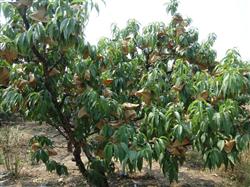
What are the advantages and disadvantages of slow-release fertilizers?
There are many varieties of fruit trees, and their life can be divided into five stages: the young tree stage, the early fruiting stage, the full fruiting stage, the late fruiting stage, and the aging stage. The demand for nutrient elements differs at each stage. During the young tree stage, because the root system and above-ground parts grow vigorously, a large supply of nitrogen and phosphorus is needed; during the fruiting stage, because of the large amount of fruit produced, there is also a need for...
-
How to use fruit tree fertilizer correctly? A detailed explanation of fertilization methods
Fellow farmers must be cautious when buying fertilizer. Since some farmers do not understand fertilizer production, they must pay attention to the following issues when purchasing, which will bring you absolute benefits: the "four don'ts." First, don't covet small bargains and ignore quality by buying fake or inferior fertilizer, so as to avoid causing...
-
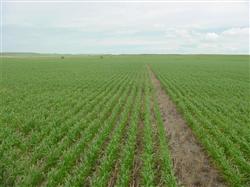
Why can't functional fertilizers be used continuously on their own?
Functional fertilizers refer to fertilizers that, in addition to containing a small amount of nutrient elements to supply vegetable growth, also have other functions, such as promoting vegetable root growth, improving plant stress resistance, or enhancing vegetable disease resistance. Therefore, when vegetables show certain problems, vegetable growers often use functional fertilizers to regulate plant growth...
-
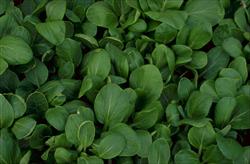
A Detailed Explanation of the Principle of Foliar Fertilizer Absorption by Plant Leaves
The main function of leaves is to carry out photosynthesis using solar energy, while also performing certain biochemical transformations on the synthesized products and transporting them to other organs. Leaves can also continuously exchange substances with the external environment. The form and mechanism of nutrient absorption by the leaf surface are similar to those of roots, and conform to the five basic principles of rational fertilization...
-
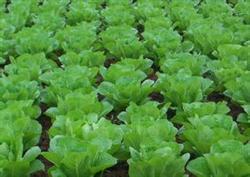
Chemical fertilizers must be applied with care: ten major taboos to avoid
Fertilizer is the "food" of vegetables. Apart from carbon, hydrogen and oxygen, the 13 nutrient elements are all supplied by the soil, and applying base fertilizer is an important measure for replenishing soil nutrients. At present, the types of fertilizers used on vegetables are broadly divided into three categories: organic fertilizers (farmyard manure), inorganic fertilizers (chemical fertilizers) and microbial fertilizers (biological bacterial fertilizers)...
-
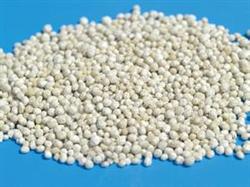
What methods are there to improve fertilizer use efficiency?
1. Fertilizer application rate. The application rate of compound fertilizer is based on the amount of nitrogen. Compound fertilizers contain multiple nutrients and mostly belong to the nitrogen, phosphorus and potassium three-element type. Except for special fertilizers for legume crops, which are mainly phosphorus and potassium fertilizers, all take nitrogen as the main nutrient, and in the nutrient ratio nitrogen is always dominant, matched with corresponding phosphorus and potassium nutrients. For one...
条件筛选