What is the principle of foliar fertilization? Explained clearly in one article
First look at the vegetable type: different vegetable types have different fertilizer requirements. For example, leafy vegetables prefer nitrogen, legumes prefer phosphorus and potassium, Chinese cabbage, cauliflower, radish and others are more sensitive to boron fertilizer, legumes and cruciferous plants are more sensitive to molybdenum fertilizer, short-term vegetables require less fertilizer, vegetables that continuously flower and fruit require more fertilizer, and root and tuber vegetables are sensitive to chloride, ...
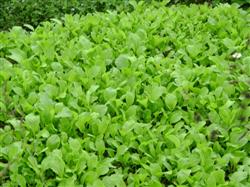 The root system is the main organ for crops to absorb nutrients. In addition to the root system, the leaves (or stems) of crops can also absorb nutrients through stomata, osmosis and ion exchange. Fertilizers used for foliar fertilization are usually called foliar fertilizers. Foliar fertilization is an important supplement to crop nutrient absorption, used to make up for the deficiency of nutrient absorption by the root system. However, foliar fertilization cannot replace the soil application of macroelement fertilizers.
Characteristics of foliar fertilization
Compared with soil fertilization, foliar fertilization mainly has the following characteristics:
1. Highly targeted, supplementing whatever is lacking;
2. Quick effect, after absorption by the leaves it is directly used by the crop, shortening the transport pathway;
3. It avoids contact with the soil, reducing losses from soil fixation, volatilization, leaching, etc., and the fertilizer utilization rate is high;
4. Small dosage, saves fertilizer, reduces costs;
5. Trace element fertilizers are mostly supplemented by foliar fertilization;
6. When the crop root system is not well developed at the seedling stage, when root function declines in the middle and late growth stages or under adverse conditions, or during the peak period of nutrient absorption, spraying foliar fertilizer can quickly and effectively supplement the insufficient nutrient absorption by the roots.