What are the common preparation methods for foliar fertilizers?
To produce pollution-free vegetables, in addition to selecting excellent varieties, practicing health-promoting cultivation, vigorously applying biological pesticides and rationally using chemical fertilizers, there are also many requirements for the soil conditions of the planting site and the fertilization methods. First, producing pollution-free vegetables requires pollution-free soil. As farmland for producing pollution-free vegetables, there must be good...
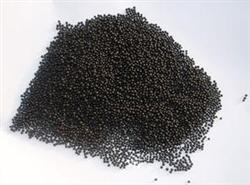 In spring, various crops enter a stage of accelerated growth. This period is a key time for spraying foliar fertilizers. Some preparation methods for foliar fertilizers are introduced below.
Urea solution
The commonly used concentration is 0.5%-1%, that is, 0.5-1 kg of urea added to 100 kg of water. Urea with a biuret content exceeding 1.5% cannot be used as a foliar fertilizer.
Urea-soap mixture solution
It has two functions: supplying nitrogen and killing aphids. Take 0.5-1 kg of urea, add it to 100 kg of water, then dissolve in 70-100 g of washing powder. Mix just before spraying; after mixing, it cannot be stored for long.
Diluted biogas slurry
Biogas slurry is rich in readily available nitrogen, is easily absorbed by leaves, and has a quick fertilizer effect. Take 10 kg of filtered biogas slurry and add 100 kg of water for spraying. Use immediately after mixing to avoid nitrogen volatilization.
Potassium dihydrogen phosphate solution
300 g of potassium dihydrogen phosphate added to 100 kg of water for spraying.
Potassium sulfate solution
The commonly used concentration is 1%-1.5%; add 1-1.5 kg of potassium sulfate to 100 kg of water.
Plant ash extract
Take 5-7 kg of fresh plant ash, add 100 kg of water, stir, let stand for 14 hours, and use the clarified liquid for spraying.
Superphosphate extract
It has the functions of supplementing phosphorus and controlling cotton pests. Take 2-3 kg of superphosphate, add 100 kg of water, stir thoroughly, let stand for 24 hours, then filter, and use the filtrate for spraying.
Mixed nitrogen-phosphorus-potassium solution
Prepare 100 kg of superphosphate extract at a concentration of 2%-3%, then add 0.3-0.5 kg of urea and 1-1.5 kg of potassium sulfate.
Ferrous sulfate solution
Take 200-300 g of ferrous sulfate and add 100 kg of water. Because iron fertilizer has poor mobility in leaves, it should be sprayed several more times, and sprayed evenly and finely, covering both the front and back of the leaves. Adding 50-70 g of washing powder to 100 kg of iron fertilizer aqueous solution gives better results.
Rare earth micro-fertilizer aqueous solution
Spraying on leaf surfaces can increase chlorophyll content and enhance photosynthesis. The spraying concentration is 0.08%-0.1%. Adding 80-100 mL of rare earth micro-fertilizer to every 100 kg of water is sufficient.
Zinc sulfate solution
Take 100-200 g of zinc sulfate and add 100 kg of water. If a small amount of limewater is added to the prepared zinc sulfate aqueous solution, the spraying effect of zinc fertilizer can be improved.
Borax solution
Take 200-300 g of borax and add 100 kg of water. Because borax dissolves slowly in cold water, it can first be dissolved in 4-5 kg of warm water at 45°C, then 95-96 kg of water can be added.
Manganese sulfate solution
Take 50-100 g of manganese sulfate and add 100 kg of water for spraying.
Ammonium molybdate solution
Take 50-100 g of ammonium molybdate and add 100 kg of water for foliar spraying.