Cultivated varieties of the button mushroom (Agaricus bisporus) can be divided into several types according to color and temperature adaptability.
The button mushroom, also called the white mushroom or common mushroom, is one of the most widely cultivated edible fungi in the world. A cultivated variety refers to a strain type that has been selected and bred by humans, has stable traits, and is suited to fruiting under mushroom house or greenhouse conditions. Different varieties differ noticeably in color, fruiting temperature, and marketable traits.
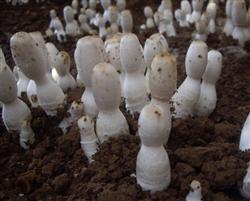
In terms of cap color, cultivated varieties of the button mushroom can broadly be divided into three groups: white, brown (brown mushroom), and cream. White varieties have pure white caps and a round, plump shape, and are currently the mainstream on the fresh market; brown varieties have thicker flesh and a stronger flavor, and are also popular in the markets of some regions. In terms of temperature adaptability, there are also conventional varieties suited to fruiting in autumn and winter and heat-tolerant varieties, so growers can choose according to local climate and cultivation season.
Most strains used in domestic production are hybrid-bred strains, generally characterized by uniform fruiting and good marketability of the fruiting bodies; for example, strains such as As2796 are relatively widely used. When introducing spawn, it should be obtained through proper channels, and a small area should be trial-planted first, expanding the scale only after confirming its fruiting performance locally.
It should be noted that different varieties have slightly different requirements for compost formula, temperature and humidity, and ventilation, so management cannot be generalized. During the fruiting period, keeping the compost temperature, moisture, and air relatively stable and watering with light, frequent sprays helps improve the uniformity and quality of the fruiting bodies and reduce the occurrence of malformed mushrooms and thin-skinned mushrooms.
Related Reading