Watering Methods and Technical Key Points for Button Mushroom Cultivation
How to water button mushrooms during cultivation? What should be noted? Is there any fellow gardener who can explain the key points of watering button mushrooms in production, from casing soil onward until fruiting, in addition to routine management? Proper watering plays an important role in ensuring the number and vigor of mycelium, ensuring the number and uniformity of pinheads, and ensuring the...
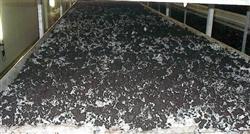 How to water button mushrooms during cultivation? What should be noted? Is there any fellow gardener who can explain
In button mushroom production, from casing soil onward until fruiting, in addition to routine management, the key points of watering button mushrooms should be mastered. Proper watering plays an important role in ensuring the number and vigor of mycelium, ensuring the number and uniformity of pinheads, and ensuring the healthy growth and commercial quality of the fruiting bodies. Therefore, Zhongdiwang has compiled the key points of watering button mushrooms, listed in detail below for fellow gardeners' reference.
Key Point 1. Watering during the mycelial growth stage:
When mycelium emerges on the bed surface, it indicates that the mycelium has reached the bottom of the compost and has fully developed within the soil layer, and has already gained the ability to form mushrooms. At this time, mycelium-pressing water should be sprayed at the appropriate time. At this point, ventilation should be increased, letting strong wind blow into the mushroom shed to make the mycelium on the soil surface lie down; and the amount of water sprayed should be controlled according to the mycelial growth in the soil layer, generally about 1 kg per square meter of compost surface, divided into one application in the morning and one in the evening, sufficient to achieve the purpose of soaking through 1/2 of the soil layer thickness.
After spraying, the mycelium no longer drills out of the soil surface, and combined with strong ventilation, the top layer of soil about 0.5 cm thick loses water and slightly whitens, while the mycelium grows laterally and connects within the soil layer below this thickness, reaching physiological maturity and transitioning toward reproductive growth.
Key Point 2. Watering before fruiting:
Watering before fruiting is sprayed 3 days after the watering during the mycelial growth stage. According to the moisture status of the base compost and soil layer, about 3 kg per square meter can be sprayed in 4 applications, until the casing soil layer is thoroughly wet but with no water seeping downward. If the soil layer is not thoroughly wet, it indicates insufficient water; if water seeps from the soil layer into the base compost, it indicates excessive water use, which may adversely affect subsequent fruiting. When spraying mushroom-forming water, ventilation should be strengthened, and forced ventilation measures should be adopted where conditions permit. After 2-3 days, small mushroom buds can be seen emerging.
Key Point 3. Watering during the fruiting stage:
Watering during the fruiting stage is similar to watering before mushroom formation. At this time mushroom buds have already emerged; note that the water temperature should be as close as possible to the shed temperature, and the temperature difference must not be too large; and where there are mushroom buds, spray frequently and lightly, with a sufficient total amount, but still be careful not to let water seep from the soil layer into the base compost - this point is very important.
Key Point 4. Daily watering after fruiting:
In combination with maintaining the humidity of the mushroom shed, the number of sprayings and the amount of water used should be controlled daily according to factors such as temperature and ventilation, keeping the air humidity at around 90% and the casing surface basically moist, but with whitening at the ventilation holes and near the doorway - these are all normal.
As the fruiting bodies continue to grow, the number of sprayings and the amount of water used should also continuously increase. When the mushroom cap diameter reaches 1 cm, a three-dimensional edible mushroom nutrient solution can be sprayed directly, once every other day, and water can be sprayed onto the fruiting bodies according to the humidity inside the shed.
How to Prevent Button Mushroom Death
Management Methods for Button Mushroom Cultivation
Click to Get More Button Mushroom Cultivation Techniques
Click to Get More Edible Mushroom Cultivation Techniques