How to Grow Wine Cap Mushrooms in an Orchard? A Detailed Guide to Cultivation Techniques
How do you cultivate wine cap mushrooms in an orchard? Here is an introduction to the method. To cultivate wine cap mushrooms in an orchard, you can refer to the following method: using pure rice straw or wheat straw for raw-material cultivation of wine cap mushrooms in the orchard, each square meter can produce 10-15 kg of fresh mushrooms, each mu can be used to cultivate 100 sq m, yielding 1000-1500 kg of fresh mushrooms, after...
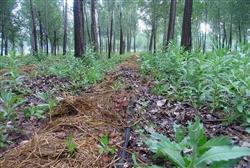 How do you cultivate wine cap mushrooms in an orchard? Here is an introduction to the method
To cultivate wine cap mushrooms in an orchard, you can refer to the following method:
Using pure rice straw or wheat straw for raw-material cultivation of wine cap mushrooms in the orchard, each square meter can produce 10-15 kg of fresh mushrooms, each mu can be used to cultivate 100 sq m, yielding 1000-1500 kg of fresh mushrooms, with very considerable economic returns. Moreover, the materials used for growing the mushrooms are returned to the field on site, improving the soil, and are a top-grade fertilizer for the orchard.
Production season arrangement for wine cap mushrooms:Generally speaking, in northern regions early autumn is the most suitable time for sowing in terms of temperature; the mycelium grows quickly, mushrooms emerge early, and yields are high. The peak mushroom emergence period falls right around New Year's Day and the Spring Festival, when the fresh-sales market is good and economic returns are high.
Orchard selection and mushroom bed preparation:The orchard for cultivating wine cap mushrooms should face south with its back to the north, be sheltered from wind and exposed to sunlight; the soil should be fertile and loose; it should be close to a water source, with convenient drainage and irrigation, no water accumulation after rain, and a naturally semi-shaded environment. Low-lying land and overly damp, shady sites should be avoided. The mushroom bed design is generally based on the size of the open space between natural rows, with a walkway left in the middle of the row, and turtle-back-shaped mushroom beds formed along both sides near the fruit trees. The bed height is 25-30 cm, and the length and width depend on the size of the space between orchard rows. Before applying material and sowing, use lime powder, carbendazim and other agents to disinfect the mushroom bed and its surroundings against insects and pathogens.
Straw selection and treatment:Select fresh, fully dry, golden-yellow, mold-free, relatively firm mid- and late-season rice straw (barley and wheat straw may also be used). First turn and sun-dry the selected rice and wheat straw in the sunlight for 1-2 days to reduce the base level of pests and diseases, then soak it in clean water or 3% lime water for 2 days, remove it, pile it up to ferment and drain off excess water, so that the straw stems lose their wax and soften, which facilitates mycelial colonization, germination and feeding growth.
Laying material and sowing for wine cap mushrooms:
When the temperature of the material pile drops below 30°C and the moisture content reaches 70%-75%, the material can be laid out and sown. Apply 20-25 kg of pure rice or wheat straw (dry material weight) per square meter, in trapezoidal small piles 14 x 70 cm in length and width and 25-30 cm high, laying one layer of straw and sowing one layer of spawn, for a total of three layers of straw material and two layers of spawn, with a sowing rate of 15-20 kg (calculated as dry material). Cover the topmost layer with a layer of wet rice straw, then immediately cover the material surface and its surroundings with a 1 cm thick layer of humus soil as a moisture-protective layer, and cover the soil with straw curtains or old burlap sacks to retain heat and moisture and favor mycelial growth.
Management during the mycelial growth period of wine cap mushrooms:
Keep the temperature of the material pile at 22-28°C. When it exceeds 30°C, the upper half of the straw pile can be turned over or holes can be punched for ventilation and cooling; if the pile temperature is too low, the covering should be thickened or plastic film added to increase and retain heat. Keep the moisture content of the culture material at 70%-75% and the relative air humidity at 85%-90%. Generally, within 20 days, do not spray water directly on the mushroom bed straw material; usually it is enough to keep the pile covering moist. After 20 days, spray an appropriate amount of water depending on the weather, keeping the air humidity above 85%.
Casing soil for wine cap mushrooms:
Under normal conditions, the mycelium germinates 2-3 days after sowing, and after 7 days extends into the material and around it; the mycelium is snowy white with obvious branching, and after about 25 days the mycelium will have grown through the material layer. At this point, a 3-4 cm thick layer of soil should be added on the material surface. It should be rich in humus and granular. Before use, break it up, sun-expose it, mix in an appropriate amount of lime powder and rice husks, and disinfect and kill insects with formaldehyde. After casing, spray an appropriate amount of water, just enough to moisten the casing soil. About 15 days after casing, mushrooms can emerge.
Management during the mushroom emergence period of wine cap mushrooms:
When white mushroom buds appear on the surface of the soil layer, spray atomized water on the bed in the morning and evening every day. Because wine cap mushrooms have large fruiting bodies and a high water requirement, water management during the mushroom emergence period is especially important. The principle is to spray lightly and frequently, spray more when there are many mushrooms, spray less when there are few, spray more on sunny days, and spray less or not at all on cloudy and rainy days. Ventilate once or twice a day for about 30 minutes each time.
Harvesting wine cap mushrooms:
Harvest promptly when the veil has just broken and the cap is still incurved and not yet opened. When picking, pinch the base of the mushroom stem with your fingers and twist gently; once loosened, pull it upward. Be careful not to disturb the surrounding small mushrooms, so as not to damage the young mushrooms and affect the yield of the next flush. After harvesting one batch of mushrooms, spray the material pile with water once and cover with plastic film to cultivate the mycelium; after about 10 days, another 2-3 batches of mushrooms can be harvested.
Click to get more wine cap mushroom cultivation techniques
Click to get more edible mushroom cultivation techniques