Detailed Explanation of Cultivation Methods and Technical Key Points for the Shaggy Mane Mushroom
What should be noted in shaggy mane cultivation? Is there any netizen who knows about it and can help explain? The shaggy mane mushroom is rich in nutrients, delicious in taste, and has an excellent texture. Regular consumption helps to increase appetite, aid digestion, and enhance human immunity, and it has very high nutritional value. However, there are many key links that need attention when growing shaggy mane mushrooms, so Zhongdi...
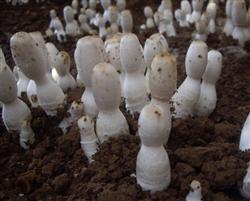 What should be noted in shaggy mane cultivation? Is there any netizen who knows about it and can help explain?
The shaggy mane mushroom is rich in nutrients, delicious in taste, and has an excellent texture. Regular consumption helps to increase appetite, aid digestion, and enhance human immunity, and it has very high nutritional value. However, there are many key links that need attention when growing shaggy mane mushrooms, so Zhongdi Net has compiled several key points that need attention in cultivating shaggy mane mushrooms, listed in detail below for netizens' reference.
Key Point One, Casing soil for the shaggy mane mushroom:
Because the shaggy mane mushroom has the characteristic that its mycelium will not produce mushrooms without contacting soil, casing soil is essential. The casing soil material uses 50% garden soil, 40% river silt soil, 8% plant ash, plus 1%-2% lime powder, mixed evenly, and finally sprayed moist with water, with a water content of 60%-70%. The limit should be that it forms a ball when squeezed and breaks apart when dropped.
The casing soil thickness is generally 3-5 cm, and the best soil particle size does not exceed 2 cm in diameter. Pile it together and cover it tightly with plastic film, make a concave shape on top, place a container and add formaldehyde and potassium permanganate to vaporize and sterilize for 48 hours, then spread it out in a pile to air for 3 days before use. It must not be exposed to rain.
Key Point Two, Growth temperature of the shaggy mane mushroom:
The normal temperature range for shaggy mane mycelium growth is 3-35°C, with the optimum at 22-28°C. The mycelium is cold-resistant but not high-temperature-resistant, and above 35°C the mycelium shows autolysis. The temperature range for fruiting body growth is 9-26°C; below 9°C it easily dies, and above 28°C it easily opens its cap and autolyzes. At 16-20°C the fruiting bodies occur in large numbers, grow quickly, and yield is high; above 20°C quality begins to decline. At an air temperature of 20-27°C, the mycelium can grow to the soil surface in about 10 days, at which point the film can be removed.
Key Point Three, Growth humidity of the shaggy mane mushroom:
For normal shaggy mane mushroom, the water content of the culture material is kept at about 65%, and during the fruiting body growth and development period the relative air humidity is kept at 85%-90%. Above 95% it is prone to spot disease, the base of the fruiting body and the stipe easily become gray-black and rot, and the top of the cap is mostly dark brown. For bag cultivation with sterilized material, the relative humidity during the mycelium running stage is preferably 70%, and for bed cultivation with raw material, the relative humidity during the mycelium running stage is preferably 70%-80%. Water can be sprayed into the air or onto the walls to maintain humidity.
Key Point Four, Light requirements for shaggy mane mushroom growth:
Suitable light can promote mycelium growth. When the light intensity is below 10 lux, mycelium growth is quite slow, and on average mushroom emergence is delayed by about 7-11 days compared with normal conditions. The fruiting bodies also grow very slowly without light stimulation, with harvest delayed by an average of 5-9 days, and the biological efficiency is also average, at about 100%.
When the light is too strong, if it reaches above 1500 lux, both mycelium and fruiting body growth are slower than below 10 lux. At this time the fruiting bodies not only grow slowly, but also have poor quality, are dry, and are light yellow in color, with little commercial value. The most ideal light intensity is generally 70-800 lux. Shaggy mane mushrooms grown under such light emerge quickly, have high yield, good quality, are less likely to be infected by contaminating microorganisms during the growth period, and have high commercial value.
Key Point Five, Air requirements for shaggy mane mushroom growth:
The shaggy mane mushroom is an aerobic saprophytic fungus, so it needs a large amount of oxygen during its growth process. A suitable oxygen content in the air can significantly improve the growth capacity of shaggy mane mycelium. This is because suitable oxygen strengthens the mycelium's ability to decompose the culture substrate, and oxygen supply is an important factor in increasing shaggy mane mushroom yield. Both mycelium growth and fruiting body growth require fresh air, so during both the mycelium running and mushroom emergence stages, attention must be paid to proper ventilation and air exchange indoors.
Key Point Six, pH requirements for shaggy mane mushroom growth:
The mycelium can grow in culture media with pH 2-10, and the casing soil material is preferably pH 7-7.5. In production, in order to prevent the occurrence of competitive contaminating microorganisms, an appropriate amount of lime is added when preparing and composting the culture material to increase the pH value.
Method for Cultivating Shaggy Mane Mushrooms with Distiller's Grains
Diseases That Need to Be Prevented and Controlled When Growing Shaggy Mane Mushrooms