Common Types of Diseases During the Fruiting Period of Button Mushrooms and Their Control Methods
Diseases during the fruiting period of button mushrooms (Agaricus bisporus) refer collectively to the infectious and physiological diseases that occur from primordium formation to the harvesting of fruiting bodies. During this period, the mushroom tissue is young and tender with a high water content, and the temperature and humidity inside the mushroom house are relatively high, making it easy for pathogens to multiply and spread; this is the key stage for disease prevention and control in the entire cultivation cycle.
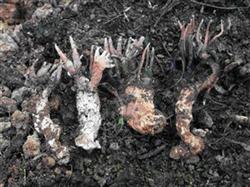
The common diseases mainly include brown rot, dry bubble disease, soft rot and bacterial blotch. Brown rot is mostly caused by infection with Mycogone perniciosa; the diseased mushrooms become deformed and swollen, later exuding a brown liquid with a foul odor. Bacterial blotch appears as small brown spots on the surface of the mushroom caps, and under high temperature and high humidity the spots expand rapidly. In addition, poor ventilation, excessive temperature differences or overwatering often trigger physiological problems such as mushroom death and thin-skinned mushrooms.
For control, prevention should be given priority. The compost must be fully fermented before being brought into the house, the casing soil materials must be disinfected before use, and the mushroom house must be thoroughly cleaned and fumigated before use. During the fruiting period, maintain suitable temperature and humidity, strengthen ventilation and air exchange, and ventilate promptly after watering to reduce humidity, avoiding prolonged water accumulation on the surface of the mushroom caps.
In daily management, once diseased mushrooms are found, they should be promptly removed together with the surrounding casing soil and taken out of the mushroom house for proper disposal to prevent the spread of pathogens. In the early stage of the disease, targeted agents can be selected for local spraying to control it, combined with measures such as reducing humidity and strengthening ventilation. After each flush of mushrooms is harvested, clean up the residual mushroom stumps on the bed surface and keep the mushroom house clean, which can effectively reduce the incidence of disease in the next flush.
Related Reading