What are the common diseases and pests of button mushrooms?
What diseases and pests affect button mushrooms? Here is an introduction. Button mushrooms have the following diseases and pests: 1.1 Weed molds and their control methods 1.1.1 Ink cap, commonly known as wild mushroom. Morphological features: the cap is initially bullet-shaped or egg-shaped, jade white, grayish white or yellowish white, mostly covered with scales on the surface, with a slender, hollow stalk. When mature, the cap expands...
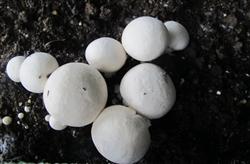
What diseases and pests affect button mushrooms? Here is an introduction
Button mushrooms have the following diseases and pests:
1.1 Weed molds and their control methods
1.1.1 Ink cap
Commonly known as wild mushroom. Morphological features: the cap is initially bullet-shaped or egg-shaped, jade white, grayish white or yellowish white, mostly covered with scales on the surface, with a slender, hollow stalk. When mature, the cap expands, and the gills gradually turn from white to black, finally dissolving with the cap into an inky liquid. Control methods: compost the substrate well, raise the pile temperature, reduce the ammonia content, and prevent the substrate from being under-composted or too wet, so as to inhibit the occurrence and growth of ink cap. After ink cap appears on the bed, it should be removed promptly; if ink cap breaks out severely, a 2%-5% formaldehyde solution can be used for control.
1.1.2 White plaster mold
Also known as stinking mold. Morphological features: initially dense mycelium in double-spot patches, gradually becoming dark yellow and flour-like, with a pungent odor. Control methods: increase the amount of superphosphate and lower the pH of the substrate; after local occurrence, spray a 500-fold dilution of 50% carbendazim wettable powder.
1.1.3 Violet fairy cup
Also known as gum gyro, fierce-mouth mushroom, dung bowl. Morphological features: the fruiting bodies grow in groups or clusters, with a short stalk; the gyro-shaped body spreads into a shallow cup shape, 1-4.5 cm in diameter and 1-2.5 cm in height, with a dark brown exterior covered in tufts of fine hairs, wrinkled when dry, and toxic. Control methods: provide appropriate ventilation and reduce humidity; promptly remove the violet fairy cup fruiting bodies and bury them deep; when occurring locally, spray a 2%-5% formaldehyde solution for control.
1.2 Insect pests and their control methods
1.2.1 Springtails
Larvae are white, adults grayish blue, small in size, soft and wingless, with a body length rarely exceeding 5 mm. They mainly gnaw on the fruiting bodies, generally invading through wounds or the gill area. Control methods: when this pest is found on the bed surface before mushroom emergence, spray a 250-fold dilution of 40% trichlorfon emulsifiable concentrate or a 500-fold dilution of 70% omethoate emulsifiable concentrate, or use a 1000-fold dilution of 80% dichlorvos emulsifiable concentrate with a small amount of honey for trapping and killing; after mushroom emergence on the bed surface, spray a 500-fold dilution of 1.1% compound Sophora flavescens plant extract for control, or use a 1000-fold dilution of 80% dichlorvos emulsifiable concentrate with a small amount of honey for trapping and killing.
1.2.2 Mushroom flies
Adults are 6-9 mm long and dark gray. Larvae are 8-12 mm long, white, with a pointed head and blunt tail. Pupae are oblong-oval, 6-8 mm long, reddish brown to dark brown. Control methods: install screens on mushroom house windows to prevent mushroom flies from entering; when adults are found in the mushroom house, mix 0.5 part baijiu, 2 parts water, 3 parts brown sugar, and 3.5 parts vinegar, add a small amount of trichlorfon or dichlorvos, place the mixture in basins for trapping and killing.
1.2.3 Mushroom gnats
Adults are generally 4.5-6.0 mm long, and larvae are 10-13 mm long, cylindrical in shape. Adults are phototactic and strong fliers. Control methods: if mushroom gnats are found before mushroom emergence, fumigate with dichlorvos; after mushroom emergence, mash castor leaves and squeeze out the juice, mix it with water at a ratio of 10 parts water : 1 part juice, boil, cool, and spray it in the mushroom house and on the substrate surface.
1.3 Diseases and their control methods
1.3.1 Brown spot disease
Also called dry bubble disease, Verticillium wilt, etc. It takes about 2 weeks from infection to the appearance of brown spots on mushrooms. Initially, many irregular brown spots the size of pinheads appear on the caps, and later the spots gradually expand and become sunken, with the sunken areas appearing gray. Control methods: spray a 500-fold dilution of 50% carbendazim wettable powder.
1.3.2 Soft rot
After the fruiting bodies are infected, they gradually turn brown until they rot. Control methods: reduce watering on the bed surface, strengthen ventilation, lower air humidity, sprinkle lime powder on the affected areas; spray an 800-fold dilution of 50% carbendazim wettable powder.
2. Integrated control
2.1 Substrate preparation and disinfection
2.1.1 pH: before the substrate enters the shed, the pH should be adjusted to 7.5-8. If it exceeds 8.2, it easily causes the occurrence of white plaster mold. If the pH is too high, adjust it with superphosphate water; if too low, adjust it with lime water.
2.1.2 Disinfection: on the day before the substrate enters the shed, spray the surface of the compost pile with a 200-fold dilution of 80% dichlorvos emulsifiable concentrate or a 400-fold dilution of 40% omethoate emulsifiable concentrate, then seal it for 24 hours to kill mites and other pests.
2.2 Disinfection of the mushroom house
2.2.1 Disinfection of empty houses. For each cubic meter, use 15 g sulfur, 2 mL formaldehyde, and 5 mL 80% dichlorvos emulsifiable concentrate, mix them into sawdust, pack into paper bags, place them in the four corners and center of the mushroom house, close doors and windows, then ignite and fumigate for 24 hours. Alternatively, for every 100 sq m of bed surface, use 2 kg formaldehyde and 1 kg dichlorvos for fumigation for 24 hours, then open windows for ventilation. If it is a continuous-cropping mushroom house, after harvesting, promptly dismantle all removable bed surfaces and move them outdoors for thorough cleaning and sun exposure; if they cannot be dismantled, uncover the plastic film and expose them to the sun for several days, and spray and whitewash the walls with 10%-20% lime water. Before use, seal the mushroom house well and then fumigate and disinfect according to the above method.
2.2.2 Disinfection of cropping houses. For every 100 sq m of bed surface, use 1 kg formaldehyde and fumigate with heat, keep sealed for 24 hours, then open the vents for ventilation.
2.3 Adjustment and disinfection of casing soil pH
2.3.1 Disinfection: evenly moisten the soil particles with a 5% formaldehyde solution, let them air briefly, then moisten them with a 500-fold dilution of 80% dichlorvos emulsifiable concentrate, and finally seal with plastic film for 24 hours.
2.3.2 pH adjustment: use lime to adjust the pH of the soil particles; the suitable pH is about 7.5-8.
2.4 Protection of vents: cover all vents with gauze to prevent various pests from flying in.
Click to get more button mushroom cultivation techniques
Click to get more edible mushroom cultivation techniques