-
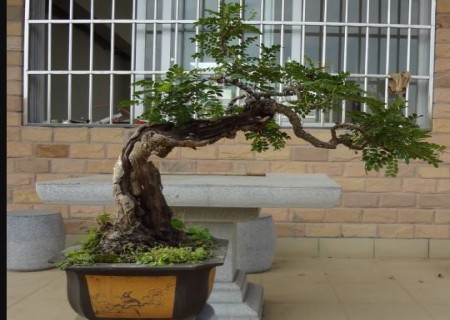
How to Grow and Care for a Qingxiangmu (Pistacia weinmannifolia) Bonsai
The leaves of Qingxiangmu (Pistacia weinmannifolia) are glossy and delicate, and although it grows slowly, it is very easy to shape. It gives off a subtle, fresh fragrance, and it not only purifies the air at home but also helps repel mosquitoes, so many households like to keep a few pots of it. Qingxiangmu bonsai are prized for their elegant, beautiful tree form and the refreshing fragrance of their leaves.
-
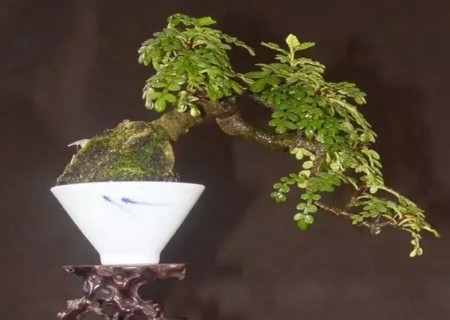
Detailed Guide to Making a Fragrant Wood (Qingxiangmu) Stump Bonsai
The natural fragrant wood, with its faint fresh scent, evergreen through all four seasons, and giving off a subtle delicate fragrance, always brings people calm and peace, a serene mind and refreshed spirit. Its emerald green leaves, when picked and rubbed in the hand, release a natural faint fresh scent that delights the heart. The leaves are fine, dense and jade-green, the young leaves a fragrant red, the branches tender and delicate, quite lovely.
-
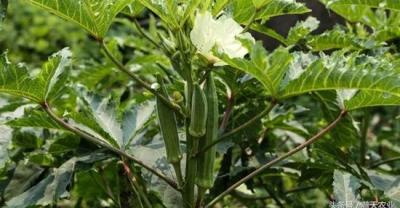
When is the best time to plant Osmanthus 'Rixiang Gui'? The best planting time and method
The planting time for Osmanthus 'Rixiang Gui' is divided into two seasons: winter and spring. In areas south of the Qinling Mountains, planting in late autumn and early winter makes it easy to root and gives a high survival rate. North of the Qinling Mountains, plant in spring when temperatures rise...
-
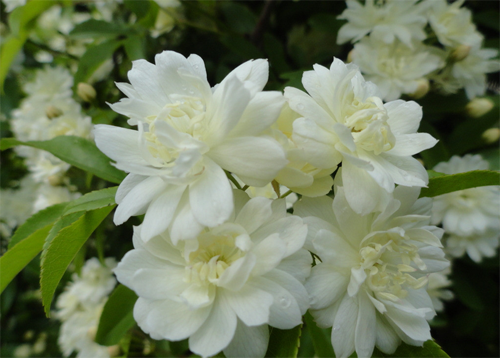
Muxiang flower's alternative names and a detailed guide to its cultivation and care
Muxiang flower is extremely beautiful to look at, it also has the ability to climb over eaves and walls, and can climb walls and trees. The flowers of Muxiang are very fragrant. What are the cultivation and propagation techniques for Muxiang flower? And what other names does it have?
-
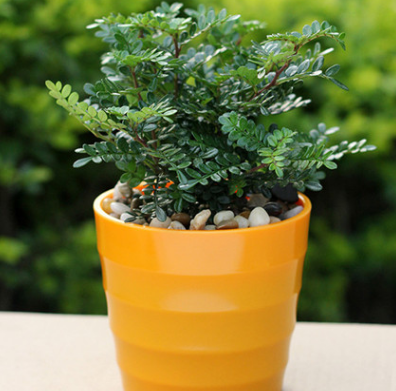
Qingxiangmu (Pistacia weinmannifolia) Bonsai: Making, Care Methods and Market Price Introduction
Qingxiangmu (Pistacia weinmannifolia) is small in appearance, and its fragrance, like its name, is fresh and pleasant. It is a woody plant with a beautiful shape and multiple benefits, often used for home decoration with a unique charm. How to make and care for a Qingxiangmu bonsai: after the Qingxiangmu plant to be trained is selected
-
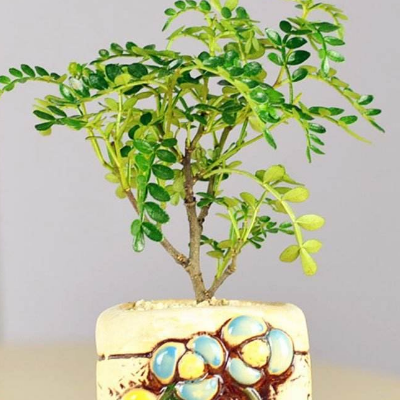
Can Qingxiangmu (Chinese pepper tree) really repel mosquitoes? Causes of yellowing leaves and solutions
Qingxiangmu is a plant with a very strong pepper fragrance and is also a very good ornamental plant, so can Qingxiangmu really repel mosquitoes? What should you do if Qingxiangmu leaves turn yellow? Can Qingxiangmu really repel mosquitoes: The whole Qingxiangmu plant has a strong pepper fragrance and helps purify the air and repel mosquitoes and flies
-

Introduction to Shenxian No. 1, an excellent vegetable soybean variety
Main characteristics: plant height 45 cm, determinate podding habit, uniform maturity, 3-seed pods account for more than 70%; fresh pods are green, with a lining inside the pod, fresh seeds have high crude protein content, tender taste, and excellent quality. Good early maturity; in the Yangtze River Basin region, about 65 days from emergence to fresh pod harvest, with fresh pod yield of 1000 kg per mu. Dry seed 100-seed weight 38 g. Key cultivation techniques: choose fertile, flat loam or sandy loam fields for planting. When the soil temperature in the 5-10 cm soil layer is stable at 1
-
Introduction to the Characteristics of the Xiangchundou 18 Soybean Variety
Xiangchundou 18 is a new medium-maturing conventional soybean variety bred by the Crop Research Institute of the Hunan Academy of Agricultural Sciences, with the parents Huaichun 79-16/Zhechun 1. Characteristics and traits: the whole growth period of this variety is 101 days, the plant is erect, the plant height is 66 cm, the stem thickness is medium, it has a determinate podding habit, the number of nodes on the main stem is 12.8, the number of branches is 2.5, the leaves are medium-sized, oval-shaped, the flowers are white, and the hairs are gray. The number of pods per plant is 18.4, with an average of 2.3 seeds per pod. When the pods are ripe, they are light brown, and the bottom pod height is about 16 cm. The seed
-
Detailed Introduction to the Soybean Variety Kangxian 2
Kangxian 2 was developed by the Saline-Alkali Land Crop Breeding Research Institute of the Heilongjiang Academy of Agricultural Sciences in collaboration with the Institute of Plant Protection of the Chinese Academy of Agricultural Sciences. In 1982, a sexual cross was made using Nenfeng 9 as the female parent and (Nenfeng 10 x Frenklin) F2 as the male parent. The progeny were continuously planted and identified in a soybean cyst nematode disease nursery, combined with southern multiplication and generation advancement, and selected and bred using the modified pedigree method, producing a new soybean variety with high resistance to soybean cyst nematode. Original code: Fuyu 8201-205. Characteristics: This variety has an indeterminate podding habit, a plant height of about 95 cm, and the main stem has 16 to
-
What tea cultivar is Baxian tea? An introduction to its characteristics
Breeding units: Zhao'an County Agricultural Committee, Science and Technology Committee, and Science and Technology Service Station of Fujian Province. Approval status: approved by the Fujian Provincial Crop Variety Approval Committee in 1987, and by the National Crop Variety Approval Committee in 1995. Variety registration number: GS13012-l994. Variety origin: developed from the local sexual population of Xiuzhuan using the single-plant selection method. Characteristics: it belongs to the small tree, large-leaf type, with tall plants and a well-developed root system, early spring budding, late winter garden closure, strong bud-developing ability,
条件筛选