Muxiang flower's alternative names and a detailed guide to its cultivation and care
Muxiang flower is extremely beautiful to look at, it also has the ability to climb over eaves and walls, and can climb walls and trees. The flowers of Muxiang are very fragrant. What are the cultivation and propagation techniques for Muxiang flower? And what other names does it have?
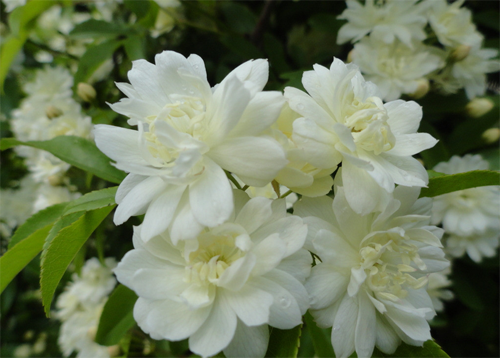
Cultivation and propagation techniques for Muxiang flower:
Muxiang flower prefers a warm, humid environment with plenty of sunlight. It tolerates cold and partial shade, but fears waterlogging. When planted in the ground, it can be placed in a sunny spot without standing water. It is not demanding about soil, but grows best in loose, fertile, well-drained soil. It has strong sprouting ability and tolerates pruning. Muxiang flower blooms from April to June, and is cultivated throughout the country.
Muxiang flower prefers a cool, humid climate, is slightly cold-tolerant, and fears high temperatures. It is best to choose deep, loose, well-drained sandy loam or loam for planting.
1. Sowing
Propagate by seed. Spring sowing is in early April, autumn sowing in mid-September.
Before sowing, soak the seeds for 24 hours. Water after sowing and keep the soil moist. During the seedling stage, provide appropriate shade. When the plants are 7-10 cm tall, thin the seedlings, leaving 2 plants per hole.
2. Fertilizing and watering
Each year, combine weeding and loosening the soil with 1-2 applications of supplementary fertilizer. If flower stalks appear, remove them promptly to benefit root growth. In winter, apply fertilizer and mound soil around the plant.
In the second year, apply human waste or urea and superphosphate as supplementary fertilizer. In winter, apply decomposed manure and miscellaneous fertilizers, plant ash, and cake fertilizer. Water during dry seasons, and mound soil after the above-ground parts wither in winter.
Muxiang flower can also be planted or grown in a flower bed. The flower pot should be large. Apply sufficient base fertilizer when planting, and set up a support for it to climb on.
During the growing season, keep the pot soil moist but not waterlogged. Apply a diluted, decomposed liquid fertilizer once every 20 to 30 days. Be careful not to apply too much nitrogen fertilizer, otherwise the branches and leaves will grow luxuriantly but produce few flowers.
3. Proper pruning
In addition to winter pruning, after the flowers fade, promptly cut off the spent flower stalks and some branches to ensure nutrients are concentrated, so that robust new branches grow and more flowers bloom the following year.
Muxiang flower can be propagated by cuttings using hardwood before and after spring sprouting, or semi-hardwood before and after flowering, and both root easily. For layering, the aerial layering method is mostly used.
During the growing season, select robust branches, make a cut at the lower end of a node, wrap a plastic film into a bag shape, fill it with soil, water it, then tie the bag opening tightly and keep the soil moist. The survival rate is very high.
4. Transplanting
During the dormant period, it can be transplanted bare-rooted. When transplanting, heavily prune the branches and vines. During the growing season, keep the soil moist and avoid waterlogging. After spring sprouting, apply a compound fertilizer once or twice to promote large, fragrant flowers. After winter begins, dig a trench around the roots and apply decomposed organic fertilizer, then water thoroughly.
In winter or early spring, prune the plant once, cutting off leggy branches, dead branches, diseased branches, and overly dense branches to improve internal ventilation and light penetration.
Propagation methods for Muxiang flower:
Muxiang flower can be propagated by cuttings or layering. For cuttings, use hardwood before and after spring sprouting, or semi-hardwood before and after flowering; both root easily. For layering, the aerial layering method is mostly used.
During the growing season, select robust branches, make a cut at the lower end of a node, wrap a plastic film into a bag shape, fill it with soil, water it, then tie the bag opening tightly and keep the soil moist. The survival rate is very high.
In addition, it can also be propagated by sowing. For some superior varieties, use rose or single-petaled Muxiang as rootstock for grafting; both bud grafting and cleft grafting are suitable.
Pest and disease protection for Muxiang flower:
Muxiang diseases include root rot, which is severe from July to August. If diseased plants are found, pull them out promptly. You can mix 4 kg of 70% quintozene beside the plant or use formalin to disinfect the soil.
Disease: root rot
You can use 70% quintozene
powder mixed with plant ash (1:30) and scatter it beside the plants to prevent spread. Pests include aphids, which can be sprayed with 40% dimethoate emulsifiable concentrate at 800 times dilution; cutworms and white grubs can be trapped and killed with poisoned bait.
There are also brown spot disease and southern blight, among others. Early pests include the silver-striped noctuid moth, which can be sprayed with 80% trichlorfon at 800-1000 times dilution.
Alternative names for Muxiang:
Guangmuxiang, Yunmuxiang, Muxiang flower, Qilixiang, Muxiang vine, Mixiang, Qingmuxiang, Wuxiang, Wumuxiang, Nanmuxiang;
That concludes the introduction to the cultivation and propagation methods of Muxiang flower. Hurry and get yourself a flower that can climb trees.
Rosa multiflora rose profile: how to grow roses / how to propagate roses
Rose profileRosa multiflora
Rose cultivation methods and precautions, and an introduction to roses
Rosa multiflora (scientific name: Rosa multiflora), also known as wild rose, is a deciduous shrub. A plant of the genus Rosa, its form is upright, climbing, or trailing. The stems usually have prickles, the leaves are alternate, odd-pinnately compound. It is mainly distributed in temperate, subtropical, and tropical mountainous regions of the Northern Hemisphere. The rose is a small vine that climbs fences. The flower disc surrounds the mouth of the hypanthium. There are single-petaled and double-petaled distinctions, with colors including red, pink, white, yellow, and many others; it is very beautiful and blooms in early summer. The leaves are alternate, odd-pinnately compound. It is cold-tolerant; some are wild. It can be propagated by layering or grafting, among other planting methods. Roses can be used medicinally, and rose flower porridge made from them has good nutritional value. Different colors have different flower meanings; for example, red roses represent passionate love; pink roses represent vows of love.
Morphological characteristics of Rosa multiflora
Deciduous shrub. The plant is clump-forming, trailing or climbing. The branchlets are slender, not upright, mostly covered with prickles, hairless. Leaves alternate, odd-pinnately compound, leaflets 5-9, obovate or elliptic, apex acute, margins sharply serrate, both surfaces with short pubescence, the leaf rachis and petiole both with short pubescence or glandular hairs; stipules adnate to the base of the leaf rachis, margins pectinate, with glandular hairs. Many flowers are clustered into conical corymbose inflorescences. Flowers numerous, flower diameter 2-3 cm. Petals 5, apex slightly concave. Wild roses are single-petaled, and there are also double-petaled cultivated varieties. Flowers come in red, white, pink, yellow, purple, black, and other colors, with red being the most common; yellow roses are considered superior and are fragrant. It blooms once a year, with the flowering period from May to June. The fruit is nearly spherical, reddish-brown or purplish-brown, about 6 mm in diameter, smooth and hairless.
Distribution area of Rosa multiflora
The genus has about 200 species, widely distributed in the cold-temperate to subtropical regions of Asia, Europe, North Africa, and North America. China has 82 species.
In Chinese literary works, daily life, and colloquial speech, "rose" generally refers to yellow roses and wild roses. Strictly speaking, except for a few roses and Chinese roses, all members of the genus Rosa are called roses, and each species of rose has an adjective before it, such as dwarf rose, Tibetan rose, multi-glandular rose, etc. This genus has about 200 species worldwide, with numerous varieties, great variation, and many variants and horticultural cultivars, mostly native to temperate, subtropical, and tropical mountainous regions of the Northern Hemisphere.
Ecological habits of Rosa multiflora
Rosa multiflora likes sunlight, also tolerates partial shade, and is relatively cold-tolerant. It can overwinter outdoors in most areas of northern China. It is not demanding about soil, tolerates drought, and tolerates poor soil, but grows better when planted in deep, loose, fertile, moist, and well-drained soil. It can also grow normally in heavy clay soil. It does not tolerate waterlogging and avoids standing water. When planting new plants, apply decomposed organic fertilizer. In the first one or two years after frost planting, open a trench each late autumn and apply base fertilizer once to promote growth and flowering. It has strong suckering ability, tolerates pruning, and resists pollution. The flowering period is generally from April to September each year, blooming in succession, lasting up to half a year. Due to global warming caused by the greenhouse effect, roses in some places begin to bloom as early as April, or even March.
Introduction to the genus and species of Rosa multiflora
This genus is one of the world's famous ornamental plants, commonly cultivated in gardens. China has a long history of cultivating roses. As far back as 1630, Wang Xiangjin wrote the Qunfangpu; in 1688, Chen Wuzi wrote the Michuan Huajing; in 1708, Wang Hao wrote the Guang Qunfangpu. These already recorded varieties such as Rosa multiflora, Chinese rose, rose, and Muxiang flower. Before the 18th century, European roses included only a few species such as Rosa gallica L., Rosa centifolia L., and Rosa damascena Mill., but lacked everblooming varieties and yellow-flowered varieties. After Chinese roses were introduced to England and France during the 18th-19th centuries, they were highly valued by Westerners. They crossed Chinese roses with existing varieties and repeatedly backcrossed them, breeding many beautiful new varieties. Chinese native rose plants, especially R. chinensis Jacq., R. odorata Sweet, R. multiflora Thunb., R. wichuriana Crép., and R. rugosa Thunb., played an important role in creating modern new rose varieties. Rosa plants have pleasant floral fragrance, and many species can be used to extract precious aromatic oils. Commonly used varieties include R. damascena, R. rugosa, R. davurica, and R. multiflora. After the fruits mature, they taste sweet and sour and are edible, rich in vitamin C, and are important medicines for treating cardiovascular diseases. Among them, large-fruited types such as R. rugosa, R. roxburghii, R. davurica, R. hemisphaerica, and R. serrata are the most famous. In addition, in this genus, Chinese rose (flower, leaf, root), rose (petals), Rosa laevigata (fruit, leaf, root), Rosa cymosa (root), Rosa davidii (fruit), Rosa roxburghii (fruit, root), Rosa multiflora (leaf, flower, fruit, root), and Rosa bracteata (flower, fruit, root) are all commonly used Chinese herbal medicines in various regions, each with special effects. Overview of the classification system of Rosa. Subgenus 1. Subgen. Hulthemia (Dumort.) Focke: leaves simple, stipules absent; flowers solitary; hypanthium urn-shaped, with many prickles. (Species 1) Subgenus 2. Subgen. Rosa: leaves pinnately compound, stipules present; flowers often in corymbose inflorescences or solitary; hypanthium urn-shaped, rarely cup-shaped. Section 1. Sect. Pimpinellifoliae DC.: upright shrubs, branches often with upright prickles or needles; leaflets 7-9, rarely 15-17, often small; stipules narrow, adnate to the petiole, with auricles; flowers solitary, without bracts; sepals entire, upright, persistent; styles free, not exserted. Series 1. Ser. Spinosissimae Yu et Ku: sepals and petals both in 5s, flowers usually yellow, rarely white or pink. (Species 2-13) Series 2. Ser. Sericeae (Crép.) Yu et Ku: sepals and petals both in 4s, flowers white, rarely pale yellow. (Species 14-19) Section 2. Sect. Rosa: low shrubs, with curved prickles and needles; stipules narrow, adnate to the petiole; leaflets 3-5, very rarely 7; flowers several or solitary; sepals often split at the apex, reflexed after flowering, deciduous; styles free, not exserted. (Species 20-23) Section 3. Sect. Cinnamomeae DC.: upright shrubs, with scattered or paired prickles, often with needles; leaflets 5-15; stipules broad or narrow, adnate to the petiole; flowers often several, rarely solitary, with large bracts; sepals often entire, upright after flowering, persistent, rarely deciduous; styles free, not exserted or slightly exserted. Series 3. Ser. Beggerianae Yu et Ku: the upper part of the receptacle falls off together with the sepals, disc, and styles after the fruit matures. (Species 24-27) Series 4. Ser. Cinnamomeae Yu et Ku: sepals and disc persistent after the fruit matures; leaflets 1.5-7 cm long, mostly acute at the apex; flowers mostly corymbose, or few-flowered, rarely solitary. (Species 28-45) Series 5. Ser. Webbianae Yu et Ku: sepals and disc persistent when the fruit matures; leaflets less than 1.5 cm long, very rarely up to 2 cm; flowers solitary or few. (Species 46-54) Section 4. Sect. Chinenses DC. ex Ser.: upright or climbing shrubs, with curved prickles; leaflets 3-5, rarely 7; stipules narrow, adnate to the petiole; flowers 1 to many; sepals entire or with a few lobes, reflexed and deciduous after flowering; styles free, exserted (Species 55-57). Section 5. Sect. Synstylae DC.: climbing shrubs, rarely upright, with curved prickles; leaflets 5-9, rarely 3; stipules entire, toothed, or pectinate, adnate to the petiole; flowers many in corymbose inflorescences; sepals often pinnately lobed, rarely entire, reflexed after flowering, deciduous; styles united into a column, exserted beyond the hypanthium. Series 6. Ser. Multiflorae Yu et Ku: stipules pectinate or with irregular serrations, margins glandular or eglandular. (Species 58-64) Series 7. Ser. Brunonianae Yu et Ku: stipules entire, not split, margins often glandular. (Species 65-75) Section 6. Sect. Banksianae Lindl.: evergreen climbing shrubs, with or without prickles; leaflets 3-7; stipules subulate, free, caducous; flowers many in umbellate or compound corymbose inflorescences; sepals entire or lobed, reflexed, deciduous after flowering; styles free, slightly exserted (Species 76-77). Section 7. Sect. Laevigatae Thory: evergreen climbing shrubs, with scattered curved prickles; leaflets 3; stipules toothed, free or basally adnate to the petiole, caducous; flowers large, solitary, without bracts, pedicels and hypanthium densely covered with prickles; sepals upright, entire, persistent; styles free, not exserted. (Species 78) Section 8. Sect. Bracteatae Thory: evergreen climbing shrubs, with paired curved prickles; leaflets 5-9; stipules pectinate, base adnate to the petiole; flowers solitary, with large bracts, hypanthium tomentose outside, sepals entire, reflexed after flowering; styles free, slightly exserted (Species 79). Section 9. Sect. Microphyllae Crép.: spreading shrubs, with opposite prickles; leaflets 5-9; stipules narrow with subulate auricles, adnate to the petiole; flowers 1-2, with small bracts, caducous; hypanthium cup-shaped, densely prickly, sepals upright with pinnate lobes, persistent; styles free, not exserted. (Species 80-82)
Medicinal or dietary therapeutic value of Rosa multiflora
The medical information and health dietary information on Huahuawang are for reference only and cannot be used as a basis for diagnosis or medical treatment. For any health problem, consult professional medical personnel; for the treatment of any disease, follow doctor's orders.
Ultimate flower-protecting mission: to love yourself, start from reality and strictly follow doctor's orders. Toward illness, do not be careless, do not delay, do not give up hope; face it bravely, warm the silent world with love, and care for the flower field in your heart with your heart.
Edible effectsFrom May to June, when the flowers are in full bloom, harvest on a sunny day and dry in the sun for medicinal use.
Rose flowers are sweet and sour in taste, cool in nature, and enter the spleen, lung, and large intestine. Rose flowers have the effects of clearing summerheat and resolving dampness, regulating qi and harmonizing the stomach, and stopping bleeding. They are suitable for treating summerheat with chest tightness, thirst, vomiting, loss of appetite (treating anorexia), mouth sores, lockjaw, diarrhea, dysentery, vomiting blood, and traumatic bleeding, etc. They have certain curative effects on dysentery, chest tightness, and heatstroke, and are also a good medicine for treating anorexia and mouth ulcers.
Modern pharmacological research
Rose flowers mainly contain astragalin and volatile oil; they have a cholagogic effect and inhibitory effects on various bacteria; they can absorb harmful gases such as hydrogen sulfide, benzene, phenol, and ether, and can also eliminate antimony poisoning.
Rose flower as a Chinese medicinal materialMedicinal name: Rose flower
Alternative names: Cihua, Bai Canhua, Chaimimihua,
English name: Flower of Japanese Rose
Latin plant animal mineral name: Rosa multiflora Thunb.
Meridian tropism: stomach; large intestine meridian
Effects: clear summerheat, harmonize the stomach, invigorate blood and stop bleeding, detoxify
Family and genus classification: Rosaceae
Latin name: Flos seu Petalum Rosae Multiflorae
Indications: summerheat with restlessness and thirst; distention and tightness in the stomach cavity, vomiting blood, epistaxis, mouth sores, carbuncles and boils, irregular menstruation
Ecological environment: grows in thickets by roadsides, field edges, or hilly land.
Harvesting and storage: from May to June when flowers are in full bloom, collect on a sunny day and dry in the sun.
Resource distribution: distributed in Shandong, Jiangsu, Henan, and other places.
Plant morphology: wild rose, climbing shrub, branchlets with short, thick, slightly curved prickles. Leaflets 5-9, sometimes 3 on leaflets near the inflorescence, 5-10 cm long including the petiole; stipules pectinate, mostly adnate to the petiole; leaflets obovate, oblong, or ovate, 1.5-5 cm long, 0.8-2.8 cm wide, apex acute or rounded-obtuse, base nearly rounded or wedge-shaped, margins serrate, upper surface hairless, lower surface pubescent, petiolules and rachis with scattered glandular hairs. Flowers bisexual; numerous, clustered into conical inflorescences, flower diameter 1.5-2 cm; sepals 5, lanceolate, sometimes with 2 linear lobes in the middle; petals 5, white, broadly obovate, apex slightly concave, base wedge-shaped; stamens numerous; styles united into a bundle. Fruit nearly spherical, 6-8 mm in diameter, reddish-brown or purplish-brown, glossy. Flowering period May-June. Fruiting period September-October.
Effect classification: heat-clearing medicine; astringent medicine
Nature and flavor: bitter, astringent; cool
Medicinal material source: the flowers of the Rosaceae plant wild rose.
Usage and dosage: oral administration: decoct in water, 3-6 g.
Source: Chinese Materia Medica
Dietary therapeutic value
The flowers of the Rosaceae shrub plant Rosa multiflora. Also known as Cihua, Bai Canhua. It is distributed in East China, Central South China, and Shandong, Henan, Sichuan, Yunnan, Guizhou, **, and other places. From May to June when the flowers are in full bloom, harvest on a sunny day, and use fresh or dried in the sun.
Properties: sweet in taste, cool in nature. Can clear summerheat, resolve dampness and harmonize the middle, and stop bleeding.
Reference: contains astragalin and volatile oil.
Uses: for summerheat with restlessness and thirst; damp-heat diarrhea, dysentery; stomach-heat vomiting blood.
Usage: brew as tea, decoct in water.
Supplementary formulas
1. Rose flower drink: rose flowers 10 g, Rosa roxburghii 15 g. Decoct in water and drink.
This formula uses rose flowers to clear summerheat and Rosa roxburghii to clear heat, promote fluid production, and aid digestion. Used for summerheat with restlessness and thirst, and loss of appetite.
2. Rose flower tea: rose flowers 10 g, tea leaves 3 g. Brew with boiling water and drink as tea.
This formula uses rose flowers to clear heat and harmonize the middle, and tea leaves to clear heat, remove dampness, and promote urination. Used for damp-heat in the spleen and stomach, vomiting and reduced eating, diarrhea, and scanty dark urine.
Rose root
Rose root is the root of the Rosaceae plant Rosa multiflora. This product is bitter, astringent, and cool in nature and flavor, and enters the spleen and stomach meridians. It has the effects of clearing heat and promoting diuresis, dispelling wind and invigorating blood, and detoxifying and reducing swelling. It is suitable for lung abscess, diabetes, dysentery, arthritis, paralysis, blood in the stool, frequent urination, enuresis, irregular menstruation, traumatic injuries, sores, boils, scabies, and tinea, etc.
Cultivar classification of Rosa multiflora
The main commonly cultivated varieties are: Fentuan rose, with larger flowers, single-petaled, pink or rose-red, many flowers clustered in corymbs; Lotus rose, with double flowers, pink to peach-red, mostly clustered; Qizimei, with double flowers, deep pink, often 7-10 flowers clustered together, fragrant; Baiyutang, with white double flowers, often 7-10 flowers clustered; Japanese thornless rose, with white single flowers, many flowers per branch, blooming in clusters, fragrant; common rose, without special features."Iceberg" roseAs a new cultivar, Iceberg belongs to the species Chinese rose.
A species is the smallest unit in biological classification, referring to organisms with stable genes and hereditary characteristics; a cultivar is a term in cultivation science, referring to certain phenotypic characteristics obtained through various means during artificial cultivation. In plain terms, one species can have many cultivars. Iceberg is a new cultivar belonging to the species Chinese rose.
Rose flower broadly refers to the Rosaceae family, scientific name Rosa, English name Rosa multiflora (ROSAE/Rose), broadly referring to Rosaceae; also known as Rosa multiflora, Qiangmi, Cimei, Bai Canhua. It is the flower of a deciduous or semi-evergreen trailing shrub of the genus Rosa in the Rosaceae family, and has been a fine flower and famous plant since ancient times.
Rose flowers have a very strong fragrance, with an alluring floral scent. Aromatic oil can be extracted from the petals, and its value is higher than gold, with high medicinal and edible value.
Rose flowers prefer to grow in thickets by roadsides, field edges, or hilly land, and are distributed in East China, Central South China, and other places in China. (Shandong, Henan, Jiangsu, Anhui, **, and other places).
Wild roses are mostly naturally distributed by streams, roadsides, garden edges, and field corners, often growing in dense clumps, with branches full of brilliance. After light rain or morning dew, the petals are wet with red blush, making a rather beautiful scene.
Rose flowering period - rose flowers bloom from May to September, opening in succession, lasting as long as half a year. There are many varieties and the names are also very complex;
The Qunfangpu states that the varieties of roses include:
1. Fentuan rose, with pink flowers, single-petaled, several or many flowers clustered into a flat corymbose inflorescence;
2. Qizimei, with larger leaves, double-petaled, often six or seven flowers forming a flat corymbose inflorescence;
3. Lotus rose, with double flowers, pale peach-red, shaped like a lotus;
4. Yellow rose, not only brightly colored but also especially early-flowering, cherished by the horticultural world.
Some also say there are three types of roses: fragrant rose, red-branched rose, and glossy-leaved rose.
Types of rosesIn fact, the types, varieties, and cultivars of roses are more numerous than those mentioned above, and names differ from place to place. What we usually call roses is merely a general term for this kind of flower. Flower colors include milky white, goose yellow, golden yellow, pink, bright red, and purple-black, among many others. Flowers range from large to small, with double and single petals, but all are clustered at the branch tips. They are brightly colored and fragrant, ornamental flowers with both scent and color. The branches are semi-climbing and can be attached to supports to form various shapes. They are suitable for arranging on flower trellises, latticework, gateways, flower walls, and other places. In summer, with abundant flowers and lush leaves, they truly present the scene of "dense leaves like layered green canopies, rich flowers like spread red brocade." They can also be controlled into a small shrub shape and cultivated as pot flowers. Some varieties can be cultivated for cut flowers.
RosaceaeRosaceae is a relatively large family, divided into four subfamilies
1. Spiraeoideae,
2. Rosoideae,
3. Maloideae,
4. Prunoideae, with about 124 genera and 3,300 species, mainly native to the temperate Northern Hemisphere.
Rosaceae, prefers to grow in thickets by roadsides, field edges, or hilly land; Rosaceae includes herbs, shrubs, or trees, often with thorns. Leaves alternate, rarely opposite, simple or compound, stipules opposite. The receptacle is convex or sunken into a saucer-shaped, bell-shaped, cup-shaped, urn-shaped, or cylindrical floral tube, called a hypanthium or receptacular tube. Flowers bisexual, 5-merous, ovary superior or inferior. Fruits are drupes, pomes, achenes, follicles, etc. Seeds without endosperm.
Cultivation techniques for Rosa multiflora
Cultivating roses has many similarities to growing Chinese roses, but it is more extensive in management than Chinese roses. The planting spacing should not be less than 2 m. From early spring sprouting to flowering, water 3-4 times as appropriate according to weather conditions to keep the soil moist. If drought occurs at this time, the number of flowers will be greatly reduced. During summer drought, water 2-3 more times. In the rainy season, pay attention to timely drainage and waterlogging prevention. Because roses fear waterlogging, waterlogging easily causes root rot. In autumn, water 2-3 more times as appropriate. Throughout the year, when watering, be careful not to let water accumulate at the roots. During the bud stage, apply 1-2 applications of diluted cake fertilizer water, and the flower color will be good and the flowering period lasting.
Pruning is an indispensable and important process in rose landscaping and shaping. Poor pruning results in a pile of thorny overgrowth, uneven and unkempt, not only with many pests and diseases but also unattractive in appearance. Generally, mature plants are pruned once each year before spring growth begins. The pruning amount should be moderate. Generally, the main branches (main canes) can be kept to a length within 1.5 m, and the rest cut off. Each lateral branch can retain 3-5 buds at the base. At the same time, remove dead branches, thin and weak branches, and diseased and pest-infested branches, and cut off overly old and dense branches to promote the sprouting of new branches. By constantly renewing old plants, they can bloom abundantly year after year. The longer the plant trails, the more it blooms, and the more nutrients it needs. Each winter, mound soil and apply fertilizer once to keep young branches and flower buds flourishing and the scene brilliant. When cultivating as pot flowers, pay even more attention to pruning and shaping. Because cut flowers have high flower yield, during the flowering season apply fertilizer once or twice a week, and pay attention to cultivating mother branches for harvesting flowers, cutting off flower buds on weak branches.
Cultivation overviewThere are several important groups of roses planted in gardens. The most famous and most widely planted group is the hybrid tea rose, accounting for most roses grown in greenhouses and gardens and sold in flower shops. All rose colors can be seen in hybrid tea roses, and hybrid tea roses have large, symmetrical flowers. Tea roses bloom frequently but are delicate. Crossbreeding them with robust everblooming hybrid perpetual roses produced hybrid tea roses. Hybrid perpetual roses were originally extremely popular until they were replaced by hybrid tea roses in the early 20th century. Polyantha roses are a type of cold-tolerant rose with small flowers densely borne in clusters. Floribunda roses are cold-tolerant and were bred by crossing hybrid tea roses with polyantha roses. Grandiflora roses are a relatively new type of hybrid rose, bred by crossing hybrid tea roses with floribunda roses, and are tall, cold-tolerant shrubs with large and numerous flowers. Other modern rose types include: climbing roses, with slender stems that can climb trellises; shrub roses, growing into large thickets; miniature roses, with extremely small plant habit and small flowers. About 13,000 cultivars of the above types of roses have been identified. No other flower is as well known and loved as the rose. Rose flower colors are diverse, from white to various shades of yellow, pink, and even deep crimson or purple-maroon; many beautiful cultivars with mixed multiple colors have been bred. Rose flower sizes vary, from miniature roses 1.25 cm (0.5 in) in diameter to large flowers 17.5 cm (7 in) in diameter. Rose flower fragrance is very pleasant, and the scent varies with cultivar and climatic conditions. Roses can be infected by many diseases, most of which are caused by fungi. Powdery mildew appears as pale gray-white mold-like mycelial strands on the surface of young leaves and tender stems. Black spot is caused by fungi and appears as obvious black spots on leaves; such leaves easily fall off. Rust is also a common rose disease.
Rose careWatering: Roses like moisture but fear dampness and waterlogging, so whether planted in the ground or in pots, a good drainage system must be ensured. Fertilizing: Roses like fertilizer. Follow the principle of "light fertilizer, frequent application" and continuously supply various nutrients. Light: Roses are sun-loving flowers and like warmth. In North China and areas to the south, they can overwinter safely outdoors. In summer, roses should be properly shaded to avoid direct sunlight exposure; loosen the soil for aeration and maintain smooth ventilation; spray water on the leaves to increase air humidity. Pruning: Pruning is an indispensable and important process in rose landscaping and shaping. Generally, mature plants are pruned once each year before spring growth begins. The pruning amount should be moderate to ensure the rose branches are appropriately dense and the appearance beautiful.
Home-grown roses
Roses are sun-loving flowering shrubs and need plenty of sunlight. They thrive in fertile, moist, well-drained soil.
Home-grown roses are prone to rose powdery mildew. The symptoms are: young leaves turn pale gray and become twisted, covered with a layer of white powder; in severe cases the leaves wither, the flowers are small and few, and the plant may even fail to bloom. The pathogen can also infect the flower stalks, stems and other parts.
Be sure to do the following:
1. Improve the growing conditions for roses: provide proper ventilation and light, apply less nitrogen fertilizer and more phosphorus and potassium fertilizer.
2. After winter pruning, spray 1.02 kg/L lime sulfur to kill overwintering pathogens. Before the disease appears, spray 200-fold equal-amount Bordeaux mixture for prevention. When the disease occurs, spray 15% triadimefon wettable powder at 1000-fold dilution, or 70% thiophanate-methyl wettable powder at 1000-fold dilution.
Artificial cultivation of roses
They are widely adaptable. In our country, apart from areas with severe winter cold, the vast southern regions are all suitable for planting them. Wild roses rarely suffer from pests and diseases, while artificially cultivated ones often have sawflies, scale insects, aphids, as well as leaf scorch, canker, black spot and other pests and diseases. Besides paying attention to spraying pesticide solutions to kill them, when arranging the landscape they should be used in combination with other flowers and shrubs, and too many should not be planted in one place. Every winter, old branches and densely growing branches are often heavily pruned to maintain good light penetration and ventilation, which can reduce pests and diseases. Pruning is an indispensable and important step in shaping roses for landscape design; poor pruning leaves them a tangled mass of thorns, uneven and irregular, not only prone to many pests and diseases but also unattractive in appearance.
The longer the plant trails and the more it blooms, the more nutrients it needs. Every winter it needs one hilling and fertilizing to keep the young branches and flower buds flourishing and the display brilliant. When growing them as potted flowers, even more attention should be paid to pruning and shaping. Because cut flowers produce a large number of blooms, during the flowering season they need fertilizing 1-2 times a week, and attention should be paid to developing the mother branches for cutting flowers and removing the flower buds on weak branches.
The world's largest rose
In Arizona in the United States there is a rose that grows like a big tree, with a trunk diameter of 1.41 m and a height of 2.75 m. It is the largest rose in the world.
Uses of roses
Rose essential oil is extracted from roses, especially the flowers of the Damask rose (R. damascena), and can be used to make perfume. The fruit of the rose, the rose hip, especially the fruit of the rugosa rose (R. rugosa), can be used to extract vitamin C and is sometimes used to make preserves.
Propagation methods for roses
Seeds can be used to raise seedlings, but in production softwood cuttings from the current year are mostly used, as they root easily. Rare and valuable cultivars are harder to root from cuttings and can be propagated by layering or grafting; seedlings from vegetative propagation can bloom in the same year. For seedlings to be used as potted flowers, choose older branches from superior cultivars and propagate by layering, and also pay attention to pruning the main bud and carrying out artificial dwarfing. For seedlings to be used as cut flowers, choose cultivars that can form mother branches for cutting flowers and have large, vividly colored blooms.
Disease control in roses
Wild roses rarely suffer from pests and diseases, while artificially cultivated ones often have sawflies, rose sawflies, scale insects, aphids, as well as leaf scorch, canker, black spot and other pests and diseases. Besides paying attention to spraying pesticide solutions to kill them, when arranging the landscape they should be used in combination with other flowers and shrubs, and too many should not be planted in one place. Every winter, old branches and densely growing branches are often heavily pruned to maintain good light penetration and ventilation, which can reduce pests and diseases. Black spot: it mainly attacks leaves, petioles and young shoots. When the leaves first become diseased, small purple-brown to brown spots appear on the upper surface, and after enlarging they are mostly round or irregular dark brown lesions. Spray carbendazim, thiophanate-methyl, daconil and similar drugs. Powdery mildew: it attacks young leaves, with white powdery material appearing on both sides. Early symptoms are not obvious; 3-5 days after the powdery layer appears, the leaves become water-soaked and gradually lose their green color and turn yellow, and in severe cases the leaves drop off. Spraying carbendazim or triadimefon during the disease period is sufficient, but Guoguang Yingna has the best effect. Rose rust: rust is a common disease of roses. Both leaves and new branches can be affected. When severe, it causes large areas of leaves to drop, to the point that the flowers lose their ornamental value or even die. If this disease is found, deal with it promptly: spray triadimefon at 800-fold dilution on the leaves once a week for 3-4 consecutive times, and the disease can basically be cured.
Chemical composition of roses
Chemical composition: the volatile oil of the flowers contains 28 compounds, among which the main components are 2,5,5-trimethylheptadiene, methyl geranate and others. The leaves contain chlorogenic acid and casuarictin. The roots contain β-sitosterol, tormentic acid, that is, 2α,19α-dihydroxyursolic acid, and rosamultin. The identification method: the rose, the Chinese rose and the rose (Rosa multiflora) - known as the three sisters of the rose family - are all plants of the genus Rosa in the family Rosaceae, and they are similar in many morphological respects. As long as their branches, leaves and flowers are carefully observed, their differences will be found.
Garden uses of roses: landscapingThe leaflets in the compound leaves of the rose (Rosa multiflora) are small and numerous, with 5-9 leaflets on one petiole, and both surfaces of the leaf are hairy. The leaflets in the compound leaves of the Chinese rose are few and large, with 3-5 leaflets on one petiole; the leaves are relatively thin, flat and not wrinkled on the surface, dark green, lighter on the underside, and hairless on both sides. The leaflets in the compound leaves of the rugosa rose are numerous and thick, with 5-9 leaflets on one petiole; the upper surface is glossy and wrinkled, and the underside is whitish with small bristles. The rose (Rosa multiflora) is relatively slender, trailing and spreading, with large and sparse prickles, mostly dark greenish. The Chinese rose has low, sturdy branches with large and sparse prickles, slightly hooked (very few cultivars are thornless), mostly greenish green. The rugosa rose has sturdy, upright branches with dense prickles of the same size, mostly grayish brown; the dog rose has sturdy branches and is therefore used as a rootstock. The flowers of the rose (Rosa multiflora) are borne in clusters in conical corymbs, with flowers 3 cm in diameter. The Chinese rose mostly bears single terminal flowers, though several may be clustered; the flower stalks are long, the colors many, and the flowers about 5 cm or more in diameter. The rugosa rose bears flowers singly or in clusters, with short flower stalks. The flowers of "floribunda roses" are also mostly in conical corymb form, and the flowers are only 3 cm in diameter. Judging from the sepals and fruits after the flowers fade, the sepals of the Chinese rose and the rugosa rose do not fall off, while those of the rose (Rosa multiflora) do; the fruits of the Chinese rose and the rose (Rosa multiflora) are round, while the fruit of the rugosa rose is flattened and round.Home environment1. Place one or two rose plants in your indoor living room near a window, in a spot that can receive sunlight. The area by the window is a very suitable place for plants, so that even indoors they can absorb sunlight and grow well. Moreover, placed here, whenever the host or guests look out of the window, they can not only see the scenery outside but also see the thriving roses, admire their elegant flower forms and smell the fragrance of the rose blossoms. 2. Placing roses in the bedroom is also a good choice for matching the home style. People spend about one third of their time sleeping, and the arrangement of the bedroom also has a great influence on people. If one or two rose plants are placed in a sunny spot in the bedroom, and one lies there morning and evening, absorbing the room's stale air, over time this is also a very good choice for the host. 3. Placing several potted roses on the balcony is also not bad. Because the balcony is relatively open and sunlight is fairly abundant, it is itself very suitable for growing roses and very suitable for their growth. Moreover, when roses are grown on the balcony, it is also very convenient whenever the host wants to admire them.
Dietary nutrition of roses
Rose flower congee - 4 fresh rose flowers, 100 g rice, an appropriate amount of white sugar; wash the rose flowers and cut them fine; rinse the rice, put it in a pot, add an appropriate amount of clear water and cook into a thin congee; when nearly done, add the rose flowers and white sugar and cook until the congee is ready, then eat. 1 dose daily. It can clear heat and relieve summerheat, and is suitable for children's summer fever, dizziness from heatstroke, and can also supplement the needed nutrients. Rose and mung bean congee - 4 fresh rose flowers, 50 g each of rice and mung beans, an appropriate amount of white sugar. Wash the rose flowers and cut them fine; rinse the rice and mung beans, cook into a thin congee, then add the rose flowers and white sugar and eat. 1 dose daily. It is suitable for summerheat with blood-streaked vomiting, thirst, dysphoric heat and so on. Rose and catfish soup - 30 g fresh rose root, 1 black catfish, an appropriate amount of seasonings. Decoct the rose root in water to obtain the juice and set aside. Remove the scales and innards of the black catfish, wash it, cut it into pieces, put it in a pot, add an appropriate amount of clear water and bring to a boil, then add the medicinal juice and seasonings and so on, and cook until the fish is thoroughly done. 1 dose daily for 1 consecutive week. It can clear heat and drain dampness, and is suitable for damp-heat pouring downward, frequent urination, urgency of urination and so on. Steamed fish with roses - 3 rose flowers, 1 crucian carp weighing half a jin, an appropriate amount of seasonings. Wash the rose flowers and cut them fine for later use. Wash the crucian carp, remove the scales, gills and internal organs, make 3-5 diagonal cuts on the trunk of the fish, put it in a clay pot, add scallion, ginger, garlic, salt, cooking wine and an appropriate amount of clear water, steam over gentle heat for 20 minutes, then add the washed rose flowers and a little MSG and sesame oil, and it is ready to eat. It can clear heat and drain dampness, and is suitable for damp-heat dysentery, unsmooth defecation and so on.
Cultural background of roses: folk legendIt is said that long ago, at the foot of Tianmu Mountain in Zhejiang, there lived a family. The daughter was named Qiangwei (Rose). Her father had died early, and she and her mother depended on each other and lived a hard life. A young neighbor named Akang was kind and eager to help others, and often helped Qiangwei cut firewood and carry water. Over time, the two fell in love with each other and privately pledged themselves to marry. One year, the emperor issued an edict to select beautiful women for the palace, and Qiangwei was chosen. When the girl heard the news, she fainted on the spot. The officials pressured her and wanted to take her to the capital. Only after her mother begged bitterly did they agree to postpone it for two days. The kindhearted villagers secretly told Qiangwei to hide deep in the mountains, and if the authorities came for her, to say she had died of a sudden illness. But word leaked out, and a greedy person secretly informed the authorities. The county magistrate reported it to the imperial court, and the emperor was furious and ordered a pursuit: if she was alive, they wanted her person; if dead, they wanted her corpse. Akang and Qiangwei hurried into the mountains, fleeing with all their strength. But how could people on foot outrun mounted pursuers? Hearing the hoofbeats drawing near, and to avoid implicating Akang, Qiangwei resolutely jumped off the sheer cliff. Akang was overcome with grief and jumped down after her. The pursuers searched and found two bodies below the cliff and carried them back to the capital. When the emperor saw the corpses, he was both angry and hateful, and ordered people to pour oil and burn the bodies, but after burning for a day and a night, the bodies and their skin color were unchanged, intact and undamaged. He then ordered people to raise knives and dismember the corpses, but the steel knives could not cut into them. The emperor, enraged and embarrassed, ordered them thrown into the sea, but the bodies would not sink. At this time, complaints were heard throughout the court, and some bold men cursed the emperor as a cruel and foolish ruler. The emperor did not dare continue his misdeeds and ordered the bodies retrieved and buried together at the foot of Tianmu Mountain.
A month later, a beautiful flower grew on the new grave, and many thorns grew on its stem. People all said this flower was transformed from the maiden Qiangwei, and the thorns were produced by Akang to protect Qiangwei, so it was named "Qiangwei" (rose). The rose is the root, stem, leaves, flowers and fruit of the perennial deciduous shrub Rosa multiflora of the family Rosaceae. Traditional Chinese medicine holds that the rose is cool and cold in nature and bitter and astringent in taste, and has the effects of clearing summerheat and harmonizing the stomach, draining dampness and dispelling wind, and harmonizing the blood and removing toxins. It was included in the "Compendium of Materia Medica".
1. Gu Lin of the Ming Dynasty once wrote a poem: "A hundred zhang of rose branches, winding around to form a bridal chamber. Honeyed leaves in layers of green curtains, rich flowers spread like red brocade. Set out a jade Go board, to while away this long red summer. Fragrant clouds fall on sleeves, leaving lingering fragrance for a month." The poem depicts a scene of green winding around and a riot of brilliant colors. Roses come in many colors, including white, light red, deep peach red, yellow and so on, and the fragrance is alluring. (Rose flower appreciation)
2. Archaeologists once believed that the Chinese nation was named precisely after the roses of the Yangshao culture at the foot of Mount Hua as a national totem, but modern scholars mostly believe that "Huaxia", "Zhonghua" and "Huaren" are named after Mount Hua. (Introduction to Mount Hua)
3. Rosicrucians. (See Baidu Baike)
In Japan it is called the "Rosicrucian Order", a secret society that spread in Europe. This was a society developed in the Middle Ages to oppose the Pope and the Church and to practice the true teachings of Greece, but it was regarded as heresy by Roman Catholicism.
During that period, this society never formed a legal organization, and so was regarded as a mysterious existence. The goal of its members was to become those thoroughly versed in occult knowledge, to hold "universal love" in the highest esteem, and to take it as their duty to rescue the seriously ill as quickly as possible. Precisely for this reason, the Rosicrucians needed to study and practice the medicine of alchemy. And by the 18th century, because of their opposition to Roman Catholicism, the Rosicrucians were regarded as heretics.
If the alchemy that served as the foundation of the Rosicrucians had been practical, it might perhaps have replaced Roman Catholicism and become the state religion. "Alchemy is for serving the public." A country like Amestris, which gives full play to its practicality, can also be seen as a country that does not exist in reality and takes the Rosicrucians as its mother body.
The flower language of roses
Rose: its flower language represents love and the longing of love. Blooming roses give people a longing for love, yet love is not just a beautiful dream; though flowers will wither, the dearest one in the heart never fades. The rose is the beginning of romance and the vow of love.
The meaning expressed by rose flowers: rose flowers are beautiful and holy, expressing lofty and sacred love; especially the red rose, which is even more a fine gift for those in first love to give.
Rose flower language: beautiful love, the longing of love; virtue.
Key words of rose flower language: beautiful love
Flower languages of various roses:
1. Red rose - passionate love; (expressing courtship, love.)
2. White rose - pure love; (expressing love, purity.)
3. Purple rose - the vow of love;
4. Yellow rose - eternal smile;
5. Deep red rose - I only want to be with you; I only want to know you alone;
6. Pink rose - I want to spend my whole life with you; I want to marry you;
7. Christmas rose - love in remembrance;
8. Wild rose - romantic love (wild rose story: turn around to heaven with you)
9. Black rose - gorgeous love; desperate love; hatred; curse; you are mine;
10. Rock rose - refusal
The romance of the wild rose:
Artificially cultivated roses do not bear fruit, but wild roses grow lovely, vivid red fruits. Besides their appearance being able to rival other roses, the fruits are also edible. This flower has a poet's temperament, so its flower language is - romance.
People born under the blessing of this flower have a romantic, romantic character and are children who love to dream. Yet they have keen judgment in handling matters and are suited to work in the arts. In matters of feelings, they are also perfectionists.
Rose pictures