Qingxiangmu (Pistacia weinmannifolia) Bonsai: Making, Care Methods and Market Price Introduction
Qingxiangmu (Pistacia weinmannifolia) is small in appearance, and its fragrance, like its name, is fresh and pleasant. It is a woody plant with a beautiful shape and multiple benefits, often used for home decoration with a unique charm.
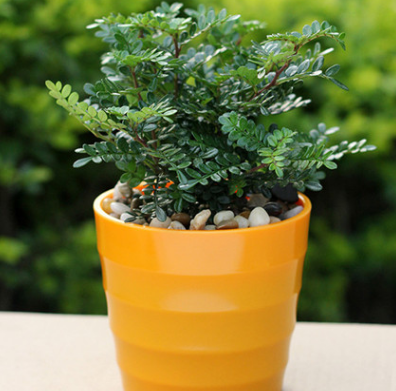
How to make and care for a Qingxiangmu bonsai
1. Making a Qingxiangmu bonsai
After the Qingxiangmu plant to be trained is selected, preliminary pruning can be carried out, removing crossing branches, overlapping branches, diseased and pest-infested branches, and leggy branches, etc. Then choose a purple clay pot as the bonsai container, because it has relatively good breathability. Pot it, cover with soil, preferably fertile sandy soil rich in humus with good drainage; you can mix peat soil and perlite to prepare nutrient soil, then press it firm and water. Then place it in a place with light and good ventilation for care, and that is all.
2. Care of a Qingxiangmu bonsai
Light:
Qingxiangmu likes light, and bathing in sunlight is very important, but do not expose it to prolonged blazing sun; in summer, strong direct sunlight may scorch the leaves. Actually, Qingxiangmu is also somewhat shade-tolerant, so it is fine not to sun it for a few days.
Water:
Do not water Qingxiangmu too frequently, and it is best not to let water accumulate, otherwise too much water may cause root rot. Generally, watering once every 3-5 days is enough, and remember to water thoroughly. In spring and summer, keep the soil moist, but in autumn and winter follow the principle of watering when dry and stopping when wet.
Temperature:
Qingxiangmu likes a warm environment and fears severe cold. The most suitable growing temperature is 20°C--30°C. In winter, it should be kept indoors for care, and the temperature should be kept above 5°C, so it can overwinter safely.
Fertilizer:
When it is a seedling, it is best not to fertilize. Qingxiangmu is very sensitive to fertilizer. Apart from applying water-soluble fertilizer 1--2 times a month during the vigorous growth season from May to September, in other seasons reduce fertilization as much as possible or do not fertilize. Moreover, in order to maintain a good ornamental effect of the bonsai, the fertilizer applied should not be nitrogen fertilizer.
Ventilation:
When caring for Qingxiangmu, pay attention to ventilation, but the connection points of its leaves are relatively fragile, so it must not be exposed to strong wind, otherwise it can easily cause leaf drop.
What is the general price of Qingxiangmu
Qingxiangmu is currently very scarce. The retail price is about 10 yuan per jin, and wholesale is 0.8~1.5 wan yuan per ton. Qingxiangmu is also called Ziyoumu and Hubantan. Its wood is purplish red, with beautiful grain, hard and rot-resistant. It is one of the heaviest woods in China, sinking immediately when put into water, and belongs to precious timber. Because it grows extremely slowly, often appearing as a shrub or small tree, with no large-diameter timber, it is used relatively little. At present, it is mostly used to make hand strings, pen holders, craft carvings, etc.
The price of Qingxiangmu bonsai is generally distinguished according to the length, size and age of the plant. The price of ordinary small bonsai kept indoors is generally around 50 to 200.
The above prices are all online reference prices. For specific prices, please refer to the actual local purchase price.
Making and care of a Qingxiangmu bonsai
Making a Qingxiangmu bonsai
After the Qingxiangmu plant to be trained is selected, preliminary pruning can be carried out, removing crossing branches, overlapping branches, diseased and pest-infested branches, and leggy branches, etc. Then choose a purple clay pot as the bonsai container, because it has relatively good breathability. Pot it, cover with soil, preferably fertile sandy soil rich in humus with good drainage; you can mix peat soil and perlite to prepare nutrient soil, then press it firm and water. Then place it in a place with light and good ventilation for care, and that is all.
Care of a Qingxiangmu bonsai
Light
Qingxiangmu likes light, and bathing in sunlight is very important, but do not expose it to prolonged blazing sun; in summer, strong direct sunlight may scorch the leaves. Actually, Qingxiangmu is also somewhat shade-tolerant, so it is fine not to sun it for a few days.
Water
Do not water Qingxiangmu too frequently, and it is best not to let water accumulate, otherwise too much water may cause root rot. Generally, watering once every 3-5 days is enough, and remember to water thoroughly. In spring and summer, keep the soil moist, but in autumn and winter follow the principle of watering when dry and stopping when wet.
Temperature
Qingxiangmu likes a warm environment and fears severe cold. The most suitable growing temperature is 20°C--30°C. In winter, it should be kept indoors for care, and the temperature should be kept above 5°C, so it can overwinter safely.
Fertilizer
When it is a seedling, it is best not to fertilize. Qingxiangmu is very sensitive to fertilizer. Apart from applying water-soluble fertilizer 1--2 times a month during the vigorous growth season from May to September, in other seasons reduce fertilization as much as possible or do not fertilize. Moreover, in order to maintain a good ornamental effect of the bonsai, the fertilizer applied should not be nitrogen fertilizer.
Ventilation
When caring for Qingxiangmu, pay attention to ventilation, but the connection points of its leaves are relatively fragile, so it must not be exposed to strong wind, otherwise it can easily cause leaf drop.
That is all for the introduction to the making and care of Qingxiangmu bonsai. We hope it is helpful to everyone.
How to make a Qingxiangmu bonsai and how to care for and manage it
Qingxiangmu bonsai can freshen the air and also repel mosquitoes, and is loved by many people. So do you know how to make a Qingxiangmu bonsai and how to manage it? Let us take a look below.
Making a Qingxiangmu bonsai:
After the Qingxiangmu plant to be trained is selected, preliminary pruning can be carried out, removing crossing branches, overlapping branches, diseased and pest-infested branches, and leggy branches, etc. Then choose a purple clay pot as the bonsai container, because it has relatively good breathability. Pot it, cover with soil, preferably fertile sandy soil rich in humus with good drainage; you can mix peat soil and perlite to prepare nutrient soil, then press it firm and water. Then place it in a place with light and good ventilation for care, and that is all.
Care of a Qingxiangmu bonsai:
Light
Qingxiangmu likes light, and bathing in sunlight is very important, but do not expose it to prolonged blazing sun; in summer, strong direct sunlight may scorch the leaves. Actually, Qingxiangmu is also somewhat shade-tolerant, so it is fine not to sun it for a few days.
Water
Do not water Qingxiangmu too frequently, and it is best not to let water accumulate, otherwise too much water may cause root rot. Generally, watering once every 3-5 days is enough, and remember to water thoroughly. In spring and summer, keep the soil moist, but in autumn and winter follow the principle of watering when dry and stopping when wet.
Temperature
Qingxiangmu likes a warm environment and fears severe cold. The most suitable growing temperature is 20°C--30°C. In winter, it should be kept indoors for care, and the temperature should be kept above 5°C, so it can overwinter safely.
Fertilizer
When it is a seedling, it is best not to fertilize. Qingxiangmu is very sensitive to fertilizer. Apart from applying water-soluble fertilizer 1--2 times a month during the vigorous growth season from May to September, in other seasons reduce fertilization as much as possible or do not fertilize. Moreover, in order to maintain a good ornamental effect of the bonsai, the fertilizer applied should not be nitrogen fertilizer.
Ventilation
When caring for Qingxiangmu, pay attention to ventilation, but the connection points of its leaves are relatively fragile, so it must not be exposed to strong wind, otherwise it can easily cause leaf drop.