Detailed Guide to Making a Fragrant Wood (Qingxiangmu) Stump Bonsai
The natural fragrant wood, with its faint fresh scent, evergreen through all four seasons, and giving off a subtle delicate fragrance, always brings people calm and peace, a serene mind and refreshed spirit. Its emerald green leaves, when picked and rubbed in the hand, release a natural faint fresh scent that delights the heart. The leaves are fine, dense and jade-green, the young leaves a fragrant red, the branches tender and delicate, quite lovely.
The natural fresh fragrance of fragrant wood has made it highly sought after by people around the world. Whether planted in gardens, made into bonsai, used for incense, or grown in pots. More and more people love it, not only for its ornamental value but also for its medicinal value. It can be used in landscaping; its green branches and leaves make it suitable for shaping, courtyard planting beautification, hedges or potted cultivation. Indoors, place a fragrant wood bonsai, evergreen at all times. The lush green, the subtle delicate fragrance, and a state of mind of tranquil serenity arise spontaneously. Taking good care of a pot of fragrant wood naturally fosters an attitude of elegance, composure, calm and focus, a detached state of mind, tranquility and far-reaching purpose.
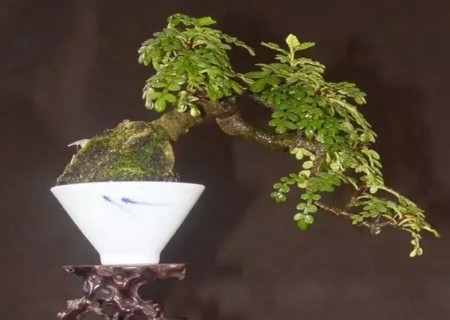
I. How to Make a Fragrant Wood Bonsai
People like to use it for indoor potted cultivation; choosing ideal plant material is the foundation of making a bonsai. Household bonsai mainly means seeing the large in the small, creating a natural, fresh feeling of bringing wild mountains, waters and trees into the home.
The selection of bonsai stump material can generally be made from mountain-collected stumps or field-cultivated stumps. Choose tree species with small or unusual glossy leaves that tolerate transplanting, tolerate pruning and sprout easily. The roots should be exposed and grip the ground powerfully, the trunk thick and tapering naturally toward the trunk transition, or a tree form that is ancient, gnarled or rugged. The branching structure should be reasonable and layered, with the first branch group gradually thinning upward, preferably conforming to natural laws.
Material selection: Carefully select material, choosing fragrant wood seedlings with curved or deformed trunks and old tree stumps with aged posture and beautiful, quaint tree forms to cultivate and pot. Wild tree stumps dug from mountains and fields are better, but because this causes ecological damage, the author does not advocate it.
Pruning: After the plants to be cultivated are selected, carry out preliminary shaping and pruning according to the design concept, flexibly applying thinning, heading back and other pruning methods to remove crossing branches, overlapping branches, diseased and pest-infested branches and water sprouts. Shorten the central leader branches and back branches; if it is a deciduous miscellaneous tree, leaves can be picked before pruning.
Pot selection: Choose a purple clay pot with good permeability as the container, pot it, cover with soil and press firm, and water to keep moist.
Potting: Choose a pot according to the size and shape of the stump; for large tree styles generally use a manger pot or oval pot, and for cascade style use a tall cylindrical pot. First prune the roots, removing bottom roots and overly long roots, place into the pot soil, fill with soil and tamp firm.
Cultivation: Because fragrant wood likes light and faces the sun, it should be placed in a ventilated and well-lit place such as a windowsill or balcony for cultivation.
Shaping: In daily care, flexibly apply coiling, tying, twisting, pressing and other shaping techniques, shaping according to the plant's tendency. After several years of care, an ideal bonsai can be cultivated.
II. Care and Management of Fragrant Wood Bonsai
1. Fragrant wood likes light; sunning it every day is good for its growth, but do not expose it to continuous blazing sun for long periods. Generally, just place the fragrant wood bonsai in a sunny spot indoors such as a balcony. Fragrant wood is also somewhat shade-tolerant, and it does not matter much if it does not get sun for a few days.
2. Do not water fragrant wood too frequently; once every 3-5 days is suitable, and each watering must be a thorough soaking, that is, the water must wet the bottom. Too much watering will cause root rot in fragrant wood, so the soil must be chosen with good drainage.
3. Fragrant wood cannot withstand strong wind, because the leaf attachment points of fragrant wood are very fragile, and if the wind is strong the leaves will drop.
4. Fragrant wood is quite sensitive to fertilizer; seedlings should be fertilized as little as possible or even not at all, to avoid excessive fertility causing fertilizer burn or excessive vegetative growth in the seedlings.
5. If there are scale insects on the branches and leaves of fragrant wood or red spider mites harming the leaves, specialized pesticides can be sprayed for control, such as methidathion and chlorpyrifos for scale insects, and dicofol, hexythiazox and others for red spider mites.
Fragrant wood has a beautiful tree form, a fresh fragrance, and multiple edible and medicinal functions, with broad development prospects; it repels mosquitoes, freshens the air, beautifies the environment, is pleasing to the eye, helps people relieve fatigue, and indeed has very good prospects as a potted plant.
III. Methods and Steps for Making a Fragrant Wood Bonsai: Netizen Experience
1. Fragrant wood must be transplanted carefully. Make the mud ball as large as possible, cut roots cleanly, treat wounds with scissors, and use a low dose of rooting agent. Pay attention to water supply after planting.
2. Do not water fragrant wood too frequently; once every 3-5 days is suitable, and each watering must be a thorough soaking, that is, the water must wet the bottom.
3. The soil must have good drainage; the soil provided at the time of purchase is fine.
4. Fragrant wood likes light and can be sunned every day, but do not expose it to blazing sun for long periods. Generally, just place it on a balcony or in a sunny spot indoors. Fragrant wood is also somewhat shade-tolerant, and it is fine if it does not get sun for a few days.