How to Grow and Care for a Qingxiangmu (Pistacia weinmannifolia) Bonsai
The leaves of Qingxiangmu (Pistacia weinmannifolia) are glossy and delicate, and although it grows slowly, it is very easy to shape. It gives off a subtle, fresh fragrance, and it not only purifies the air at home but also helps repel mosquitoes, so many households like to keep a few pots of it.
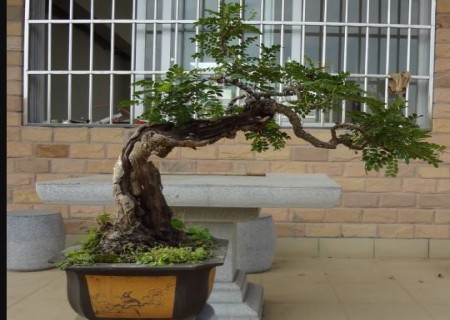
Because of its elegant, beautiful tree form and the refreshing fragrance of its leaves, the Qingxiangmu bonsai is a precious plant that combines ornamental value with practical use, and it is deeply loved by people. But do you know how to grow a Qingxiangmu bonsai? Below, the editor shares an article on how to care for a Qingxiangmu bonsai, in the hope that it will help those friends who still do not know how to grow one.
1. Soil
Qingxiangmu has a fairly strong tolerance for drought and poor soil, so its soil requirements are naturally not very strict; as long as the soil stays loose, breathable and well-draining, it will do. But to help the plant grow better, sandy loam is recommended, and you can also mix in some leaf mold or peat soil.
2. Wind protection
The branches of Qingxiangmu are rather fragile. If they are subjected to a relatively strong external force, the branches are easily broken, and the leaves are also easily blown off. Therefore, in daily care and management, avoid having it buffeted by strong winds, and always take wind-sheltering measures.
3. Light
Qingxiangmu is a plant that rather likes light, so giving it appropriate light every day is good for its growth, but it should not be left in direct sun for long periods, especially during the high temperatures of summer. Normally we can keep it on a balcony or in another outdoor spot that easily receives light.
4. Watering
Qingxiangmu has a certain drought tolerance, so it should not be watered too often; usually once every three to five days is enough. Each time, water only after the potting soil has dried, and water thoroughly. Most plants should not be overwatered, and Qingxiangmu is no exception. If water accumulates in the pot, it can easily cause root rot.
5. Fertilizing
Qingxiangmu is fairly tolerant of poor soil and is itself a plant that does not like fertilizer, so it is quite sensitive to fertilizer. Especially during the seedling stage, fertilizing should be avoided. If you fertilize it, it can easily cause fertilizer burn, scorching the seedling or causing leggy growth. Even at the mature tree stage, you should fertilize sparingly, or even not at all.
6. Pruning
A good bonsai shape is inseparable from pruning. As for how a Qingxiangmu bonsai should be pruned and to what extent, this depends on the plant's growth and your personal creative preferences. You can use methods such as heading back, thinning cuts and heavy pruning, and keep going until you are satisfied with the result.
7. Pests and diseases
As everyone knows, Qingxiangmu gives off a fresh fragrance, which naturally attracts quite a few insects and thus harms the plant. Since scale insects and red spider mites are especially fond of attacking Qingxiangmu, it is recommended to use pesticides such as methidathion and chlorpyrifos to control them. You can also use dicofol, hexythiazox and similar pesticides to spray and kill red spider mites.
The above are the care and management methods for a Qingxiangmu bonsai. I hope everyone can master these methods and soon grow their own Qingxiangmu with lush foliage and a refreshing fragrance.