Can Qingxiangmu (Chinese pepper tree) really repel mosquitoes? Causes of yellowing leaves and solutions
Qingxiangmu is a plant with a very strong pepper fragrance and is also a very good ornamental plant, so can Qingxiangmu really repel mosquitoes? What should you do if Qingxiangmu leaves turn yellow?
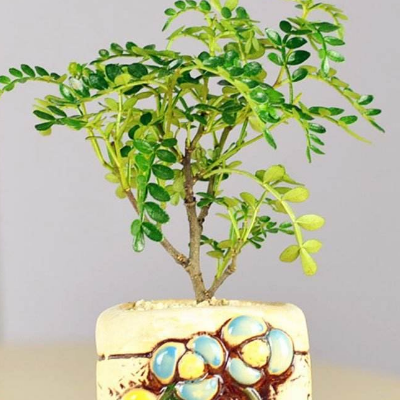
Can Qingxiangmu really repel mosquitoes:
The whole Qingxiangmu plant has a strong pepper fragrance and helps purify the air and repel mosquitoes and flies, but Qingxiangmu's mosquito-repellent effect is not obvious. To be precise, Qingxiangmu does not have mosquito-repellent properties.
In fact, many aromatic plants do give off scents that mosquitoes and other insects dislike, and when they encounter these plants, the insects will automatically detour around them. These plants can indeed repel mosquitoes and insects, but most are only effective for themselves. For these plants to help humans repel mosquitoes, they must be planted over a large enough area and the scent in the air must reach a certain concentration before they are effective. The artificially cultivated pitcher plants sold on the market have already lost much of their insect-catching ability and cannot actively attract and quickly digest mosquitoes and insects. Moreover, because pitcher plants secrete a lot of nectar, they instead attract many small insects to gather around them.
In summer, the soil of potted plants is relatively moist and easily becomes a breeding ground for mosquitoes and insects. For city residents who want to grow green plants, mosquito-repellent plants are indeed a good choice, because even if these plants have limited mosquito-repellent ability, they will not attract mosquitoes and insects. However, for people with respiratory diseases such as asthma, it is not recommended to grow these aromatic plants, because the scents they give off can easily make people feel nauseated and dizzy. It is also not recommended to place these plants indoors; they can be placed near a well-ventilated window.
What should you do if Qingxiangmu leaves turn yellow:
1. Yellowing leaves of Qingxiangmu caused by improper watering
Qingxiangmu seedlings are very afraid of waterlogging. If watered too frequently, it is very easy to cause water accumulation and damage the seedling roots.
If Qingxiangmu leaves turn yellow due to overwatering, stop watering immediately and wait for the water in the potting soil to be fully drained out. During this period, do not do any watering at all!
In addition, Qingxiangmu likes soil that does not easily accumulate water, and drainage must be good. If the soil at your home does not meet this requirement, repot it as soon as possible for the plant's health.
The correct watering approach: water only after the potting soil has dried out, once every 3-5 days, and each time thoroughly soak the soil. The amount of water also varies with the seasons. From late spring to autumn each year, the watering amount is the largest; in winter, when the temperature drops and water evaporation decreases, the watering amount is reduced accordingly.
2. Yellowing leaves of Qingxiangmu caused by excessive fertilizing
Just like with watering, many flower growers think that the more fertilizer they give their plants, the better, not realizing that this actually harms their beloved plants.
For Qingxiangmu, especially Qingxiangmu seedlings, the demand for fertilizer is very low. Only light fertilizer is needed to meet their growth needs. Excessive fertilizing will definitely cause seedling leaves to turn yellow (fertilizer burn) and cause leggy growth.
3. Yellowing leaves caused by insufficient light
Qingxiangmu does not like shady environments, so it must be placed in a place with plenty of sunlight, but be careful not to expose it to harsh sun. Try to meet Qingxiangmu's sunlight needs as much as possible, and manage the environment well for air circulation and ventilation. In winter, maintain a certain temperature to avoid frost damage, and then yellowing leaves, withering, and dropping will all stay far away from us!
4. Leaf drop caused by outdoor environment
In windy conditions, Qingxiangmu potted plants should not be placed outdoors, because Qingxiangmu leaves simply cannot withstand the pressure of strong wind and will drop one after another. At this time, quickly move Qingxiangmu indoors!
In winter, Qingxiangmu can withstand low temperatures of minus 10°C, but as the owner, we should still protect our beloved plant well. As long as Qingxiangmu is placed indoors in winter, there is no problem.
Alright, everyone, you all understand clearly now, and know that Qingxiangmu actually cannot repel mosquitoes.
Can Qingxiangmu repel mosquitoes? Is its mosquito-repellent effect good?
As midsummer arrives, mosquitoes begin to run rampant. In flower and bird markets and other places, many vendors put Qingxiangmu on their counters. This plant that gives off a fresh fragrance is treated as a green mosquito-control method. Can Qingxiangmu repel mosquitoes? Is Qingxiangmu's mosquito-repellent effect good? Let's take a closer look below!
Can Qingxiangmu repel mosquitoes:
The whole Qingxiangmu plant has a strong pepper fragrance and helps purify the air and repel mosquitoes and flies, but Qingxiangmu's mosquito-repellent effect is not obvious. To be precise, Qingxiangmu does not have mosquito-repellent properties.
In fact, many aromatic plants do give off scents that mosquitoes and other insects dislike, and when they encounter these plants, the insects will automatically detour around them. These plants can indeed repel mosquitoes and insects, but most are only effective for themselves. For these plants to help humans repel mosquitoes, they must be planted over a large enough area and the scent in the air must reach a certain concentration before they are effective. The artificially cultivated pitcher plants sold on the market have already lost much of their insect-catching ability and cannot actively attract and quickly digest mosquitoes and insects. Moreover, because pitcher plants secrete a lot of nectar, they instead attract many small insects to gather around them.
In summer, the soil of potted plants is relatively moist and easily becomes a breeding ground for mosquitoes and insects. For city residents who want to grow green plants, mosquito-repellent plants are indeed a good choice, because even if these plants have limited mosquito-repellent ability, they will not attract mosquitoes and insects. However, for people with respiratory diseases such as asthma, it is not recommended to grow these aromatic plants, because the scents they give off can easily make people feel nauseated and dizzy. It is also not recommended to place these plants indoors; they can be placed near a well-ventilated window.
Is Qingxiangmu's mosquito-repellent effect good:
Qingxiangmu's mosquito-repellent effect is not obvious. Therefore, for mosquito prevention in summer, you cannot rely only on Qingxiangmu. Maintaining good hygiene and choosing suitable mosquito-repellent products is the key.
Growing Qingxiangmu at home - Causes of Qingxiangmu leaves turning yellow
Qingxiangmu belongs to a plant in the order Apiales, family Anacardiaceae. Its leaves have a fresh fragrance, and both the young leaves and fruits are red. It can still survive at a low temperature of minus 10°C, and it likes soil with plenty of light and no easy water accumulation.But what habits does Qingxiangmu have, and how should it be grown? In the process of growing Qingxiangmu, you may encounter many problems, for example: why do Qingxiangmu leaves turn yellow?
Growing Qingxiangmu at home - Causes of Qingxiangmu leaves turning yellow
I.Issues to note for seedlings
1. Qingxiangmu seedlings are afraid of waterlogging, so do not water too frequently; use loose soil that does not easily accumulate water.
2. Seedlings are afraid of shade, so they must be placed in a place with plenty of sunlight, avoid harsh sun exposure, and try to meet their sunlight needs. In winter, do a good job of frost protection. Increase ventilation and air circulation for the seedlings.
3. Seedlings do not have high fertilizer requirements; fertilizer should be diluted and light. Too much will cause seedling fertilizer burn or leggy growth.
Growing Qingxiangmu at home - Causes of Qingxiangmu leaves turning yellow
II.Soil and watering
Qingxiangmu requires loose, fertile, and well-drained soil. Although it is not strict about soil requirements and can tolerate drought and poor soil, it can adapt to slightly acidic, neutral, and slightly alkaline sandy and clayey soils.
Potted soil varies from place to place, but loose, fertile, well-drained soil is best. Therefore, when cultivating Qingxiangmu, the soil used for planting Qingxiangmu can be prepared by mixing loam soil, humus soil, and peat soil in a 1:1:1 ratio.
As for watering, wait until the soil in the pot has dried out completely before watering, once every 3-5 days, and each time let the water thoroughly soak the soil. The amount of water also varies with the seasons. From late spring to autumn each year, the watering amount is the largest; in winter, when the temperature drops and water evaporation decreases, the watering amount is reduced accordingly.
Growing Qingxiangmu at home - Causes of Qingxiangmu leaves turning yellow
III.Sunlight
Qingxiangmu is a plant that likes partial shade and partial sun, so Qingxiangmu can be placed in the sun every day, but do not expose it to harsh sun for long periods. Under normal circumstances, placing it on a balcony or in a sunny indoor spot is fine. At the same time, Qingxiangmu can go without sun for several days, and there is no major problem.
Growing Qingxiangmu at home - Causes of Qingxiangmu leaves turning yellow
As for the causes of Qingxiangmu leaves turning yellow, generally speaking there are only two:
1. Too much water was given, damaging Qingxiangmu's root system;
2. There is not enough sunlight.
Growing Qingxiangmu at home - Causes of Qingxiangmu leaves turning yellow
Summary: The above are the cultivation methods for Qingxiangmu. I hope they can be helpful to friends who like growing Qingxiangmu, or to friends who are currently encountering problems.