-

A Complete Analysis of the Key Technical Points of Circular Production of Edible Fungi
Circular Production Technology for Edible Fungi
-
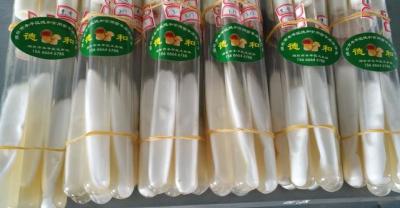
Why can edible mushrooms treat diseases? A popular science analysis of the principles behind them
NO.1 Why edible mushrooms can treat many kinds of diseases Edible mushrooms strengthen the body's constitution and have therapeutic effects of supporting healthy qi and consolidating the foundation, and supporting healthy qi to dispel pathogenic factors, so for many...
-
Straw Grows Small Mushrooms: A New Technology for Circular Agriculture
In the rice-producing areas of the south, the technology of rapid straw decomposition and return to the field is promoted; in the dry-farming agricultural areas of the north, the technology of straw bio-reaction carbon fertilizer utilization is the focus of promotion; in the key corn and wheat producing areas, the technologies of straw crushing and return to the field, straw silage for feed, and straw forming, solidification and gasification for fuel are promoted, achieving a fundamental shift from "storing grain in granaries" to "storing grain in the land." In Nannihe Village, Zhaoxian County, the village is not large, but it has already developed more than 200 button mushroom (Agaricus bisporus) sheds. Each mushroom shed can convert and utilize the straw produced from 20 mu of land and more than 3,000 kg of dry livestock and poultry manure, producing more than 2
-
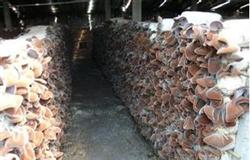
Detailed Explanation of Key Points for Cultivating Yellow-Back Wood Ear Mushroom (Auricularia polytricha) on Rice Straw
1 Rice straw softening treatment. The quality of rice straw treatment is the key to the success or failure of cultivating yellow-back wood ear mushroom and to achieving high yields. Rice straw is a loose material that easily accumulates water but is difficult to shape, and its epidermis in particular has a waxy layer that can hinder mycelial colonization of the substrate. Through experimentation, we have developed 3 methods for softening rice straw...
-
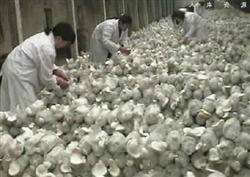
What causes irregular pinning in white lingzhi mushrooms (Pleurotus nebrodensis), and how can it be prevented and controlled?
What is irregular pinning in white lingzhi mushrooms (Pleurotus nebrodensis), and how should it be prevented and controlled? Please provide an introduction and control methods. Irregular pinning in white lingzhi mushrooms means that mushroom primordia do not form normally at the two ends of the mushroom bag, but instead appear in the middle of the bag, which has a major impact on yield. The following four points can effectively prevent irregular pinning in white lingzhi mushrooms: First, the mushroom bag filling must be standardized. Try to fill the bags evenly and tightly...
-
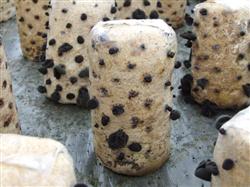
What are the key management points during the fruiting body stage of wood ear mushroom (Auricularia polytricha)?
What should be paid attention to during the fruiting body stage of wood ear mushroom (Auricularia polytricha)? Please give guidance. The fruiting body stage of wood ear mushroom occurs from May to October each year. To produce high-quality, high-yield wood ear mushroom, scientific management methods are very important. The key techniques for managing the fruiting body stage of wood ear mushroom are introduced below: 1. Temperature control. The temperature range for ear growth is...
-
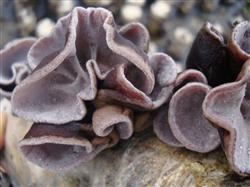
Cultivation Methods and Technical Key Points for Oversummering Auricularia polytricha
How to cultivate oversummering Auricularia polytricha? Please give guidance. For substitute-material cultivation of Auricularia polytricha and Auricularia maxima, there are two types: spring cultivation and autumn cultivation, and in most regions it is spring cultivation. However, in spring cultivation, the early stage generally has low temperatures, making mycelial growth difficult; in the later stage, the fruiting temperature is high, resulting in many malformed fruiting bodies. To solve this problem, soil-covering oversummering cultivation is carried out. Feeding 200...
-
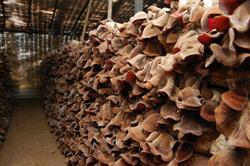
Detailed Explanation of Key Management Techniques for Oversummering Wood Ear Mushroom (Auricularia polytricha)
How to manage oversummering wood ear mushroom (Auricularia polytricha)? Please give an introduction. Oversummering wood ear mushroom (Auricularia polytricha) can be managed by referring to the following methods: 1. Making fungus logs. For soil-covered oversummering cultivation of wood ear mushroom (Auricularia polytricha), the inoculation time for making fungus logs should be postponed by 30-45 days compared with conventional spring cultivation, that is, from late April to early May. At this time, the temperature is 20-30°C, which is just suitable for...
-
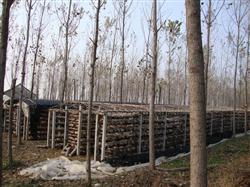
Key Techniques for Summer Cultivation of Black Wood Ear (Auricularia heimuer) in Forest Intercropping
How do you cultivate black wood ear in forest intercropping in summer? Please provide guidance. Under normal conditions, black wood ear grown in forest intercropping should produce 3 flushes. However, at present, after some first-flush wood ears are harvested, the bags become infected with contaminant microorganisms before the second flush even emerges, causing reduced yields or even total crop failure in the second and third flushes, which hurts profits. I. Causes of contaminant microorganism infection during flush transition: (1)...
-
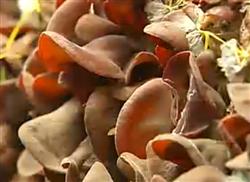
What are the cultivation methods for Auricularia polytricha?
How is Auricularia polytricha cultivated? Please give guidance. Auricularia polytricha is a medium-to-high temperature type fungus with a relatively wide temperature adaptation range; the young fruiting body is cup-shaped, gradually growing into an ear shape, with many ear pieces connected together in a chrysanthemum shape; the diameter is generally 10 cm-20 cm, and after drying it shrinks strongly into a horny texture, hard and brittle...
条件筛选