Detailed Explanation of Key Management Techniques for Oversummering Wood Ear Mushroom (Auricularia polytricha)
How to manage oversummering wood ear mushroom (Auricularia polytricha)? Please give an introduction. Oversummering wood ear mushroom (Auricularia polytricha) can be managed by referring to the following methods: 1. Making fungus logs. For soil-covered oversummering cultivation of wood ear mushroom (Auricularia polytricha), the inoculation time for making fungus logs should be postponed by 30-45 days compared with conventional spring cultivation, that is, from late April to early May. At this time, the temperature is 20-30°C, which is just suitable for...
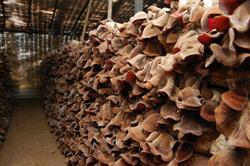
How to manage oversummering wood ear mushroom (Auricularia polytricha)? Please give an introduction
Oversummering wood ear mushroom (Auricularia polytricha) can be managed by referring to the following methods:
1. Making fungus logs For soil-covered oversummering cultivation of wood ear mushroom (Auricularia polytricha), the inoculation time for making fungus logs should be postponed by 30-45 days compared with conventional spring cultivation, that is, from late April to early May. At this time, the temperature is 20-30°C, which is just suitable for the mycelial growth of wood ear mushroom (Auricularia polytricha). Preparation of culture material: 80% cottonseed hulls, 16% wheat bran, and 1% each of sugar, gypsum, quicklime, and superphosphate. The material-to-water ratio is about 1:1.2. First dissolve the sugar and superphosphate in water, then sprinkle water while mixing the material until uniform. Put the material into 17×33 cm polyethylene bags, with about 500 grams of dry material per bag, seal the openings, and sterilize under normal pressure. After inoculation, move them into the spawn-running room and stack them in a tic-tac-toe pattern, 6-8 layers high. The spawn-running room requires good ventilation, shading from light, and a temperature controlled below 30°C. Open doors and windows once in the morning and once in the evening for ventilation, 30 minutes each time. In the later stage of spawn running, the temperature gradually rises, so the frequency and duration of ventilation should be increased accordingly. Turn the stacks once a week, check the spawn-running condition, and remove contaminated fungus logs. If poor mycelial growth or failure to colonize the material is found, puncture holes to increase oxygen and promote mycelial growth. Generally, after 35-40 days of cultivation, the mycelium can fill the material bags.
2. Bag removal and soil covering After the material bags are fully covered with mycelium, they can be removed from the bags and cultivated with soil covering. Before removing the bags, first level the land and make beds. Choose a shaded place near a water source with good ventilation (among trees or using a shiitake mushroom shed), level the land, and make beds 1 m wide, 20 cm deep, and of unlimited length. The bed surface should be shaped like a turtle back, and a thin layer of lime should be scattered on the bed surface. Then wipe and wash the fungus logs with a 0.1% potassium permanganate solution, cut open the film with a sharp blade to remove the bags, arrange them neatly on the bed, and cover with a 2 cm thick layer of garden soil or fine field soil. The soil should be fertile and loose. Finally, set up an arched frame and cover it with film to retain moisture.
3. Fruiting body management The key to management after soil covering is water regulation. Generally, watering management is carried out on the 2nd day after soil covering, spraying once in the morning and once in the evening. At this time, because summer has begun, the temperature is high and evaporation is large, so watering should be done with fine and light spraying so that water penetrates the soil and the covering soil remains moist at all times. Generally, 2-3 days after soil covering, the mycelium begins to extend toward the soil surface, and about 12 days later ear buds appear, entering the fruiting stage. At this time, on sunny days, watering should be increased to 3-4 times per day. Watering should be combined with ventilation, achieving alternating dry and wet conditions, so as to keep the ear pieces from drying out and the edges from curling. On rainy days, cover with film to prevent rain, but leave ventilation openings at both ends. During this period, the air in the ear field should also be kept fresh, and the air humidity should be controlled at 90-95%. If about 15 days after ear buds appear, the ear pieces are fully expanded, the edges have wavy lines, and the ear base is loose, they can be harvested. After harvesting the first flush of ears, promptly remove the residual ear bases on the surface of the covering soil, stop watering for 2-3 days, and cover with film to retain warmth so that the mycelium can recover and grow. After about 4-5 days, when the second flush of ear buds begins to form, uncover the film for ventilation, spray water to retain moisture, and the method is the same as before. Under normal conditions, 5-6 flushes can be harvested, and the biological efficiency is stable at about 150%.
Soil-covered oversummering cultivation of wood ear mushroom (Auricularia polytricha) has advantages such as stable material temperature, less contamination, fast fruiting, large and uniform ear pieces, distinct flushes, and no restriction by site. At the same time, it can overcome the shortcomings of slow mycelial growth during the spawn-running period in spring cultivation and difficulty in fruiting due to low temperature in the later stage of autumn cultivation. In addition, because moisture retention is enhanced after soil covering, it avoids the phenomenon of excessive water loss in conventional bag cultivation, and therefore has an obvious yield-increasing effect.
Click to get more wood ear mushroom cultivation techniques
Click to get more edible fungus cultivation techniques