What are the key management points during the fruiting body stage of wood ear mushroom (Auricularia polytricha)?
What should be paid attention to during the fruiting body stage of wood ear mushroom (Auricularia polytricha)? Please give guidance. The fruiting body stage of wood ear mushroom occurs from May to October each year. To produce high-quality, high-yield wood ear mushroom, scientific management methods are very important. The key techniques for managing the fruiting body stage of wood ear mushroom are introduced below: 1. Temperature control. The temperature range for ear growth is...
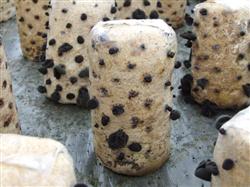
What should be paid attention to during the fruiting body stage of wood ear mushroom (Auricularia polytricha)? Please give guidance.
The fruiting body stage of wood ear mushroom (Auricularia polytricha) occurs from May to October each year. To produce high-quality, high-yield wood ear mushroom, scientific management methods are very important. The key techniques for managing the fruiting body stage of wood ear mushroom are introduced below:
1. Temperature control. The temperature range for ear growth is 16°C~35°C, with the most suitable growth temperature being 24°C~28°C. Within this temperature range, the higher the temperature, the faster the ear grows. When the temperature is below 18°C, ear growth is slow; when the temperature exceeds 35°C, ear growth is inhibited. When the temperature is below 20°C, ventilation should be reduced and insulation work should be done well. When the temperature exceeds 33°C, attention should be paid to spraying water to cool down and strengthening ventilation.
2. Humidity regulation. During the growth and development stage of ear, the required relative air humidity is 85%~95%. The relative air humidity can be maintained through artificial water spraying. When spraying water, a water pipe can be used to spray directly onto the ear and the space, but water should mainly be applied to the space and the ground. Water spraying should be determined according to the climate and the growth conditions of the ear. On sunny days, when the temperature is high and the ear is large, the amount of water sprayed should be greater, spraying 3~4 times per day; on cloudy days, when the ear is small, spray less water or no water. When the edges of the ear curl, turn black and harden, it indicates that the humidity in the environment is insufficient, and water should be sprayed promptly. Wood ear mushroom ear has strong drought tolerance. Even if the ear turns black, hardens, and curls from drying, after spraying water and absorbing it to recover, it can resume growth. Therefore, in management, alternating dry and wet conditions should be adopted, keeping the environment in a dry-wet alternating state, which is beneficial for improving the quality and yield of the ear.
During high-temperature periods, alternating dry and wet management should be especially well done. If kept in a high-temperature and high-humidity environment for a long time, "flowing ear" is very likely to occur. After each water spraying, combine with ventilation and air exchange to let excess water on the ear dissipate. During continuous rainy days, ventilation and air exchange must be increased to prevent "flowing ear".
3. Increasing light. The intensity of light has a relatively large impact on the quality of the ear. Under strong light, the grown ear is thick-fleshed, dark in color, soft, with coarse and long fuzz, and after drying, the ear is black. Under weak light or near-dark environmental conditions, the ear color is light, appearing pale red, the ear is relatively thin, and the fuzz on the ventral surface is fine and short, not obvious; after drying, the ear is reddish-brown and semi-transparent. Therefore, by regulating the light intensity of the fruiting environment, ear of different qualities can be produced to meet market needs.
4. Maintaining ventilation. During the growth and development of the ear, a large amount of oxygen is absorbed and carbon dioxide is expelled. If ventilation in the ear shed is poor, a high-concentration carbon dioxide environment will be created, and the ear cannot differentiate and form normally, instead growing into "finger-shaped" fruiting bodies. In the later stage of ear growth, when encountering high temperature and high humidity, "flowing ear" will occur. Therefore, during the fruiting period, the air in the ear shed should be kept flowing and fresh. Since ventilation contradicts heat preservation and moisture retention, ventilation should be carried out according to temperature and humidity. When the temperature is low and humidity is low, ventilation should be reduced; when the temperature is high and humidity is high, ventilation should be increased; during continuous rainy days, ventilation should be maintained continuously to reduce humidity and prevent "flowing ear".
5. Management of the second flush. Under normal conditions, wood ear mushroom can be harvested 3~4 flushes continuously. The 1st~2nd flushes have large quantity and good quality, while the ear quality after the 3rd flush is relatively poor. After harvesting the first flush, in order to promote rapid transition to the second flush of fruiting body growth, the following steps should be noted in management:
1. Clean the ear base. After harvesting the first flush of fruiting bodies, if the ear base is not removed cleanly, when the temperature is high, it is prone to mold and rot, leading to contamination by competing fungi and making regrowth impossible. For this reason, during harvesting, the entire cluster should be cut off along the bag surface, and a sharp knife should be used to remove the residual ear base at the hole opening.
2. Control humidity and cultivate mycelium. After harvesting, stop spraying water on the fungus bags for 3~5 days, while strengthening ventilation, and thin out the covering on the shade shed to increase light, so that surface moisture contracts. The mycelium inside the bag continues to absorb nutrients, shifting from the original reproductive growth back to vegetative growth. At this time, the temperature should be maintained at 24°C~26°C to promote rejuvenation of the fungal body and provide strong mycelium conditions for the second flush of fruiting.
3. Increase humidity to induce ear formation. After harvesting wood ear mushroom, part of the moisture in the substrate has already been consumed. In order to induce primordium formation, a small amount of atomized water must be sprayed on the surface of the substrate, and the film should be uncovered normally every day for ventilation to renew the air in the shed; at the same time, temperature difference stimulation and alternating dry and wet conditions should be used to promote rapid primordium formation, differentiation into ear buds, and growth into fruiting bodies.
After each flush of fruiting bodies is harvested, because the moisture and nutrient content in the bag are relatively reduced, the number of water sprayings and the amount of water sprayed should be correspondingly increased progressively in sequence. Some yield-increasing agents can also be sprayed to supplement nutrition, promote thick and plump ear, and increase yield.
Click to get more wood ear mushroom cultivation techniques
Click to get more edible mushroom cultivation techniques