-
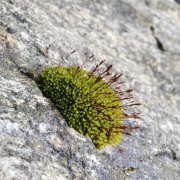
Does wall moss have leaves? A detailed explanation of its living environment, reproduction method and conducting tissue
Wall moss is a bryophyte, belonging to the family Pottiaceae among bryophytes, and is a clump-forming plant, mainly growing on soil under forests or on rocks at an altitude of about 1200 m. This moss is also very widely distributed; in China its main distribution areas are Xinjiang, the northern and southern
-
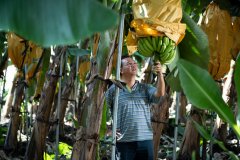
Fighting Banana Yellow Leaf Disease: Taiwan, China Pioneers Tissue-Cultured Plantlets with Tai Chiao No. 1, Banana Farmers Figure Out the Logic from the Soil
Banana's incurable disease, yellow leaf disease, has taken root in Taiwan, China for more than 50 years. Taiwan, China's leader in banana research, the Taiwan Banana Research Institute, has repeatedly set world precedents, developing tissue-cultured banana plantlets and multiple disease-resistant banana varieties and earning international fame, while professional banana farmers have developed a set of soil-improvement,
-

What are the precautions for walnut tissue culture
(1) Contamination The tissue culture process requires a relatively highly sterile environment. During tissue culture, it is often infected by microorganisms such as fungi and bacteria, which multiply in the culture vessels and affect the normal growth and development of the culture material. At every step of culturing, attention must be paid to adequate disinfection and sterilization. Inoculation tools, inoculation materials, and operators must all be strictly sterilized as required before inoculation operations, including used inoculation bottles, bottle stoppers, and so on, which must be carefully cleaned and sterilized before they can be used again. The inoculation room, culture room, and ultra-clean workbench should be regularly fumigated with formalin and frequently sterilized with ultraviolet lamp irradiation.
-
A Detailed Explanation of the Basic Operational Procedure for Walnut Tissue Culture Propagation
Tissue culture propagation has high reproductive efficiency, is unaffected by seasons and disastrous weather, allows year-round propagation, and the material can multiply in geometric progression, giving a fast rate of seedling multiplication. The culture technique is simple and easy to perform, convenient to manage, and the culture conditions can be controlled artificially, which facilitates automated management.
-
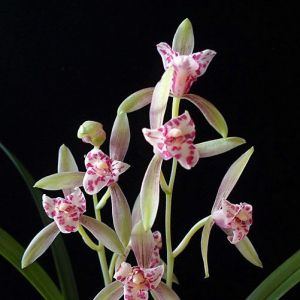
Sharing My Experience in Growing Back-Sold Tissue-Cultured Hybrid Orchids
Green Three Star~~Lucky Star
-
What do old orchid varieties, new varieties, original species, re-imported varieties, and tissue-cultured seedlings mean?
Baomuzhaizhu First, it is something we often see: sellers add the two words "old variety" before the variety name. It should be pointed out here that this is a huge deception. The so-called "old variety" has, as parallel terms, "new old variety," "new variety," or "newly collected flower." "Old variety" is not a word describing origin; it...
-
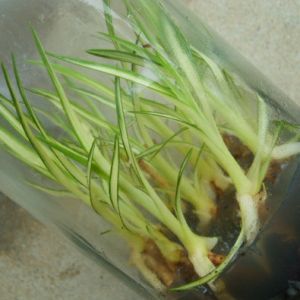
What are the reasons tissue-cultured orchid plantlets are not good
Besides being difficult to grow, tissue-cultured orchid plantlets also have a low survival rate. The low survival rate is related to the special propagation method used for tissue-cultured plantlets: the heavy use of hormones and chemical nutrients leaves the orchid plantlets in poor physical condition, frail and unable to withstand the slightest stress, and poorly adapted to the growing environment after being taken out of the flask, so they tend to sulk, neither dying nor thriving. If they are genuine tissue-cultured orchids, the flowers they produce should be the same as before, unless the wrong goods were sent. In short, tissue-cultured plantlets in the weak-plantlet stage are generally not suitable for growing at home, because these tissue-cultured plantlets themselves have low dry-matter content, poor disease resistance, a low survival rate in home cultivation, and a long cultivation cycle; many unscrupulous traders often pass off ordinary varieties as rare varieties to make money, because tissue-cultured plantlets make it hard to distinguish the characteristics of each variety (they look basically the same); if you want to introduce rare orchid tissue-cultured plantlets, it is advisable to do so at agricultural and forestry research institutes that carry out orchid tissue culture, where quality and variety are guaranteed.
-
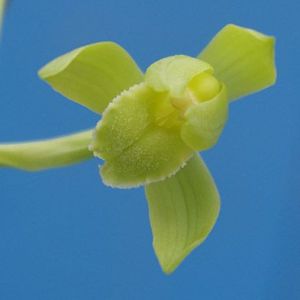
Orchid Cultivation and Tissue Culture Technology Video Tutorial
Huisi has good form and upright flower shape
-
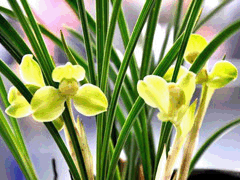
The secret formula for growing tissue-cultured orchids and rejuvenating weak seedlings fully revealed
Revealing the "secret formula" for growing tissue-cultured orchids and rejuvenating weak seedlings
-
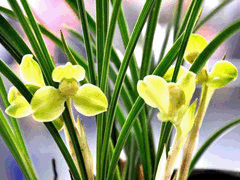
Detailed Explanation of Key Points of Orchid Tissue Culture Rapid Propagation Technology
Overview of Orchid Tissue Culture Rapid Propagation Technology
条件筛选