The secret formula for growing tissue-cultured orchids and rejuvenating weak seedlings fully revealed
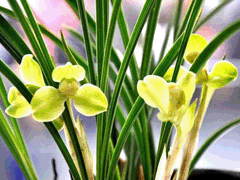 Revealing tissue cultureorchidsgrowing and rejuvenating weak seedlings "secret formula"
http://www.dfac.cc/showtopic-17-214140-0-0-1.htm
Vermiculite + Kanuma soil, 50% each: suitable for tissue-cultured seedlings and old pseudobulbs with few roots
Pure Kanuma soil + seaweed organic fertilizer granules (low-nitrogen formula) + Hyponex No. 2 spray: suitable for imported orchids
Kanuma soil + 50% seed-starting soil mix: suitable for relatively robust wild-collected orchids and commercial orchids
Seed-starting soil mix: Brand: Taiwan Cuiyun, best for seed sowing and cutting survival Made from pure natural raw materials blended in a professional formula, most suitable for sowing and cutting propagation of all kinds of flowers, vegetables and tree seedlings; this product has strong water retention, please do not overwater. Contains peat soil, woody peat, coconut coir powder, vermiculite, with the best water retention, fertilizer retention and air permeability, can promote rapid germination and vigorous root growth. Absolutely contains no agricultural or livestock waste, guaranteed odorless, does not breed mosquitoes or flies Tissue-cultured seedlings and sprouting from old pseudobulbs mainly require clean growing medium + moisture retention + ventilation and air permeability + low salt Woody peat, coconut coir powder, vermiculite are all good growing materials Combined with high-grade Kanuma soil, it is also effective for small-scale balcony growing Tissue-cultured orchids purchased from Tongxin, grown with seed-starting soil mix + Kanuma soil at 50% If it is tissue-cultured Green Cloud, replacing with Kanuma soil + coarse vermiculite at 50% is more suitable About vermiculite Vermiculite is a layered-structure magnesium-containing hydrous aluminum silicate. Because it curls when heated and expands, resembling a leech in shape, it is called vermiculite. Vermiculite is a mica-like mineral of the hydrous silicate class, mainly formed from the alteration of biotite and phlogopite. In addition to magnesium, iron, silicon and aluminum, its composition also contains 8%-13% crystal water. After roasting, vermiculite expands rapidly in volume, increasing to 8-20 times its original volume. The expanded vermiculite is granular, with a diameter of about 0.5-0.8mm. The specific gravity of expanded vermiculite is 0.06-0.2 tons/cubic meter. It has excellent properties such as heat insulation, frost resistance, antibacterial, fireproof and sound absorption, and its dielectric properties are relatively poor. When roasted at 800-1000 degrees high temperature, its volume can increase 4-15 times, and the color turns golden yellow or silvery white. Vermiculite is divided by stage into raw vermiculite ore and expanded vermiculite, and by color into golden vermiculite, silvery white vermiculite and milky white vermiculite. As horticultural vermiculite, its main role is to increase the aeration and water retention of soil (medium). Because it is fragile, as the use time extends, it easily makes the medium compact and lose aeration and water retention, so coarse vermiculite lasts longer than fine vermiculite and has better effects. Therefore, horticultural vermiculite should choose coarser flake-like vermiculite. Even for sowing medium for fine seeds and as a covering for sowing, coarser is better.Wuyan wrote: It is said that Korea uses vermiculiteGrowing orchids.
If pure Kanuma soil is used for growing, it lacks this medicinal guide
The possibility of balcony growing failure is relatively high
Vermiculite's moisture retention, air permeability and fertilizer retention are better than pure Kanuma soil
After three months of growing, seaweed liquid fertilizer can be applied.
Orchid seedlings grown this way have clean white roots, thick fat leaves, plump pseudobulbs and strong disease resistance