Detailed Explanation of Key Points of Orchid Tissue Culture Rapid Propagation Technology
Overview of Orchid Tissue Culture Rapid Propagation Technology
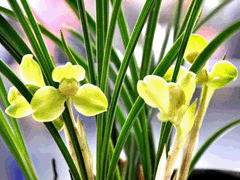 Orchidsare generally propagated by division, but the propagation coefficient is low. Nowadays, commercial production of tropical orchids is all carried out through test-tube seedling cultivation, which can generally be divided into two types: seed sowing to produce seedling plants and tissue culture to produce mericlone plants, each with its own merits. Below is an explanation of their production processes and applications:
I. Orchidseedsowing: Orchidfruits are commonly known as orchid capsules, containing thousands to millions of seeds, varying by species. The seed development of Orchidaceae plants is rather special: after the seeds mature, they have no endosperm and need to coexist symbiotically with certain fungi, relying on the fungi to provide nutrients in order to germinate. Under natural conditions, the germination rate is very low. In early times, orchid seeds could be made to germinate by artificial inoculation with fungi, but the technique was cumbersome and rather difficult. Later it was discovered that on artificial culture media, without fungal symbiosis, orchid seeds can also germinate and grow if the nutrients are suitable. Commonly used media include KC, VW and Kyoto, among which the Kyoto formula uses Huabao flower fertilizer as the main inorganic component, is convenient to prepare, and is more suitable for orchid enthusiasts. Orchidseedculture is a necessary means for orchid hybrid breeding and also an important technique for orchid seedling production. For example, in current domestic Phalaenopsis seedling production, most are seedling plants. Compared with mericlone plants, seedling plants often cannot guarantee completely consistent traits, so the requirements for the parents are very high. The offspring of good parents will not segregate greatly, and the rate of good flowers can reach more than 80%. The production of seedling plants is relatively simple and rapid. Taking Phalaenopsis as an example, from one good capsule, after sowing, about tens of thousands of small protocorms can be produced in about two months. After one subculturing, seedling cultivation can proceed, and after about 3 months, a large number of transplantable test-tube plantlets are obtained.II. Tissue culture: Since MOREL first successfully carried out orchid tissue culture in the 1960s, tissue culture has now been carried out on orchids of dozens of genera. Seedlings produced through tissue culture and cloning technology have traits completely identical to the mother plant. The rapid propagation of tropical orchids by tissue culture is generally carried out by inducing the production of protocorm-like bodies (PLBs) and propagating through PLB multiplication. The best starting material is the shoot apical meristem, and dormant axillary buds on the flower stalk are also one of the most commonly used materials. For some monopodial orchids such as Phalaenopsis, if the shoot tip is taken, the mother plant is often lost, while taking the flower stalk does not cause such worry.
In the process of plant tissue culture, somaclonal variation often occurs. This can be used as a breeding method, but it is unfavorable for commercial production, so when propagating through PLBs, great attention must be paid to removing morphologically abnormal tissues. At present, part of the mericlone seedling production of Phalaenopsis in Taiwan, China, adopts the clustered shoot method, that is, inducing axillary buds on the flower stalk to form small shoots, then inducing clustered shoots from the small shoots and continuously cutting and multiplying them. Seedlings produced in this way can basically ensure consistency with the traits of the mother plant. However, the production cost is high and the cycle is extremely long, and it is often necessary to have a certain number of mother plants from which to take flower stalks. Actually, as far as commercial orchid production is concerned, propagation through PLBs to produce mericlone seedlings is the most efficient, and through control, the variation rate can be reduced to a very low, negligible level. In addition, young flower stalks are also a very good starting material and can induce PLBs or adventitious buds. In recent years, tissue culture of Chinese orchids has developed greatly.
Cymbidium goeringiiCymbidium sinense、andCymbidium ensifoliumand other traditional famous orchids can all be cloned. The tissue culture of this type of terrestrial orchid differs from that of tropical orchids: it is carried out by inducing the production of rhizomes, propagating through rhizomes, and generating small plantlets at the front end of the rhizomes. There are also reports of callus induction, but all must go through the rhizome formation stage. Traditional famous orchids such as these can now be cloned. The tissue culture of these terrestrial orchids differs from that of tropical orchids: it works by inducing the production of rhizomes, propagating through the rhizomes, and generating young plantlets at the tips of the rhizomes. There are also reports of callus induction, but all of them must go through the rhizome development stage.