-
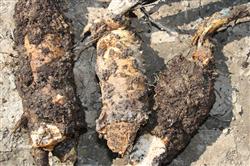
How to prevent and control ginseng root rot? These methods you need to master
How to prevent and control ginseng root rot? Please give an introduction. Symptoms of ginseng root rot: it mainly damages the roots of seedlings and the stem parts below the soil surface. The rotting ginseng roots appear dark brown and wet-rotten, and later become decayed and hollow, with only the hollow root skin remaining. The aboveground parts of affected ginseng seedlings show no obvious symptoms in the early stage, and in the middle and late stages the leaves fade to yellow, wilt and die....
-
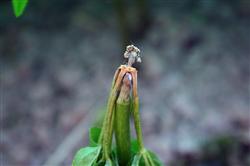
What are the control methods for ginseng gray mold?
How do you control ginseng gray mold? Please explain the methods. Ginseng gray mold symptoms: It damages ginseng leaves; the lesions on the leaves are limited by the leaf veins and appear polygonal or irregular. They are light brown, and on the underside of the lesions there is a sparse, thin, grayish-white or pale yellow mold layer, namely the pathogen's sporangiophores and sporangia. In the later stage, the lesion tissue necroses, breaks apart easily...
-
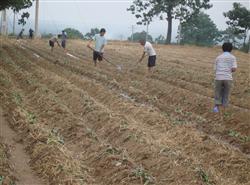
What are the methods of using potassium fertilizer in sweet potato cultivation?
What are the ways to use potassium fertilizer for growing sweet potatoes? How can potassium fertilizer be used for growing sweet potatoes to get good results? Please help explain, fellow gardeners. Sweet potatoes have a high demand for potassium fertilizer, and it is also a magic weapon for increasing sweet potato yields. Zhongdiwang has compiled the methods for using potassium fertilizer in sweet potato cultivation, listed below for fellow gardeners' reference. Method 1: Apply sufficient base fertilizer...
-
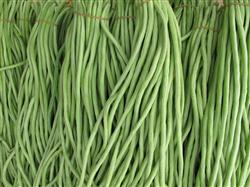
How to keep green beans fresh and preserve them? A few practical methods to teach you
How do you keep green beans fresh and preserve them? How can green beans be preserved well? Please provide an introduction to methods. If you want to keep green beans fresh for a long time, you can refer to the following methods: 1. Bag storage method: first lay the green beans row by row flat in a basket or wooden box, leaving a certain gap in between, and do not pack them too tightly. Then move them into...
-
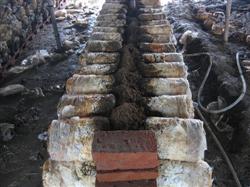
What are the methods for preventing and controlling pests and diseases of oyster mushrooms in summer?
How do you prevent and control pests and diseases of oyster mushrooms in summer? Please describe the methods. The following methods can be used to prevent and control pests and diseases when cultivating oyster mushrooms in summer: 1. Site disinfection. Spray the entire cultivation site with dichlorvos for disinfection, spread a layer of quicklime on the ground, and nail window screens over windows and ventilation holes to prevent pests from entering. 2. Substrate...
-
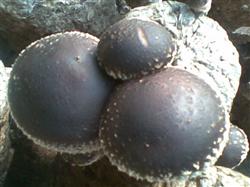
What are the control methods for mushroom death in summer for oyster mushrooms?
How to prevent and control mushroom death when cultivating oyster mushrooms in summer? Please introduce the methods. When cultivating oyster mushrooms in bags in summer, sometimes a large number of small mushrooms die after fruiting. The main reasons are the following four points, and preventive measures should be taken early. Excessive temperature: After the primordia of oyster mushrooms form, if high temperature (above 30°C) continues, the caps...
-
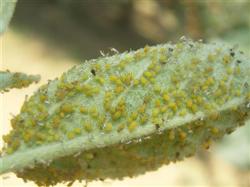
What are the common pests of camellias? Detailed control methods
What pests of camellias need to be controlled? Here is a detailed introduction. Camellias have the following pests that need to be controlled: Aphids [Appearance and damage] Aphids are divided into two types: winged aphids and wingless aphids. The winged viviparous female aphid has transparent wings and a dark brown body; the wingless viviparous female aphid has no wings and a dark brown body. In addition, the nymph resembles the adult in appearance, has no wings, and is light yellow. Adults and nymphs gather on the young shoots of camellias to suck sap, causing the buds and leaves of the affected camellias to shrivel and severely affecting growth. The excrement of aphids can cause sooty mold.
-
What are the seed-scion grafting methods for potted camellias?
How do you graft potted camellias using seed scions? Here is an introduction. For seed-scion grafting of potted camellias, you can refer to the following methods: 1. Sprout the seeds and cut the scion: first sprout the seeds. When the seed sprouts emerge above the surface of the sand bed, grafting can begin. Take the sprouted seeds, rinse them clean, and use a grafting knife to cut off the root end, keeping a length of 6-9 cm...
-
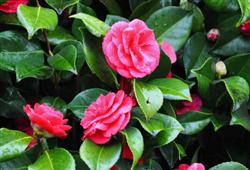
Common Pests and Diseases of Camellias and Their Control Methods
Which pests and diseases of camellias need to be controlled? The pests of camellias include aphids, scale insects, red spider mites, rust mites, and leaf-rolling moths. Except for rust mites, they can be controlled with ordinary insecticides. The most serious are rust mites and mite pests, which are powdery white, very small, and hard to spot, attacking specifically the young leaves and tender shoots of camellias, causing the undersides of the leaves to turn yellow as if rusted, twisting the leaves, and preventing new shoots from growing...
-
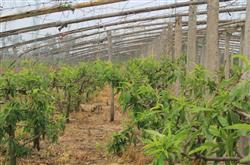
How to prune newly planted peach trees? A full breakdown of the key methods
How should newly planted peach trees be pruned? When is the best time to prune newly planted peach trees for the best results? Please provide guidance. Peach trees have a relatively large annual growth increment, and their buds have strong precocity, so a newly planted peach tree can sprout 3 to 4 flushes of shoots in the same year. Therefore, this characteristic of peach trees can be used, on the premise of strengthening fertilizer and water management, through summer pruning...
条件筛选