What are the common pests of camellias? Detailed control methods
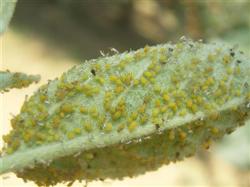
What pests of camellias need to be controlled? Here is a detailed introduction. Camellias have the following pests that need to be controlled: Aphids [Appearance and damage] Aphids are divided into two types: winged aphids and wingless aphids. The winged viviparous female aphid has transparent wings and a dark brown body; the wingless viviparous female aphid has no wings and a dark brown body. In addition, the nymph resembles the adult in appearance, has no wings, and is light yellow. Adults and nymphs gather on the young shoots of camellias to suck sap, causing the buds and leaves of the affected camellias to shrivel and severely affecting growth. The excrement of aphids can cause sooty mold.
 What pests of camellias need to be controlled? Here is a detailed introduction
Camellias have the following pests that need to be controlled:
Aphids
[Appearance and damage] Aphids are divided into two types: winged aphids and wingless aphids. The winged viviparous female aphid has transparent wings and a dark brown body; the wingless viviparous female aphid has no wings and a dark brown body. In addition, the nymph resembles the adult in appearance, has no wings, and is light yellow. Adults and nymphs gather on the young shoots of camellias to suck sap, causing the buds and leaves of the affected camellias to shrivel and severely affecting growth. The excrement of aphids can cause sooty mold.
[Control methods] 1. During the peak occurrence of aphids, spray camellia plants with a 2,000-fold dilution of 50% phosphamidon emulsion or a 1,000-fold dilution of 50% dimethoate emulsion, once every 3-5 days, for 3 consecutive times, to eliminate aphids. 2. Soak 0.5 kg of tobacco stems and 0.25 kg of quicklime in 10-15 liters of water for a day and a night, filter out the residue, and use the liquid for spray control; the effect is good.
Scale insects
[Habits and damage] There are many kinds of scale insects that harm camellias, and the serious ones include the cottony cushion scale, the red wax scale, and the chaff scale. Scale insects lay a large number of eggs; each female can lay about a thousand eggs, and 3-5 generations occur in 1 year. Most overwinter as fertilized females on branches and leaves, and begin laying eggs to cause damage in March of the following year, mostly gathering on tender branches and leaves to suck sap. Affected leaves change from green to grayish green, and finally to yellow. In severe cases, the branches and leaves are covered with scale insects, causing the whole plant to wither and die. Their secretions can induce sooty mold.
[Control methods] 1. Manual control: Most of these insects gather in groups. When the number during the occurrence cycle is not large, the insect bodies can be directly crushed on the branches and leaves. 2. Chemical control: Seize the characteristic that newly hatched nymphs have weak resistance to pesticides, and grasp the timing of application. Adults have a waxy body, so the control effect is relatively poor. A commonly used pesticide is rosin mixture made by boiling rosin and caustic soda (sodium hydroxide) with water (rosin:caustic soda:water = 3:2:10). This liquid is dark brown and mainly contains excess free alkali and rosin soap solution. It has a strong corrosive effect on the waxy covering outside the bodies of scale insects and is an effective pesticide for controlling many kinds of scale insects. Generally, a 10-fold dilution is used in winter and a 20-fold dilution in summer. A 5-fold dilution of 40% omethoate can also be applied to the trunk. 3. Improve the ventilation and light conditions of camellias to inhibit the growth and reproduction of scale insects.
Stem borers
[Damage situation] These insects mainly harm the branches and tips of camellias. The affected branches and tips initially appear wilted and gradually all die over time. Generally, they mainly harm spring shoots in March-April and mainly harm summer shoots in August-September. The affected branches and tips have borer holes and fecal excrement, and the branches eventually dry up.
[Control methods] 1. Cut off and centrally burn the branches with stem borers. 2. Light traps can be used to kill adults. 3. During the peak emergence period of adults, spray with a 500-fold dilution of 20% dimethoate emulsion or a 1,000-fold dilution of 90% trichlorfon; during the larval stage, a 500-fold dilution of 90% trichlorfon can also be sprayed.
Black citrus whitefly
[Damage situation] The black citrus whitefly mainly harms camellia leaves, sucking the sap of the leaves. Its secretions can lead to a large outbreak of sooty mold, seriously affecting the normal photosynthesis of camellias and causing phenomena such as a large number of flowers dropping.
[Control methods] 1. In winter or early spring, cut off branches and leaves with insects and burn them centrally to remove the source of insects. 2. During the peak hatching period of nymphs, spray with an 800-1,000-fold dilution of 25% phosmet or 50% malathion; or spray with a 1,000-fold dilution of 40% dimethoate, 50% dimethoate, or 50% fenitrothion; or spray with a 1,000-fold dilution of buprofezin (also known as thiazinone), once every 7 days, with good results.
Tea shoot moth
[Damage situation] The tea shoot moth uses its larvae to harm the mesophyll of camellias and bore into and feed on camellia spring shoots, causing the affected spring shoots to gradually wither and die.
[Control methods] 1. During the peak period of adults, cut off the affected leaves and branch tips and burn them centrally to eliminate the pests. 2. During the larval damage period, spray with a 500-1,000-fold dilution of trichlorfon, or spray with a 1,000-fold dilution of fenitrothion, omethoate, etc., all of which can achieve relatively good control effects.
Tea tussock moth
[Control methods] Tea tussock moth larvae mainly feed on leaves. First- and second-instar larvae have gregarious habits and mostly gather on the underside of camellia leaves, eating the lower epidermis and mesophyll while leaving only the upper epidermis and veins, turning the affected camellia leaves into semi-transparent net-like membranes, which soon turn yellow and wither. Third-instar larvae begin to eat the entire leaf and often migrate in groups to the upper part of the canopy to cause damage, while spinning silk to form webs. Fourth-instar larvae gradually increase their food intake, and by the fifth and sixth instars their food intake increases greatly. After eating all the leaves of the entire camellia plant, they migrate elsewhere to continue causing damage, and the consequences are very serious.
[Control methods] 1. Control before the third-instar larvae for better results. 2. Tea tussock moths generally overwinter as egg masses. Egg masses can be picked in winter and early spring and burned centrally to eliminate the source of insects. To prevent the poisonous hairs from injuring hands, apply soapy water to the hands before picking. 3. Spray with 1,000-1,500-fold dilutions of omethoate, trichlorfon, malathion, etc. for control. 4. Use the phototaxis of adults for light trapping.
Leaf miner
[Damage situation] The leaf miner uses its larvae to sneak under the epidermis of tender camellia leaves and new shoots to bore and feed. Damage begins in May, gradually becomes serious in June, and is most serious from July to September. Semi-transparent markings appear on the epidermis of affected young leaves, and white or semi-transparent blister-like spots appear on the epidermis of affected new shoots. Camellia plants grow poorly, and leaves become distorted and fall off.
[Control methods] 1. Spray with a 5,000-fold dilution of fenvalerate or a 1,000-fold dilution of omethoate 3 consecutive times before and after the occurrence of the pest to control it. 2. If potted camellias at home have nymph damage, they can be captured and killed manually.
Tea looper
[Damage situation] The tea looper uses its larvae to chew and feed on leaves. When it breaks out in large numbers, it can eat all the camellia leaves and tender stems, seriously affecting camellia growth and preventing photosynthesis.
[Control methods] Control before the third-instar larvae for good results. Commonly used pesticides include 2,000-4,000-fold dilution of 90% trichlorfon, 800-1,000-fold dilution of phosmet, 2,000-fold dilution of fenvalerate, 1,000-fold dilution of phoxim; and 1,000-1,500-fold dilutions of dichlorvos, omethoate, malathion, etc., used for spray control.
Click to get more camellia planting techniques
Click to get more flower and tree planting techniques