-
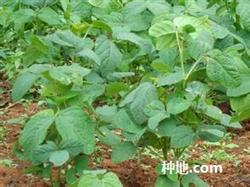
What are the commonly used herbicides in soybean fields?
What herbicides can be used for growing soybeans? How to use them without causing phytotoxicity. Fomesafen (fluoroglycofen-ethyl) is a herbicide for controlling broadleaf weeds with a relatively broad weed-killing spectrum. After application, contact phytotoxic spots will appear on soybean leaves; this is normal and has no obvious effect on soybean growth, and newly grown leaves will show no phytotoxicity. Value...
-
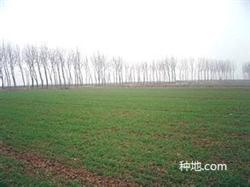
What are the precautions for using herbicides in wheat fields?
What should be noted when using herbicides in wheat fields? How should it be done? Applying herbicides to wheat requires the following strict practices: Strictly select herbicide varieties. There are many types of herbicides, and each herbicide has a certain spectrum of weed control. Some herbicides have a very narrow weed control spectrum, such as barban, which can only control wild oats; MCPA controls shepherd's purse, purslane, and wild oats very well, but its effect on cleavers is very poor; 2,4-D is effective against broadleaf weeds such as amaranth, but ineffective against grass weeds. Farmers should choose the right herbicide according to the most common weed species in the wheat field in order to achieve the desired effect. To control broadleaf weeds, herbicides such as chucaojing, dicaojing, tribenuron-methyl, and baijia mixture can be selected for good control results; however, metsulfuron-methyl, chlorsulfuron, and maicaoer can only be used early in wheat fields under a rice-wheat rotation system. If crops such as cotton, corn, peanuts, or beans are planted after rice, serious phytotoxicity will occur, leading to frequent incidents of almost total crop failure.
-
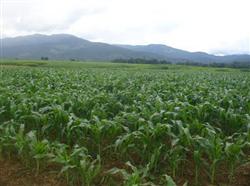
What are the precautions for using post-emergence herbicides in corn fields?
I. 2,4-D butyl ester. (1) Causes of phytotoxicity. Applying the herbicide too late, at too high a dose, or unevenly can cause phytotoxicity. (2) Symptoms of phytotoxicity. When the herbicide is applied to the soil, the young shoots bend and the young roots grow upward, then later return to normal. When the herbicide is applied to stems and leaves, the stems become twisted, the leaves become narrower, ...
-
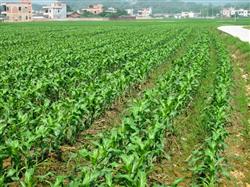
What are the commonly used herbicides for aquatic vegetable fields?
Properly grasp the application time, generally spraying after corn sowing; spraying herbicides when the ground is moist gives the best effect. Strictly control the dosage according to the amount stated in the instructions, using a reasonable dose; too much easily causes phytotoxicity, while too little fails to achieve the proper effect. Avoid spraying on windy days; when spraying, it is best to choose weather with wind...
-
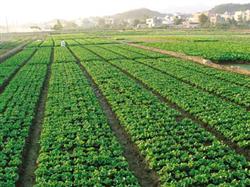
What are the key precautions for using herbicides in vegetable fields
In vegetable production, hoeing and weeding often accounts for more than 40% of the total labor used in vegetable field management. If chemical weeding is used, it can not only effectively control weeds and improve the quality and yield of vegetables, but also save a large amount of weeding labor and reduce labor intensity, but the following "eight precautions" must be observed....
-
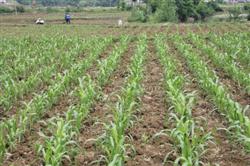
What are the methods for weed control in sorghum fields?
How do you control weeds in sorghum fields? Please explain the methods. Weeds are a major disaster in sorghum production, competing with sorghum for water, nutrients, light and space, causing a decline in sorghum yield and quality. Weed damage is especially severe in low-lying land and saline-alkali land, and it is year-round, that is, weeds cause damage at any time...
-
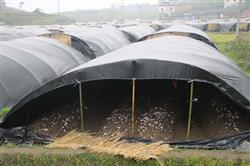
What are the methods for growing button mushrooms in rice fields?
How are button mushrooms grown in rice fields? Please explain. Button mushroom cultivation in rice fields is a planting method that uses rice straw and other materials as the main raw materials, which are composted and fermented to make the growing substrate, utilizes the temperature and light resources of autumn, winter and spring and the idle seasons, and adopts open-field cultivation of button mushrooms in rice fields after the rice harvest. 20...
-
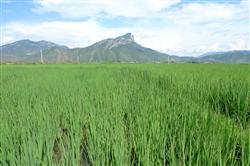
What are the correct methods and precautions for draining and drying rice fields?
How to dry a rice field properly? An introduction. Draining and drying a rice field is an important measure for improving paddy soil structure, promoting rice seedling roots to grow downward, enhancing rice root vigor, increasing rice stalk toughness and lodging resistance, controlling ineffective tillering, raising the percentage of productive tillers, improving the field microclimate, and reducing the occurrence of rice diseases and insect pests. But...
-
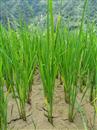
What is the correct method and purpose of draining paddy fields for rice?
How do you drain a paddy field for rice? What does it do? Please explain the field-draining method. Draining paddy fields is one of the main technical measures for increasing rice yields and promoting early ripening. 1. Main purposes of field draining. 1) Control ineffective tillering and consolidate effective tillering. When rice tillering has reached a certain number, that is, once there are enough seedlings, in our province, in terms of time, the effective tillering termination period is around the end of June. Early tillers can form panicles, while tillers after the termination period cannot form panicles or only form small panicles. In production, by draining the field, the young tiller buds at higher positions cannot get water and fertilizer and stop growing, reducing nutrient consumption, so that the main stem and large tillers receive more nutrient supply, laying a foundation for strong stems and large panicles.
-
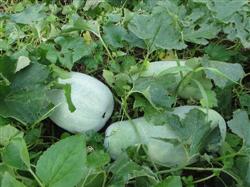
What are the key management techniques for growing winter melon in paddy fields?
How do you manage winter melon grown in paddy fields? What methods can increase yield? Growing winter melon in paddy fields can use the following three methods to increase yield: fertilizer and water management. During the stem and vine growth stage of winter melon, watering is not easy, so a combined "promote" and "control" management approach should be adopted. After watering, cultivate in time to conserve soil moisture and extend the watering interval...
条件筛选