What are the key precautions for using herbicides in vegetable fields
In vegetable production, hoeing and weeding often accounts for more than 40% of the total labor used in vegetable field management. If chemical weeding is used, it can not only effectively control weeds and improve the quality and yield of vegetables, but also save a large amount of weeding labor and reduce labor intensity, but the following "eight precautions" must be observed....
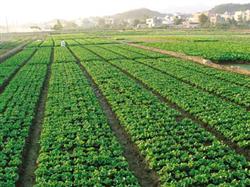
In vegetable production, hoeing and weeding often accounts for more than 40% of the total labor used in vegetable field management. If chemical weeding is used, it can not only effectively control weeds and improve the quality and yield of vegetables, but also save a large amount of weeding labor and reduce labor intensity, but the following "eight precautions" must be observed.
First, apply the herbicide before seedling emergence as much as possible.
Chemical weeding in vegetable fields mostly uses soil treatment, but it must be applied before sowing or after sowing and before sprouting. The best weed control effect is achieved when the application time is at the initial stage of weed growth. This can avoid or reduce the contamination and residues of the pesticide in vegetables.
Second, make the soil level, fine and moist.
When herbicides are applied to the soil, the soil surface is required to be level, finely broken and moist. This not only ensures uniform application, but also creates favorable conditions for weed germination, making weeds germinate uniformly, thereby achieving the goal of killing most weeds with one application and improving the weeding effect.
Third, apply the herbicide at the right time.
General chemical herbicides have a good effect when used during the weed germination period. However, when applied after weeds have grown to 9-10 cm or have tillered, the effect is poor or even ineffective. Therefore, weed control should preferably be carried out at the weed germination stage.
Fourth, spray the herbicide evenly.
Chemical herbicides with poor wettability are prone to precipitation. Therefore, when spraying, shake frequently to ensure uniform application; otherwise, the concentration of the lower layer of the liquid may be too high, easily causing phytotoxicity.
Fifth, reduce the dosage in protected cultivation areas.
The soil in protected facilities and other protected cultivation has high temperature and high humidity, and the pesticide effect is fast and strong. Therefore, the dosage should be reduced by 20%-30% compared with open-field vegetable fields to avoid phytotoxicity to vegetables.
Sixth, alternate the herbicides used.
Be careful not to use a single herbicide continuously for a long time, to prevent weeds from developing resistance and to improve the weeding effect.
Seventh, cover the soil promptly.
Some chemical herbicides, such as trifluralin, are volatile and must be covered with soil immediately after application to ensure the control effect. Some herbicides decompose and lose effectiveness when exposed to light and cannot be exposed to sunlight, so the soil must be covered immediately after application.
Eighth, choose herbicides with a short residual life.
According to different vegetable varieties and the length of the growing period, it is generally better to choose herbicides with an appropriate residual life, so as to reduce the time of residual contamination and ensure safety.