What are the precautions for using post-emergence herbicides in corn fields?
I. 2,4-D butyl ester. (1) Causes of phytotoxicity. Applying the herbicide too late, at too high a dose, or unevenly can cause phytotoxicity. (2) Symptoms of phytotoxicity. When the herbicide is applied to the soil, the young shoots bend and the young roots grow upward, then later return to normal. When the herbicide is applied to stems and leaves, the stems become twisted, the leaves become narrower, ...
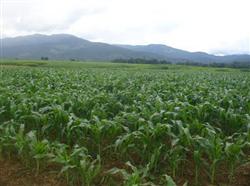 Based on years of investigation into the phytotoxicity caused by post-emergence herbicides applied in corn fields and the effects of weed control, the following "six dos and six don'ts" for spraying post-emergence herbicides are proposed, with the aim of achieving good weed control in the field while protecting corn from phytotoxicity.
1. When applying herbicide in corn fields, do this: "Distinguish the variety clearly; do not use herbicide blindly." Since most current post-emergence corn herbicides contain nicosulfuron, some corn varieties are sensitive to this ingredient and are prone to phytotoxicity. Some products state that they are prohibited for use on corn inbred lines, sweet corn, waxy corn, Denghai series and other varieties. Therefore, post-emergence herbicides cannot be used on just any variety. The various instructions on the product should be read carefully. Use them if they can be used, and do not use them if they should not be used, so as to prevent phytotoxicity in corn seedlings.
2. When mixing the herbicide, do this: "Dilute twice; do not mix water and herbicide directly," especially for powder formulations. Secondary dilution is just like a cook making flour porridge: after choosing a certain amount of water, first mix a small amount of water evenly with the herbicide, then add the remaining water, stir evenly, and spray. This avoids uneven mixing of water and herbicide, which can result in dead weeds in one patch where the herbicide reached and continued weed growth in another patch where only water reached, producing a "patchy" weed control effect.
3. When spraying, do this: "Spray low, not high." The "low" and "high" here refer to low and high temperatures. That is, spray before 9 a.m. and after 4 p.m., when the temperature is lower during the day. Do not spray in the morning, at noon, or in the afternoon when the temperature is high and the weather is dry, because this limits the amount of herbicide that enters the weeds and the amount absorbed is insufficient, affecting weed control. At the same time, spraying at high temperatures also makes corn seedlings prone to phytotoxicity.
4. When controlling weeds, do this: "Spray small weeds, not old ones." Seize the period from the two-leaf-one-heart stage to the four-leaf-one-heart stage of the weeds. Spray at this favorable time when the weeds have a certain area to receive the herbicide and have low resistance. Do not wait until the weeds have grown to more than 10 cm tall and look uniformly green before spraying. In hot and dry years, although the weeds are short, because they have grown for a long time and have developed root systems, they form "small old weeds" with grayish-white leaves. The amount of spray solution should be increased, with no less than 40 kg of solution per mu, spraying the entire weed plant thoroughly and evenly. Do not be stingy with water while sparing herbicide, otherwise the effect of completely eliminating the weeds will not be achieved.
5. When controlling weeds and insects at the same time, do this: "Mix with pyrethroid pesticides; never mix with organophosphorus pesticides." When insect pests occur in corn fields at the seedling stage, in order to save labor and time, post-emergence herbicide can be sprayed to control both weeds and insects at the same time. However, the pesticides mixed in should be pyrethroid and carbamate insecticides, and when spraying, care should be taken to avoid the heart leaf as much as possible to prevent the solution from pouring into the heart. In years when Swedish fly or thrips occur severely, although the herbicide can be mixed with imidacloprid or acetamiprid, controlling these two small insects requires spraying the heart leaf. If they are mixed with the herbicide and sprayed on the heart leaf to control insects, corn seedlings are prone to phytotoxicity. The herbicide should be sprayed first, and then imidacloprid or acetamiprid should be sprayed afterward to avoid phytotoxicity in corn seedlings. Within one week before and after spraying post-emergence herbicide, it is strictly forbidden to spray organophosphorus insecticides, otherwise corn seedlings will suffer phytotoxicity.
6. When applying herbicide after the corn seedlings have five leaves, do this: "Use directed spraying; do not spray the entire field." The 2- to 5-leaf stage of corn is the best time to spray post-emergence herbicide. If the best period is missed and weed control is necessary, directed spraying along the rows should be used, and the entire field should not be sprayed, so as to avoid causing phytotoxicity. Otherwise, in mild cases the corn heart leaves turn yellow, and in severe cases the leaves turn white and the whole plant stops growing.