What are the precautions for using herbicides in wheat fields?
What should be noted when using herbicides in wheat fields? How should it be done? Applying herbicides to wheat requires the following strict practices: Strictly select herbicide varieties. There are many types of herbicides, and each herbicide has a certain spectrum of weed control. Some herbicides have a very narrow weed control spectrum, such as barban, which can only control wild oats; MCPA controls shepherd's purse, purslane, and wild oats very well, but its effect on cleavers is very poor; 2,4-D is effective against broadleaf weeds such as amaranth, but ineffective against grass weeds. Farmers should choose the right herbicide according to the most common weed species in the wheat field in order to achieve the desired effect. To control broadleaf weeds, herbicides such as chucaojing, dicaojing, tribenuron-methyl, and baijia mixture can be selected for good control results; however, metsulfuron-methyl, chlorsulfuron, and maicaoer can only be used early in wheat fields under a rice-wheat rotation system. If crops such as cotton, corn, peanuts, or beans are planted after rice, serious phytotoxicity will occur, leading to frequent incidents of almost total crop failure.
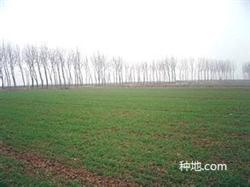
What should be noted when using herbicides in wheat fields? How should it be done?
Applying herbicides to wheat requires the following strict practices:
Strictly select herbicide varieties. There are many types of herbicides, and each herbicide has a certain spectrum of weed control. Some herbicides have a very narrow weed control spectrum, such as barban, which can only control wild oats; MCPA controls shepherd's purse, purslane, and wild oats very well, but its effect on cleavers is very poor; 2,4-D is effective against broadleaf weeds such as amaranth, but ineffective against grass weeds. Farmers should choose the right herbicide according to the most common weed species in the wheat field in order to achieve the desired effect. To control broadleaf weeds, herbicides such as chucaojing, dicaojing, tribenuron-methyl, and baijia mixture can be selected for good control results; however, metsulfuron-methyl, chlorsulfuron, and maicaoer can only be used early in wheat fields under a rice-wheat rotation system. If crops such as cotton, corn, peanuts, or beans are planted after rice, serious phytotoxicity will occur, leading to frequent incidents of almost total crop failure.
Strictly follow the optimal application time. Many farmers choose spring as the time to use herbicides in wheat fields, waiting until the weeds are large and dense before applying the herbicide. At this time, the weeds are older, their resistance to the herbicide has increased, and the dosage must be increased for control. This not only increases costs but also easily causes phytotoxicity to wheat, subsequent crops, and nearby crops. For example, if 48% dicamba or 2,4-D is used during the wheat booting stage, the application time is too late and the wheat will fail to set grain. Years of trials and production practice show that the time to use herbicides in wheat fields is best before winter. Generally, pre-emergence herbicides are selected before wheat emerges, or herbicides capable of killing emerged weeds are selected at the 2-4 leaf stage of wheat.
Strictly control the temperature and humidity at application. 1. Control the temperature at application. The temperature at application directly affects the effectiveness of the herbicide. For example, 2,4-D and MCPA have very poor control effects when applied below 10°C, and only show good effects when applied above 10°C; the herbicide juxing shows weed control effects only 30-40 days after application under low-temperature conditions. Therefore, when using herbicides in wheat fields, they should be applied on sunny days when the temperature is relatively high so that the efficacy can be fully exerted. 2. Ensure sufficient soil moisture at application. Whether applying to the soil before wheat emerges or applying during the wheat growing period, soil moisture is an important factor affecting the level of efficacy. When applying before emergence, if the surface soil layer has high moisture, it easily forms a tight herbicidal soil sealing layer, and weed seeds germinate and emerge quickly, so the control effect is high. When applying during the wheat growing period, if the soil is moist, it is conducive to the absorption of the herbicide by weeds and its translocation within the plant, so the efficacy is exerted quickly and the weed control effect is good.
Strictly control the dosage. Weeds and wheat are both plants, and the selectivity of herbicides is limited. To ensure that the herbicide both kills weeds and does not harm wheat, the dosage of the herbicide must be strictly controlled. It can neither be increased nor decreased at will; it must be used according to the dosage stated in the instructions and adapted to local conditions. Soil with high organic matter content and fine soil particles has a large adsorption capacity for herbicides, and the number of soil microorganisms is large and their activity is vigorous, so the chemical is degraded to a greater extent, and the application rate should be appropriately increased. In contrast, sandy loam soil has larger particles and a lower adsorption capacity for the chemical; the chemical molecules are mostly in a free state among soil particles, have strong activity, and are prone to causing phytotoxicity, so the application rate can be appropriately reduced. Herbicides are relatively stable in alkaline soil, are not easily decomposed, and have a long residual effect, making it easy to cause phytotoxicity to subsequent crops. Therefore, in alkaline soil, the application time should be as early as possible and the herbicide should be used cautiously.
Strictly master spraying techniques. When using herbicides, be sure to dilute with enough clean water and mix thoroughly and evenly. Spraying must be uniform, with no overlapping or missed spraying. If adjacent plots contain crops sensitive to the herbicide, isolation measures should be taken, and spraying should not be done when it is windy, so as to avoid harming crops in adjacent plots. It is best to use dedicated equipment for spraying herbicides, so as to avoid harming crops when spraying other pesticides. If the equipment cannot be dedicated, after spraying herbicides it must be repeatedly rinsed clean with bleaching powder before it can be used to control crop diseases and pests.
Click to see more herbicide application techniques
Click to see more pesticide application techniques