What are the commonly used herbicides in soybean fields?
What herbicides can be used for growing soybeans? How to use them without causing phytotoxicity. Fomesafen (fluoroglycofen-ethyl) is a herbicide for controlling broadleaf weeds with a relatively broad weed-killing spectrum. After application, contact phytotoxic spots will appear on soybean leaves; this is normal and has no obvious effect on soybean growth, and newly grown leaves will show no phytotoxicity. Value...
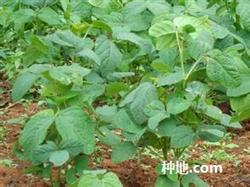
What herbicides can be used for growing soybeans? How to use them without causing phytotoxicity
Fomesafen (fluoroglycofen-ethyl) is a herbicide for controlling broadleaf weeds with a relatively broad weed-killing spectrum. After application, contact phytotoxic spots will appear on soybean leaves; this is normal and has no obvious effect on soybean growth, and newly grown leaves will show no phytotoxicity. It is worth noting that in recent years, when corn was planted as the following crop in soybean fields where fomesafen had been used, relatively serious residual phytotoxicity occurred. When using fomesafen, be sure not to exceed the dose and strictly control it within the recommended dosage range. It needs to be mixed with herbicides for grass weeds.
Bentazone (bentazone) is a herbicide for controlling broadleaf weeds with a relatively broad weed-killing spectrum. It has a special effect on cocklebur and is safe for soybeans. It needs to be mixed with herbicides for grass weeds.
Acifluorfen (acifluorfen sodium) is a herbicide for controlling broadleaf weeds with a relatively broad weed-killing spectrum. After application, contact phytotoxic spots will appear on soybean leaves. The phytotoxicity is slightly more serious than that of fomesafen; this is normal and has no obvious effect on soybean growth, and newly grown leaves will show no phytotoxicity. It needs to be mixed with herbicides for grass weeds.
Lactofen (lactofen) is a herbicide for controlling broadleaf weeds with a relatively broad weed-killing spectrum. After application, contact phytotoxic spots will appear on soybean leaves. The phytotoxicity is slightly more serious than that of acifluorfen; this is normal and has no obvious effect on soybean growth, and newly grown leaves will show no phytotoxicity. It needs to be mixed with herbicides for grass weeds.
Sethoxydim (sethoxydim), clethodim (clethodim), fluazifop-P-butyl (fluazifop-P-butyl), haloxyfop-R-methyl (haloxyfop-R-methyl), and quizalofop-P-ethyl (quizalofop-P-ethyl) are all herbicides for controlling grass weeds. Their weed-killing effects are similar. When controlling perennial grass weeds, a high dose or double dose is needed.
All five grass weed herbicides can be mixed with the above four broadleaf weed herbicides. When mixed, each agent should use the recommended dosage and must not be reduced. If an adjuvant is added, the application amount can be reduced by 1/4 or 1/3.
Click to get a massive amount of herbicide application techniques
Click to get a massive amount of pesticide application techniques
Click to get a massive amount of soybean cultivation techniques