-
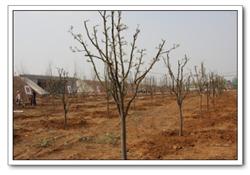
Detailed Explanation of Key Points for Fertilization and Water Management Techniques for Apricot Trees
I. Fertilization In the first year after planting, young trees are fertilized with light, frequent applications in order to rapidly expand the canopy and form a certain number of flower buds. The first fertilization is applied when the trees sprout after planting, after which a topdressing is applied once every 15-20 days, mainly with urea, combined with phosphorus and potassium fertilizers and organic fertilizer. Topdressing is stopped in early July, with appropriate water control...
-

What are the key points of winter pruning techniques for apricot trees?
Brief introduction: Brown rot Brown rot is also known as fruit belly disease. In rainy years, if fruit-boring pests are severe, brown rot becomes epidemic year after year, causing a large amount of rotten fruit and fruit drop, resulting in great losses. 1. Symptoms It can infect flowers, leaves and fruit, with fruit suffering the most serious damage. (1) Floral organs: When flowers are affected, they turn brown and wilt, mostly...
-
Shaping Methods and Winter Pruning Techniques for Persimmon Trees
Persimmon trees are light-loving crops. In dense planting cultivation, attention should be paid to solving ventilation and light penetration, which is a major measure in high-yield management. Persimmon trees bear fruit from axillary buds, so thinning out vigorous growing branches and strengthening nutrient accumulation in the branches and trunk are very important. Before flowering, emphasis should be placed on applying amino acids to the trunk to promote flower bud differentiation, overcome alternate bearing, and encourage early fruiting...
-
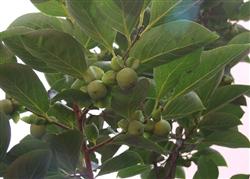
Management Techniques After Persimmon Trees Bear Fruit
Timely fertilization: When the fruit reaches 4-5 cm in transverse diameter and when the fruit size has basically become fixed, apply fruit-swelling fertilizer and pre-harvest fertilizer, mainly with quick-acting, readily soluble nitrogen-phosphorus-potassium fertilizer. For bearing trees over five years old, apply 1.5-2 kg of urea and 0.75-1 kg of monopotassium phosphate per tree, or apply 1-1.5 kg of nitrogen-phosphorus-potassium compound fertilizer, broadcast after rain, or...
-
Key Cultivation Techniques and Planting Management Methods for Papaya
Papaya is a perennial deciduous shrub or small tree of the genus Chaenomeles in the rose family. It is mainly distributed in East China as well as Hubei, Jiangxi and other places, and is also cultivated in Henan and Hebei. Papaya is used both as food and medicine, mainly for medicinal purposes. The mature fruit of papaya is used as medicine; it is sour, astringent and warm in nature, and contains saponins, flavonoids, malic acid, tartaric acid, citric...
-
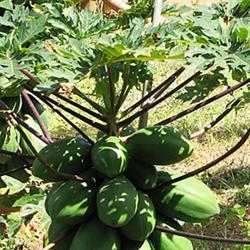
Detailed Explanation of Papaya (Chaenomeles) Cultivation Techniques and Management Methods
(1) Varieties. Papaya (Chaenomeles) varieties. (2) Land conditions. Altitude 300 to 900 m, soil type yellow-brown earth, soil layer thickness over 50 cm, soil pH 5.3 to 7.0, organic matter content ≥1.0%. (3) Cultivation management. 1. Seedling propagation: seedling propagation by seed. Raising seedlings is divided...
-
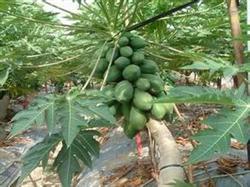
Detailed Explanation of Key Techniques for High-Yield Cultivation of Quince
Quince is a plant of the genus Cydonia in the Rosaceae family and is an ancient local variety of Linyi. Its fruit is rich in nutrients and has high medicinal value. In 2003, Caozhuang Township introduced 1000 mu of quince, mainly varieties Luofu and Changjun. At present, the growth is good. Now China Agriculture Network introduces the key techniques for high-yield field cultivation of quince as follows...
-
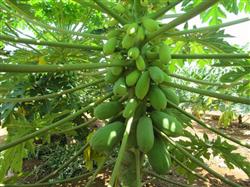
Detailed Explanation of Key Techniques for Papaya Cultivation and Management
1. Select excellent varieties. Varieties suitable for the local area include Yizhou papaya, Yipinhong papaya, etc., and they can pollinate each other. 2. Establish the orchard by planting. It is advisable to choose deep, fertile soil with good drainage, neutral or slightly alkaline loam or sandy loam. Plant spacing is 2.5 m x 4 m. Before planting, dig a planting hole 1 m long, 1 m wide, and 0.8 m deep...
-
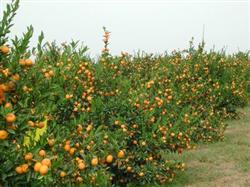
Cultivation Techniques for Early Fruiting and High Yield of Navel Orange in the Third Year After Planting
Navel orange fertilization includes soil fertilization and foliar topdressing, with soil fertilization being the main method. (1) Soil fertilization: Soil fertilization should not only help the root system absorb nutrients as quickly as possible, but also prevent the root system from suffering fertilizer damage. Therefore, fertilization should be adapted to the time, the tree, and the fertilizer. Adhere to shallow application for shallow roots, deep application for deep roots, shallow application in spring and summer, and in autumn and winter...
-
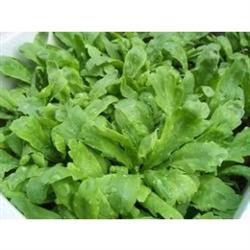
Key Techniques for Cultivating Crown Daisy (Glebionis coronaria) in Greenhouses in Early Spring
Seed selection and germination: Choose varieties with strong cold resistance; generally 1.5-2 kg of seed is needed per mu. 3-5 days before sowing, soak the seeds in warm water at 30°C for 24 hours, rinse and air-dry them, then place them under 15-20°C for germination, rinsing once daily with warm water; sow once the seeds have sprouted. Fertilization and soil preparation...
条件筛选