What are the irrigation methods and techniques for cherry orchards
How should a cherry orchard be irrigated? Seeking guidance. Cherry tree roots are shallow and have high requirements for soil aeration. Compared with other deciduous fruit trees, they have larger leaf area and higher transpiration, so in dry and hot conditions the water in the fruit is lost in large amounts through the leaves; soil drought during fruit development can cause fruit drop; and rain after a long drought or irrigation can easily...
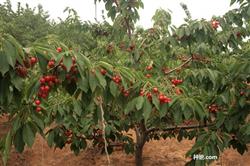
How should a cherry orchard be irrigated? Seeking guidance
Cherry tree roots are shallow and have high requirements for soil aeration. Compared with other deciduous fruit trees, they have larger leaf area and higher transpiration, so in dry and hot conditions the water in the fruit is lost in large amounts through the leaves; soil drought during fruit development can cause fruit drop; and rain after a long drought or irrigation can easily cause fruit cracking. Therefore, cherry trees are very sensitive to both soil water shortage and excess water. A cherry orchard needs both irrigation conditions and smooth drainage.
I. Requirements of a pollution-free cherry orchard for irrigation water. It must be clean and non-toxic and meet the national "Farmland Irrigation Water Quality Standard". Its main indicators are a pH of 5.5-8.5, and total mercury, total cadmium, total arsenic, total lead, chromium, chloride and cyanide must be below the limit standards set by the state. In addition, there are total bacteria count, coliform bacteria, chemical oxygen demand and biochemical oxygen demand, among others. Water quality pollutant indexes are divided into 3 grades: grade one is unpolluted; grade two is still clean (within the standard limits); grade three is polluted (exceeding the warning level). Only irrigation water meeting grade one and grade two standards can be used to produce pollution-free cherries.
II. Irrigation by stages. Cherry orchard irrigation can be divided into pre-bloom water, fruit-forcing water, post-harvest water and freeze-sealing water.
① Pre-bloom water. For pre-bloom irrigation, because the temperature is low, irrigation easily lowers the soil temperature, so the irrigation amount should be small, with "water passing and the soil surface drying" as the standard, so as not to affect root growth. It is best to use water from reservoirs or ponds, or well water that has been warmed by the sun before irrigating.
② Fruit-forcing water. From after flower drop to before fruit ripening, new shoots and fruit are growing at the same time. This is the period when cherries are most sensitive to water and is the critical period for water demand. When the water content of the main root distribution layer drops below 12%, irrigation must be carried out. During this period, irrigation should be frequent and the amount large, generally 2-3 irrigations.
③ Post-harvest water. In places with sufficient water sources, when the weather is dry after harvest, irrigation can be carried out together with fertilization to give full play to fertilizer efficiency and promote flower bud differentiation. Of course, the several irrigations mentioned above should depend on the specific conditions at the time; for example, when there is a lot of rainfall, there is no need to irrigate.
④ Freeze-sealing water. Irrigating an appropriate amount after cherry trees shed their leaves and before the freeze-up is useful for preventing drought and cold, and also benefits the early spring growth of cherry trees.
III. Sprinkler irrigation has good results. Sprinkler irrigation can control the amount of water sprayed, and the water is sprayed evenly, saving water. Especially for sandy orchard land, it can save 60%-70% of water. Sprinkler irrigation can keep the soil loose, maintain soil aggregate structure and soil fertility, and can also regulate the microclimate and reduce the harm to fruit trees from low temperature and dry heat.
Click to get more cherry cultivation techniques
Click to get more fruit cultivation techniques