Key Cultivation Techniques for Dragon Fruit in Northern Regions
Dragon fruit, also known as cactus honey fruit, red dragon fruit, etc., is a perennial climbing succulent fruit. Dragon fruit originated in the tropical rainforests of the Americas and was later introduced to China. Greenhouse cultivation of dragon fruit has made "growing southern fruit in the north" a success. The following are the key techniques for greenhouse cultivation of dragon fruit, including cutting propagation and seedling raising, management during growth and development stages, greenhouse...
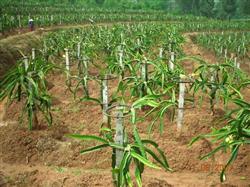
Dragon fruit, also known as cactus honey fruit, red dragon fruit, etc., is a perennial climbing succulent fruit. Dragon fruit originated in the tropical rainforests of the Americas and was later introduced to China. Greenhouse cultivation of dragon fruit has made "growing southern fruit in the north" a success. The key techniques for greenhouse cultivation of dragon fruit, including cutting propagation and seedling raising, management during growth and development stages, greenhouse cultivation management, and timely harvesting, are introduced as follows:
I. Seedling Raising
Dragon fruit is mainly propagated by cutting or grafting.
1. Cutting propagation: Spring is the most suitable time. Select plump stem segments for cuttings, cut them into 15 cm long pieces, let the wounds air-dry, then insert them into a sand bed. Roots will form in about 15-30 days, and when the roots reach 3-4 cm, transplant them to the seedling bed.
2. Grafting propagation: Select Hylocereus undatus (night-blooming cereus) that is free of pests and diseases, grows vigorously, and has plump stem flesh as the rootstock, and graft on a sunny day. Cut the dragon fruit stem into a flat surface with a knife, insert the scion, align the cambium layers, and bind tightly with cotton thread to secure. At 28-30°C, a large amount of callus tissue will form on the graft union surface in 4-5 days. When the color of the scion and rootstock becomes similar, it indicates that the vascular bundles of the two have healed and the graft is successful. After that, they can be moved to a temporary planting bed for continued cultivation.
3. Seedling stage management: The seedling bed should be selected in a field with good ventilation and sunlight, fertile soil, and convenient drainage and irrigation. Level the soil finely and make beds with a bed width of 90 cm. For 667 sq m (1 mu), first apply 1500-2000 kg of decomposed chicken manure or cow manure, mix in 100 kg of rice husk ash, mix thoroughly, and apply to the surface soil layer 10-20 cm below the bed surface during land preparation; then apply 100-150 kg of calcium magnesium phosphate fertilizer, stir thoroughly with a hoe, and apply to the surface soil layer at a depth of 4-5 cm; finally, plant the small seedlings in the seedling bed at a spacing of 3 cm, water thoroughly, and spray 500 times diluted carbendazim solution once. Apply 5-7 kg of compound fertilizer every 10-15 days. Once the first stem segment with plump stem flesh grows out, they can be released from the nursery.
II. Cultivation Management
Dragon fruit is a tropical plant that likes light, tolerates shade, tolerates heat, tolerates drought, likes fertilizer, and tolerates poor soil. Its stems can even grow attached to rocks. The plant has extremely strong wind resistance and can withstand typhoons as long as the support is firm. Generally, 300-400 plants are planted per 667 sq m, and a 20 cm square, 2 m high cement pillar can be buried as a support in the middle of every 4 plants.
Dragon fruit can adapt to various soils, but neutral soil and slightly acidic soil with abundant humus and good water and fertilizer retention are best. To make it grow vigorously after planting, it is necessary to apply more organic fertilizer such as fermented and sterilized human, poultry, and livestock manure. During the seedling stage, apply calcium magnesium phosphate fertilizer and compound fertilizer, with the amount depending on the size of the plant.
Dragon fruit grows rapidly in a warm, humid, and well-lit environment. During open-field cultivation in spring and summer, water more to keep the root system in a vigorous growth state. During continuous rainy weather, drain promptly to avoid infection by pathogens that causes stem flesh rot. Dragon fruit can tolerate low temperatures of 0°C and high temperatures of 40°C. To ensure its year-round growth and multiple fruiting, the greenhouse temperature should be kept as close as possible to its suitable growing temperature of 20-30°C. Dragon fruit cultivation in northern regions must involve building a greenhouse, and the nighttime temperature in winter should not be lower than 8°C. In summer, the plastic film does not need to be removed, but ventilation is essential. The dragon fruit orchard does not need to be plowed; simply remove weeds in time. Dragon fruit has a thick waxy layer and a smooth appearance, so bagging can be omitted, saving labor and time. Dragon fruit generally has no pest problems. Occasionally, nematodes may harm the roots and red spider mites may harm the stems and leaves; timely control is sufficient.
Dragon fruit takes about 32 days from flowering to fruit maturity. When the fruit gradually turns from green to red and has a slight fragrance and bright color, it can be harvested.
Click to see more dragon fruit cultivation techniques
Click to see more fruit cultivation techniques