-
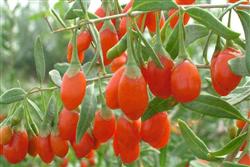
Key Technical Points for High-Yield and High-Quality Cultivation of Goji Berry
Goji berry is a perennial deciduous shrub of the genus Lycium in the Solanaceae family. Its leaves, fruit, roots and bark all have extensive medicinal value. It has strong stress resistance and tolerates fertilizer and water well; it is suitable for planting in arid, sandy wasteland and saline-alkali land, and is also an excellent tree species for courtyard economies. Its fruiting period is long; planted in the same year, it can bear fruit for up to 50 years, and enters full fruiting at 3-4 years. A...
-
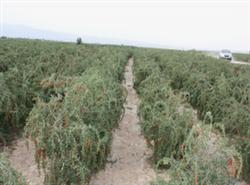
Control Methods and Key Technical Points for Black Fruit Disease of Goji (Lycium barbarum)
Goji root rot is widespread and causes serious damage. Plants killed by the disease account for 3%-5% each year, causing great losses to goji production. According to research by Lu Zhankui and others at the Ningxia Academy of Agriculture and Forestry Sciences, root rot symptoms fall into the following two types: (1) Root decay type. Roots or the root crown show varying degrees of decay and peeling, and the stem...
-
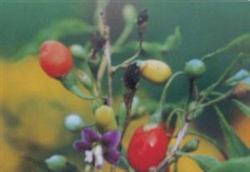
Control Methods and Technical Key Points for Goji Berry Anthracnose
Symptoms Goji berry anthracnose is commonly known as black fruit disease. It mainly damages green fruits, tender branches, leaves, buds, flowers, etc. When green fruits are infected, small black spots or irregular brown patches initially appear on the fruit surface. During continuous rainy weather, the lesions keep expanding, and half or the entire fruit turns black; when dry, the fruit shrivels; when humidity is high, many orange-red gelatinous dots grow on the diseased fruit; tender branches, leaf tips...
-
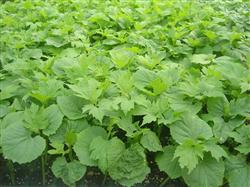
Planting Methods and Key Technical Points for Grafted Bitter Melon Seedlings
How do you plant grafted bitter melon seedlings? Here is a detailed introduction. Grafted bitter melon seedlings can be planted by referring to the following methods: 1. Choose suitable rootstock and scion varieties. Choose cucurbit varieties with good compatibility and strong stress resistance as rootstock. Currently, Yunnan black-seed pumpkin and local Mopan pumpkin are preferable; for scion varieties, generally choose local main cultivars...
-
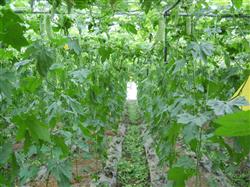
Bitter Melon Continuous Cropping: Planting Methods and Key Technical Points
How to grow bitter melon in continuous cropping? Please provide guidance on the methods. First, pay attention to timely pest and disease control. In the middle and late stages, bitter melon's stress resistance decreases, and the likelihood of pest and disease infection increases, so prevention should be carried out early. At present, the main disease harming bitter melon is powdery mildew, which can be controlled by spraying 12.5% myclobutanil emulsifiable concentrate at 2000 times dilution or 12.5% tebuconazole...
-
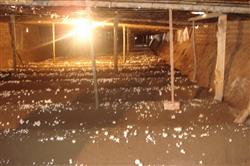
Key Technical Points for Integrated Pest and Disease Control in Button Mushrooms (Agaricus bisporus)
1 Competing fungi, diseases, and insect pests and their control 1.1 Competing fungi and their control methods 1.1.1 Coprinus comatus, commonly known as the wild mushroom, morphological characteristics: the cap is initially bullet-shaped or oval, jade white, grayish white, or yellowish white, mostly with scales on the surface, and the stalk is slender and hollow. When mature, the cap expands, and the gills gradually turn from white to black, finally autolyzing together with the cap into an ink-like liquid.
-
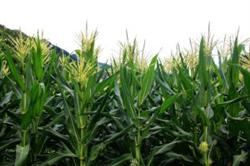
Summer Corn Ear Stage Management Methods and Technical Key Points
How should summer corn be managed during the ear stage? Please explain the methods. Summer corn ear stage management can refer to the following methods: 1. Remove weak plants and cultivate to promote roots. For those small plants, weak plants and ineffective plants, they should be removed early. During the ear stage, generally cultivate 1-2 times. After the small trumpet stage, cultivation should be shallow, to protect roots and conserve soil moisture; ...
-
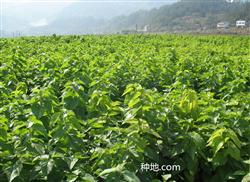
What are the key technical points for spring management of mulberry trees?
How should mulberry trees be planted to achieve high yields? Mulberry is a perennial woody plant. Mulberry leaves are the main nutritional organ of the mulberry tree and also the primary "food" for silkworms. Therefore, the amount of leaves produced by mulberry trees will directly affect the healthy growth of silkworms. High-yield cultivation techniques for mulberry leaves can be considered from the following aspects. 1...
-
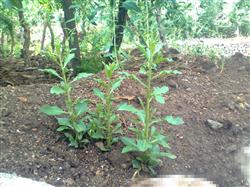
Management Methods and Technical Key Points for Young Goji Berry (Lycium barbarum) Plants
Trunk-establishing pruning: After the planted seedlings sprout, remove the sprouts below 30 cm above the base of the main trunk (the branching zone); above the branching zone, select and retain 3-5 lateral buds or lateral branches growing in different directions with a spacing of 3 cm-5 cm as the scaffold branches forming the small tree crown (the first layer of the tree crown), and at a plant height of 40 cm-50 cm...
-
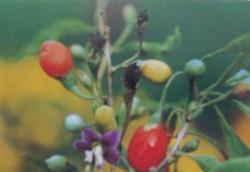
Control Methods and Technical Key Points for Black Fruit Disease of Goji Berry
Black fruit disease is one of the major diseases of goji berry (Lycium barbarum). The pathogen damages the green fruit, flowers and buds of goji berry, and also damages young shoots and leaves. After the green fruit of goji berry is infected, small black spots or black patches or black net-like patterns begin to appear. On cloudy and rainy days, the lesions expand rapidly, turning the fruit black and producing orange-red conidial masses, making it unfit for medicinal use. ...
条件筛选