-
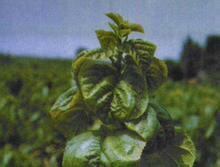
Key Technical Points for Pest and Disease Control in Mulberry Trees After Summer Pruning
Mulberry dwarf disease is a whole-plant disease of mulberry trees. It can be divided into three types: yellowing, dwarfing, and mosaic. 1. Symptoms ① Yellowing-type dwarf disease: In the early stage of the disease, it mostly starts from the top of the branches, with small yellow leaves that curl toward the underside. As the disease worsens, the lower leaves become thin and small, yellowed, curled, and with scorched spots. The internodes of the branches are short, and side branches cluster densely, forming a broom-like...
-
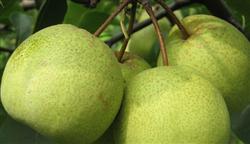
What are the key technical points for high-yield management of Xuehua pear?
How should Xuehua pear be managed to achieve high yield? Please provide guidance. To grow Xuehua pear for high yield, the management methods can refer to the following: 1. Strengthen soil, fertilizer and water management. Before planting, deep plow the whole area to 60cm. At planting, apply 80kg of barnyard manure per tree. From the year of planting to the 3rd year, apply 0.2kg of special fruit tree fertilizer per tree every June, and spray urea (0.3%) on the leaves 4 times along with orchard pesticide spraying. Irrigate 2 times. Due to sufficient nutrition, the canopy expands rapidly, is robust and uniform. At 4 years old, the number of branches and buds per 666.7 sq m reaches about 10,000, laying a solid foundation for early fruiting and early high yield.
-
Summer Loofah Planting Methods and Key Technical Points
How to plant loofah in summer? Please guide. Loofah is deeply loved by people for its crisp texture and sweet taste. Summer loofah is planted from late April to early July and comes to market from June to October. Its cultivation methods are as follows: 1. Variety selection: For summer loofah, choose varieties that are heat-tolerant, early-maturing and high-yielding. 2. Land selection: Summer loofah has no special requirements for the soil...
-
How to plant loofah in autumn? Planting methods and key technical points
How to cultivate loofah for high yield? Please give an introduction. Loofah is deeply loved by people for its crisp texture and sweet taste. Summer loofah is planted from late April to early July and comes to market from June to October. Its cultivation method is as follows: choose heat-tolerant, early-maturing, high-yielding varieties. Site selection: summer loofah has no special requirements for the soil, only...
-
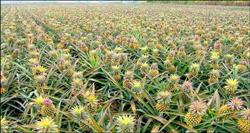
Detailed Explanation of Pineapple Cultivation Methods and Technical Key Points
How should pineapples be planted? Please explain in detail. Pineapple, also known as fengli, English name Pineapple, belongs to the Bromeliaceae family, Ananas genus. It is a perennial monocotyledonous herbaceous plant that grows on the ground. The fruit is a collective fruit formed by the aggregation of many small fruits, generally weighing 1--1.5 kg. Pineapple is a tropical fruit, native to Central and South...
-
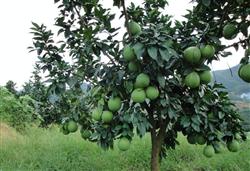
How to manage red-fleshed honey pomelo in spring? These technical points need to be mastered
How to manage red-fleshed honey pomelo in spring? Please advise. Spring is the early stage when red-fleshed honey pomelo puts out roots, grows spring shoots, grows flower spikes, blooms, and sets young fruit. During this period, pest and disease damage, fertilizer deficiency, and drought have a direct impact on the pomelo tree's strong shoots, strong flowers, and fruit-setting rate, and it is a key period for increasing the yield of the year. Effective measures must be taken in a timely manner...
-
Detailed Explanation of Key Technical Points for Managing Red-Fleshed Honey Pomelo in the Rainy Season
How to manage red-fleshed honey pomelo in the rainy season? Please advise. In the rainy season, you can refer to the following methods to manage red-fleshed honey pomelo: (1) Combine weeding with intertillage and soil loosening. In the rainy season, weeds grow very quickly, not only competing with red-fleshed honey pomelo trees for water and nutrients, but also serving as hiding places for pests and diseases. Timely intertillage and weeding are necessary, and herbicides such as sethoxydim, paraquat, glyphosate, etc. can also be used.
-
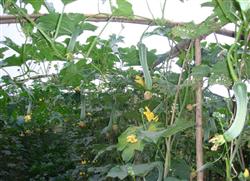
What are the key technical points for loofah cultivation and management?
How should loofah be managed when grown? Please help guide. Loofah has strong heat and moisture tolerance, but poor cold resistance, so loofah is often planted in spring and summer and harvested in summer and autumn. Loofah can flower and bear fruit continuously, so in most regions it is arranged for one crop per year within the frost-free period. 1. Variety selection for spring sowing...
-
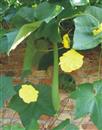
The correct method and key technical points for dipping loofah flowers
How to dip loofah flowers? Please provide guidance. To dip loofah flowers, you can refer to the following methods: 1. Determine the right time for dipping flowers. As temperatures rise, loofah flowers open earlier, so it is recommended that vegetable growers now finish dipping flowers between 10 a.m. and 3 p.m., otherwise the dipped flowers will be large and thin, and customers will be unwilling to buy them. Next...
-
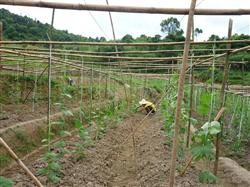
How to grow loofah? Key technical points from sowing to management
How to grow loofah? For detailed information on how to grow loofah, you can refer to the following methods: 1. Select good varieties. Choose varieties suitable for summer cultivation, that is, varieties that are not sensitive to short-day conditions: such as Xiayou loofah, Xinxiatang loofah, Fengkang loofah, Yalu No. 1, Xiuyu loofah, etc. 2. Raise seedlings and transplant. Summer loofah...
条件筛选